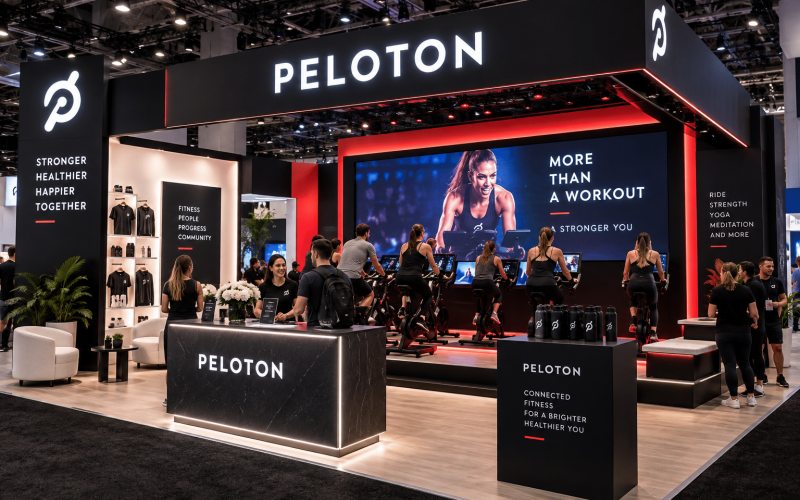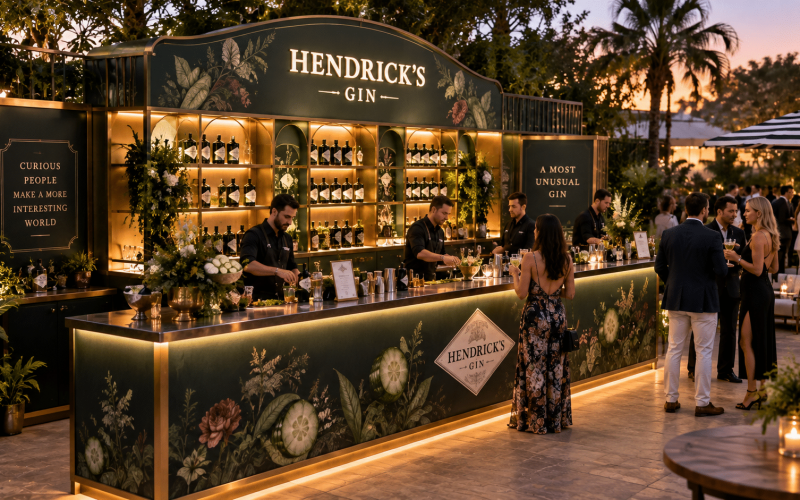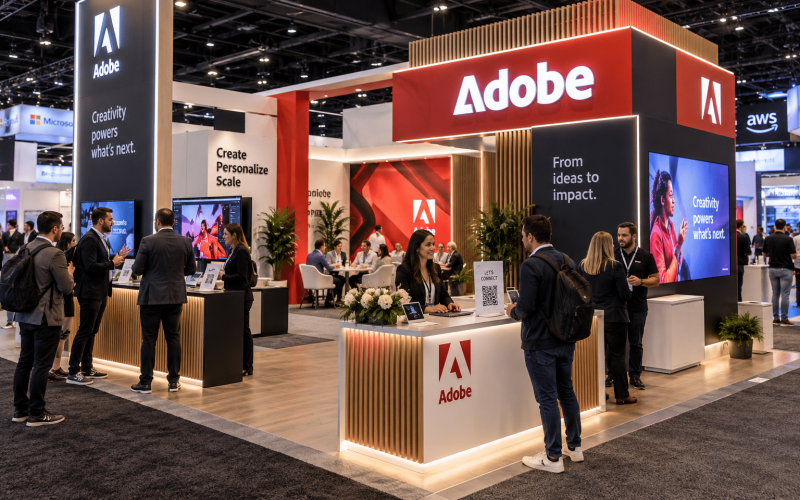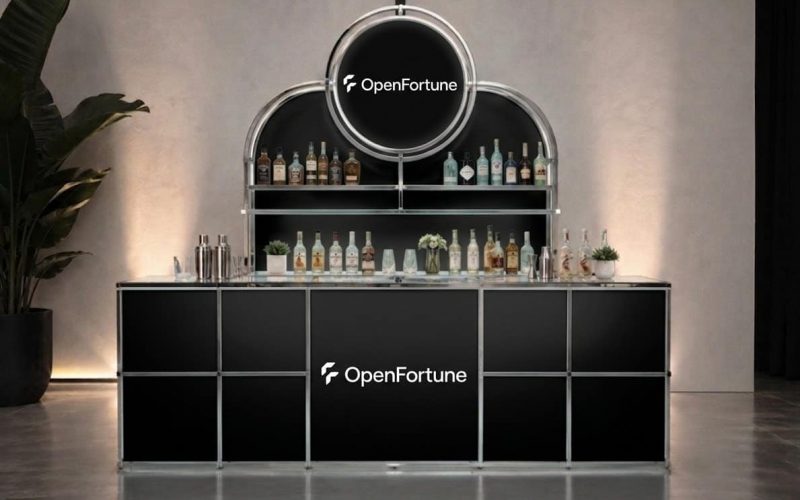
A branded giveaway table rarely earns a line. The custom brand activation examples that perform best give attendees a reason to stop, participate, and leave with a clear impression of the product. For marketers and event producers, that requires more than a strong creative idea. It requires an environment that can be fabricated, installed, staffed, and used repeatedly without losing its visual impact.
The right format depends on the audience, venue, campaign objective, and footprint. A product launch may need guided education and premium finishes, while a festival activation may need speed, weather resistance, and a simple interaction that works from a distance. The following concepts show how custom fabrication, branded furniture, interactive elements, and practical event planning come together.
8 Custom Brand Activation Examples for Live Events
1. The product trial bar
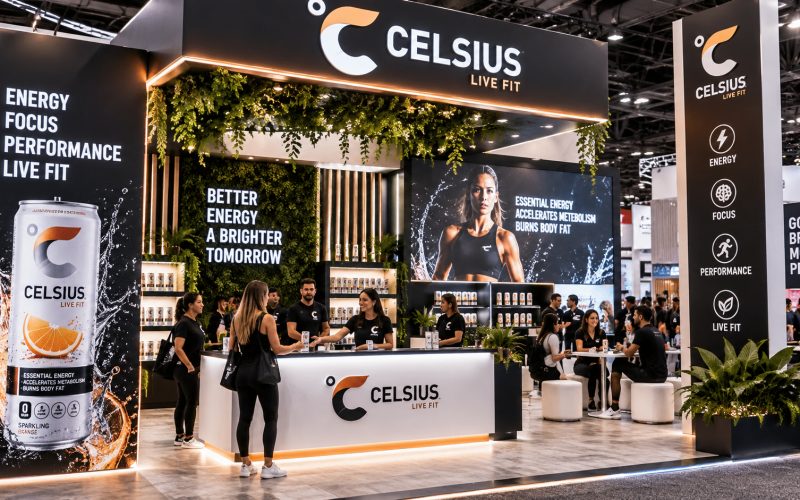
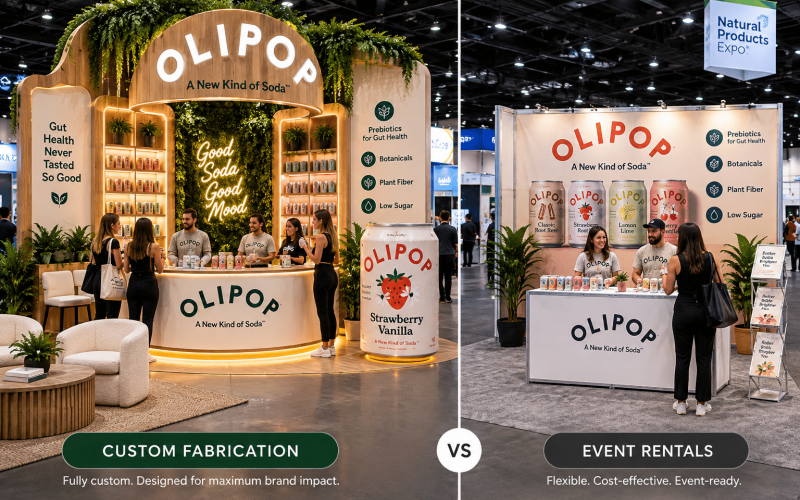
For food, beverage, beauty, wellness, and consumer technology brands, a trial bar turns sampling into a controlled branded experience. Rather than placing products on a basic table, the activation can include a custom counter, back bar, menu-style signage, storage, refrigeration or power accommodations, and a clear circulation path for guests.
The best trial bars are built around throughput. If the team can serve one person at a time but the event draws hundreds of guests per hour, the display becomes a bottleneck. A fabrication partner can design the counter around staff workflow, replenishment access, and the specific equipment required. Finishes still matter, but operational details determine whether the experience feels premium or chaotic.
2. The oversized product replica
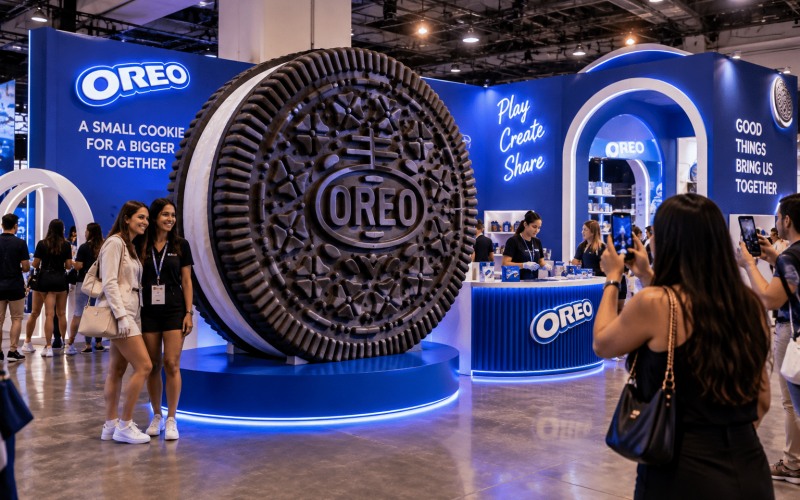
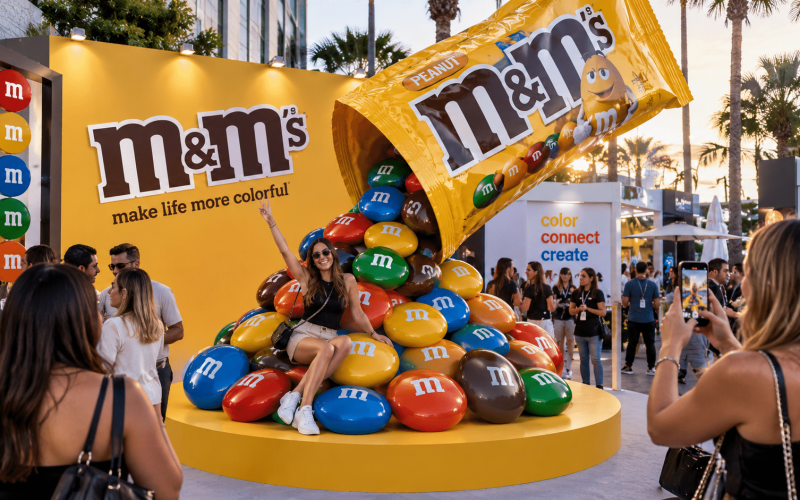
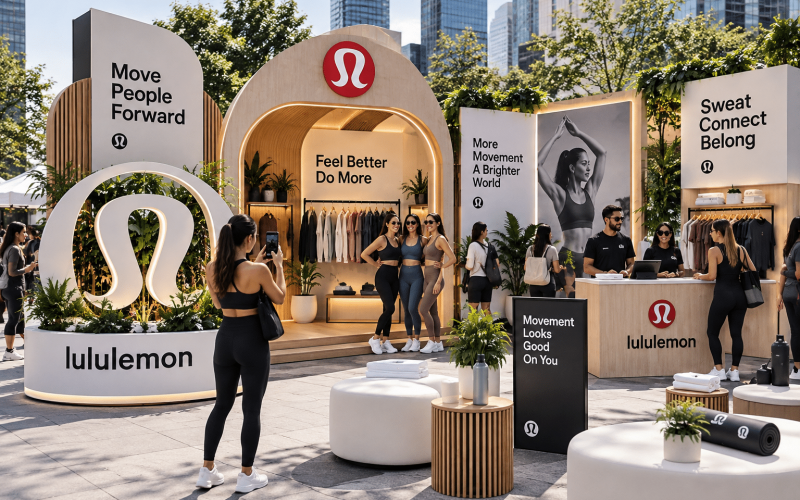
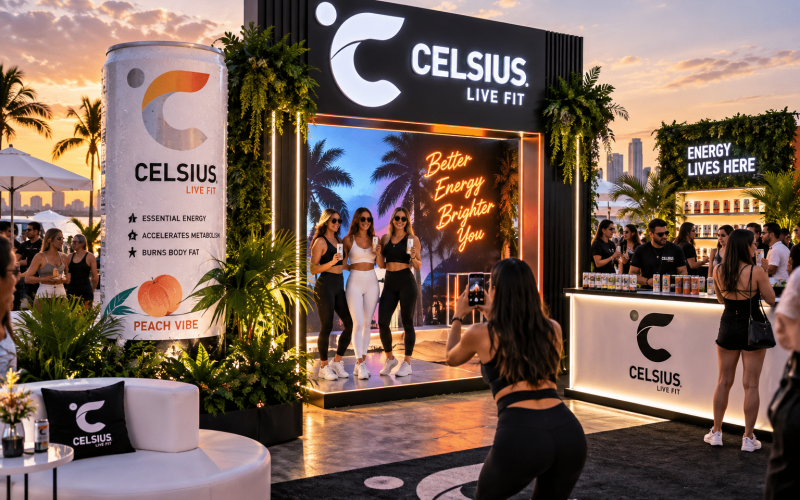
An oversized product replica is one of the clearest ways to create a visual landmark on a busy event floor. A giant cosmetic compact, sneaker, snack package, beverage can, or technology product can establish immediate recognition and give guests a natural photo moment.
This format works when the scale has a purpose. The replica might conceal a sampling station, frame a doorway, function as a seating area, or provide a backdrop for creator content. A large object that does nothing beyond looking impressive can still draw attention, but combining it with an interaction extends dwell time and gives staff an opening to tell the product story.
Fabrication choices should match the event plan. Lightweight modular construction is often more practical for touring campaigns, while a one-time indoor launch may support more intricate finishes. Transportation dimensions, venue doors, rigging restrictions, and installation time should shape the design before the concept is approved.
3. The custom game zone
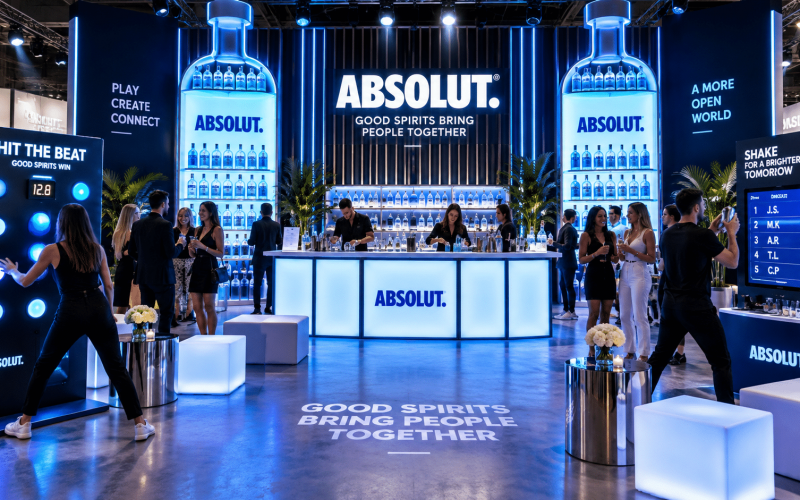
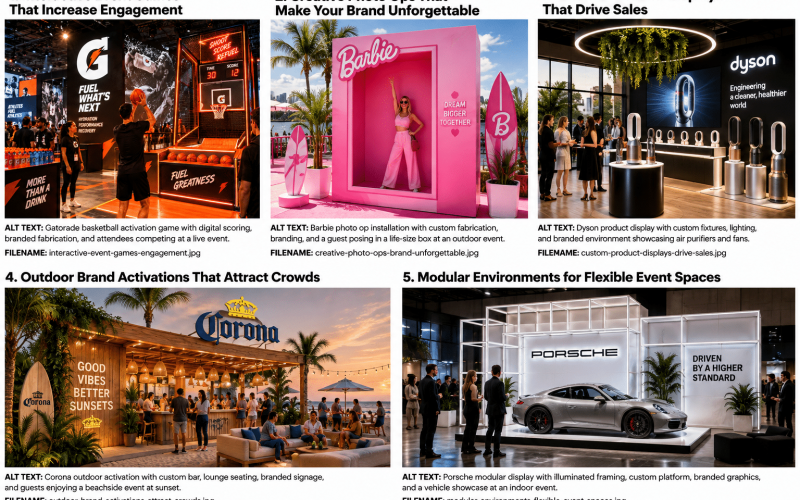
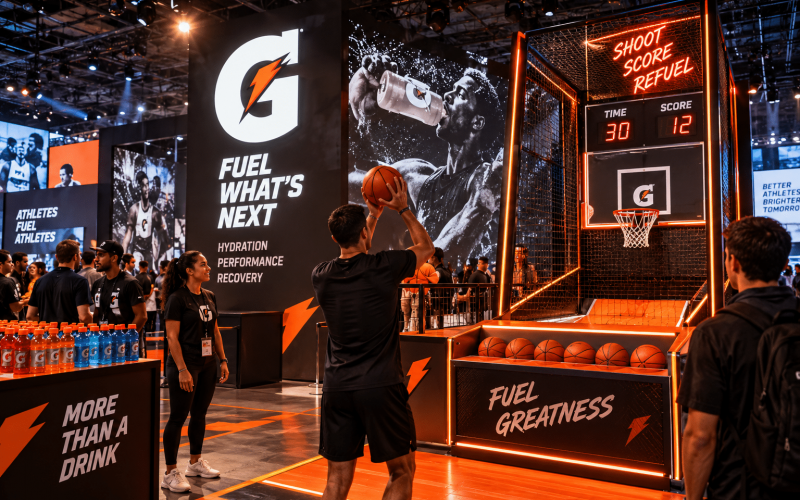
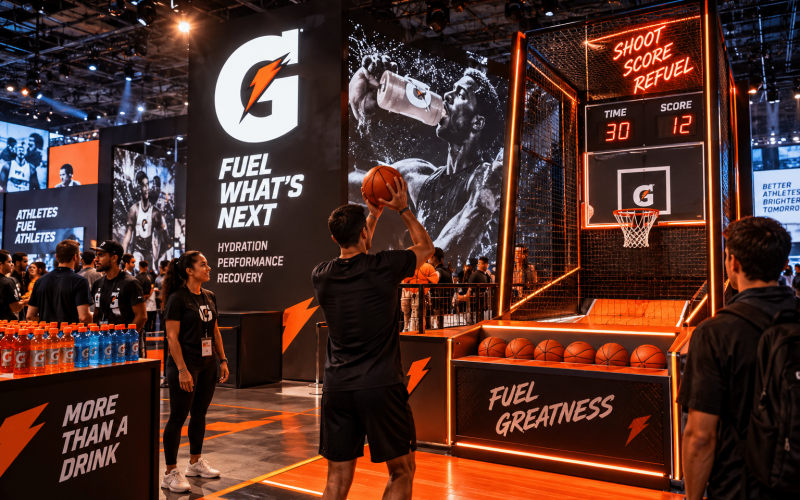
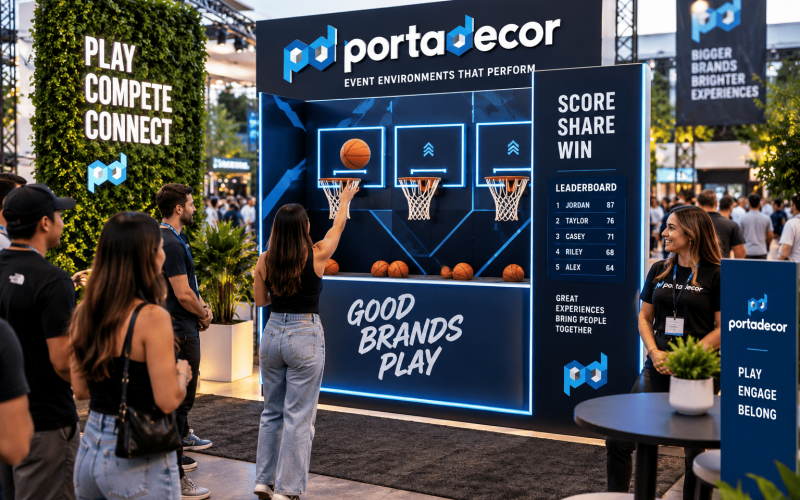
Games give attendees a low-pressure reason to engage with a brand. Prize wheels, plinko walls, claw machines, skill games, reaction challenges, and digital scoreboards can all be tailored to a campaign message. The strongest version connects the mechanics to the product instead of applying a logo to a generic game.
A sports drink brand might build a timed agility challenge. A travel company could use a destination-matching game. A financial services brand may create a decision-based game that turns a complicated benefit into a memorable result. The interaction should be understandable in seconds, particularly at festivals and public events where attention is limited.
Custom game fabrication also needs to account for resets, replacement parts, prize distribution, and staff access. An activation that looks great in a render but takes three minutes to reset will not perform well in a high-volume environment. Durable construction and clear operational planning protect the attendee experience.
4. The guided product discovery booth
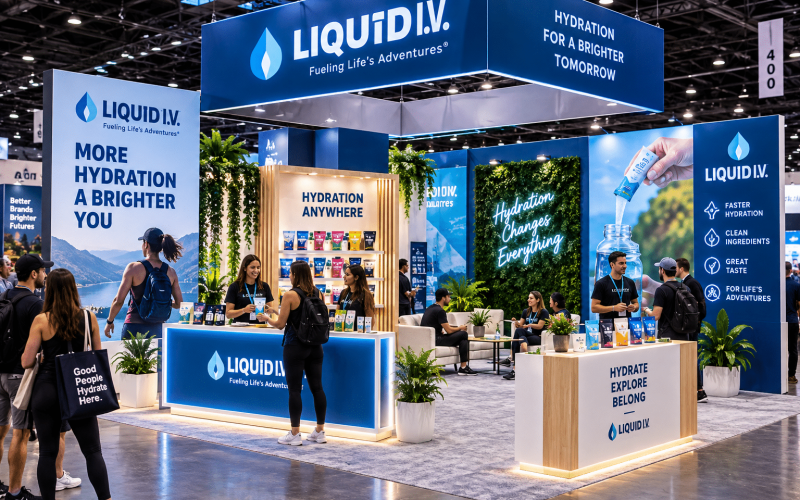
Some products need more explanation than a sample or a quick game can provide. A guided discovery booth creates a sequence: attract, introduce, demonstrate, and capture the next step. This can work especially well for automotive, technology, healthcare, home improvement, and B2B brands at trade shows.
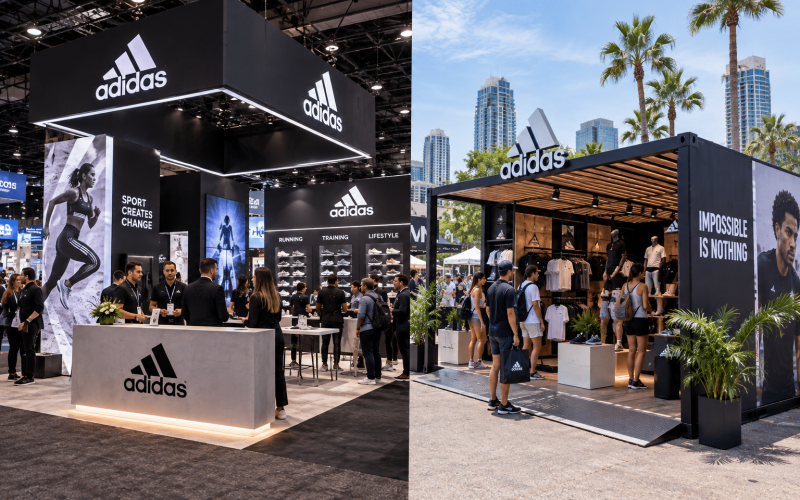
Physical components might include demo pedestals, illuminated product displays, touchscreen housings, branded consultation counters, and semi-private seating. The booth should make it obvious where guests begin and where they go next. Good space planning prevents a compelling demonstration from becoming hidden behind a crowd.
There is a trade-off between openness and depth. A fully open booth can bring in more traffic, while a more enclosed setting can support meaningful conversations and longer demonstrations. For qualified lead generation, fewer but better conversations may be the better result.
5. The social content studio
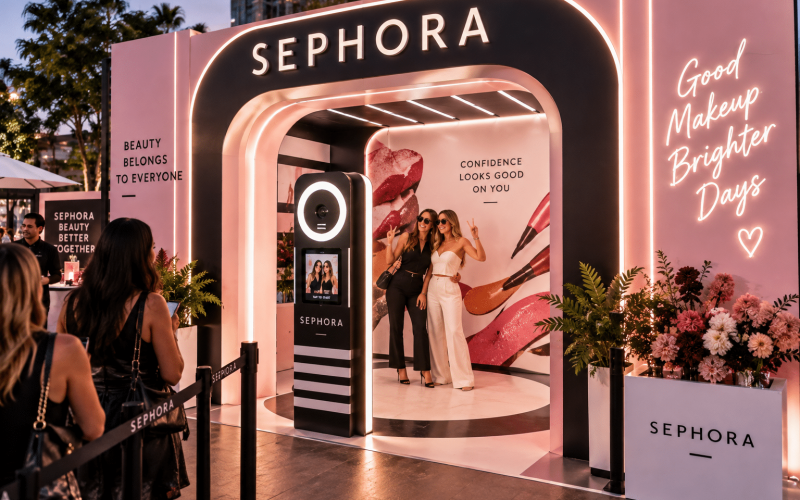
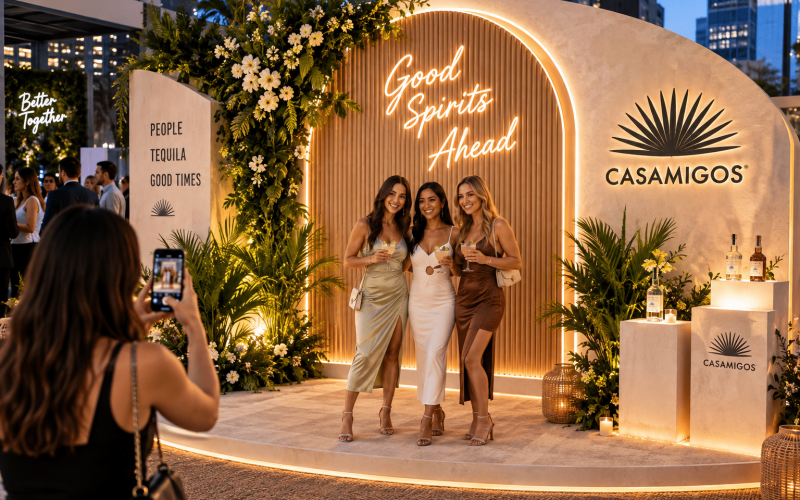
A photo wall is familiar. A content studio gives attendees a reason to create something more personal. It can include a styled set, product props, branded lighting, a camera moment, and a simple prompt that makes the content easy to share. The setting might recreate a hotel room, a locker room, a podcast set, a kitchen, or a surreal version of the product world.
The fabrication opportunity is in the details that make the set look intentional on camera: dimensional logos, custom walls, practical furniture, prop shelving, mirror treatments, and concealed cable management. A good studio reads clearly from the aisle and looks polished from multiple angles.
Plan for guest flow before selecting the backdrop. If the content takes several minutes to create, provide a defined queue and a clear exit so the audience does not spill into the main event aisle. If creator participation is central to the campaign, the set should also accommodate professional camera operators and lighting equipment.
6. The modular pop-up lounge
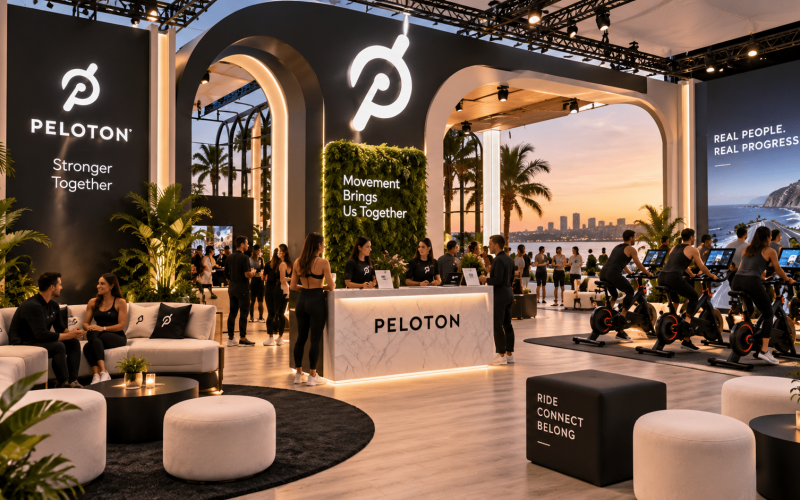
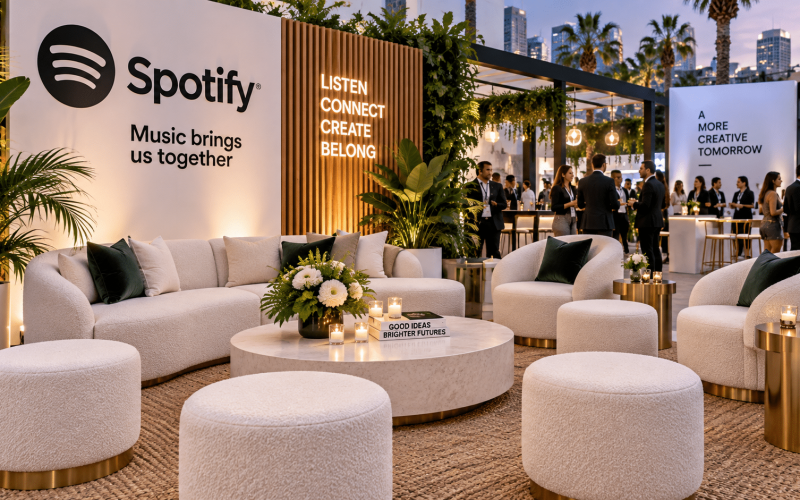
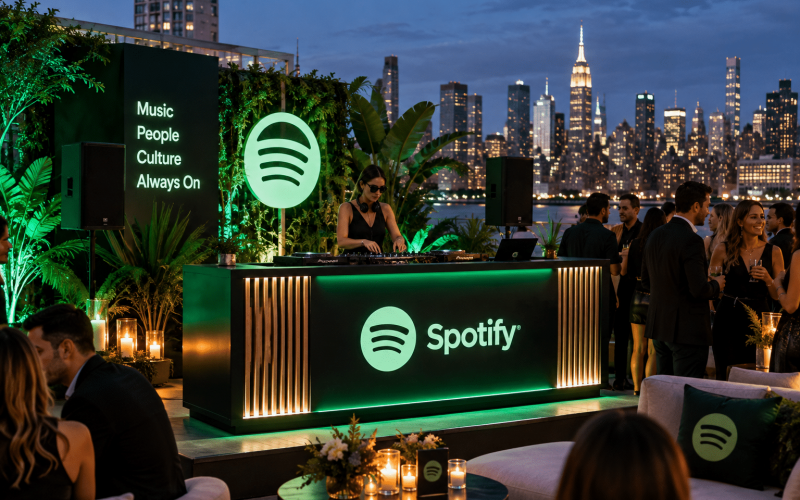
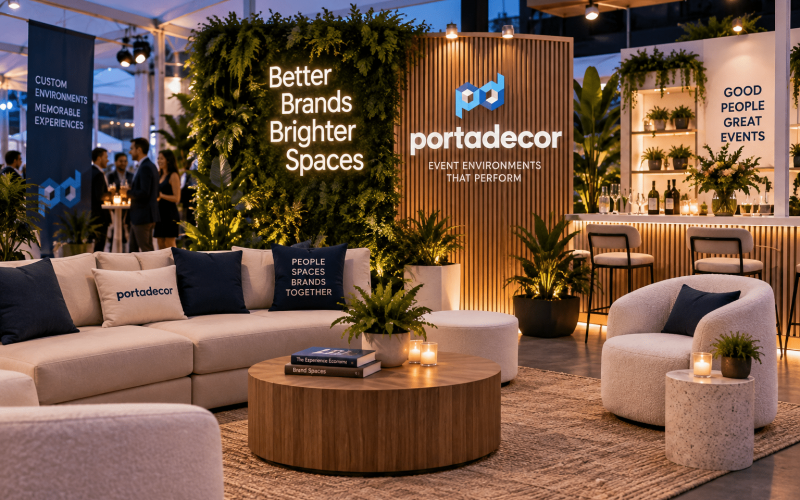
A branded lounge is useful when a campaign needs people to stay, recharge, or hold a conversation. Custom seating, tables, charging stations, shade structures, display units, and branded partitions can turn an empty footprint into an inviting destination. This is a practical fit for conferences, sporting events, VIP programs, and multi-day festivals.
The key is to avoid treating the lounge as passive furniture placement. Give it a reason to exist, such as product personalization, a short consultation, a refreshment service, or scheduled programming. The environment should support the campaign objective while still being genuinely comfortable.
Modular elements can make this format more efficient for programs with multiple stops. The same core assets can be reconfigured for different footprints, then refreshed with new graphics or product features. For recurring events in New York, New Jersey, Boston, and Connecticut, rental furniture can also reduce the amount of custom material that needs to travel with the program.
7. The personalization station
Personalization creates a takeaway that feels more valuable than a standard promotional item. Guests may customize a product with engraving, patches, color selections, embroidery, labels, or digital designs. The result connects the brand to an individual choice, which can improve recall after the event.
This concept depends heavily on production planning. Personalization equipment needs power, ventilation in some cases, work surfaces, storage, and a process for managing orders. A custom-built station can conceal equipment while keeping the operator efficient and the guest-facing experience clean.
Set expectations clearly. If customization takes ten minutes, attendees need to know whether they should wait, return later, or receive a digital fulfillment option. The best stations balance craftsmanship with a process that can handle event demand.
8. The mission-driven challenge
For campaigns tied to sustainability, community impact, health, or education, a mission-driven challenge can make a broad message tangible. Attendees might contribute to a collective installation, complete a series of small actions, or see a live visual representation of the campaign’s impact.
For example, a custom wall could fill with participant-selected commitments, with each action triggering a visual change. A recycling-focused activation might use a sorting challenge that demonstrates the difference between materials. The physical environment should communicate the message without requiring guests to read a long explanation.
This format needs authenticity. If the campaign makes a sustainability claim, materials, waste handling, and post-event asset plans should support that claim. Reusable structures, replaceable graphics, and durable event furniture help reduce the gap between the message and the execution.
What Makes an Activation Concept Buildable
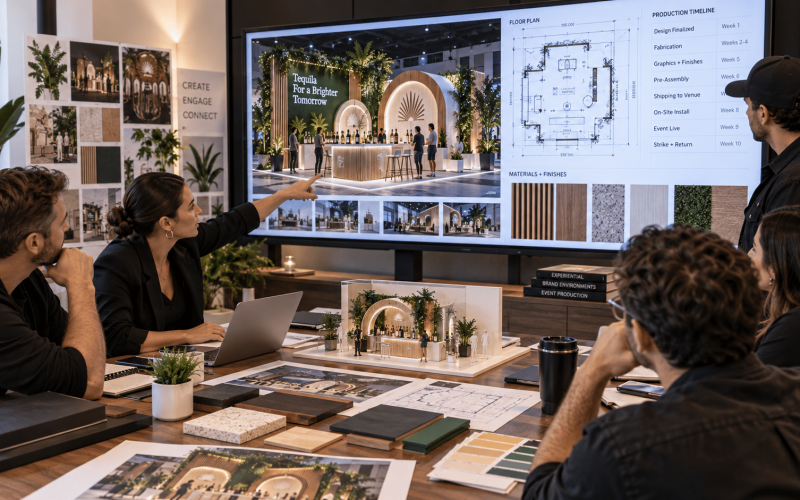
A strong concept becomes an effective activation when creative and production teams address the real conditions early. Start with the primary action you want attendees to take: sample, play, learn, create, consult, or share. Then design the footprint around that action, including queue space, staff positions, storage, power, accessibility, sightlines, and reset time.
Brand consistency also needs to extend beyond graphics. Material selection, furniture style, lighting, product presentation, and interaction design all affect how the experience is perceived. A luxury brand may need refined finishes and controlled guest flow. A youth-focused festival program may prioritize bold color, fast participation, and durable components that can handle continuous use.
Portadecor approaches these projects as event-ready fabrication, not just display production. That means building custom assets around how they will be transported, installed, staffed, and experienced on site. The earlier those requirements are considered, the more likely the final activation will deliver the impact shown in the original concept.
The most useful idea is not always the biggest one. Choose the activation that gives your audience a clear reason to engage, then build every physical detail around making that moment easy, credible, and memorable.