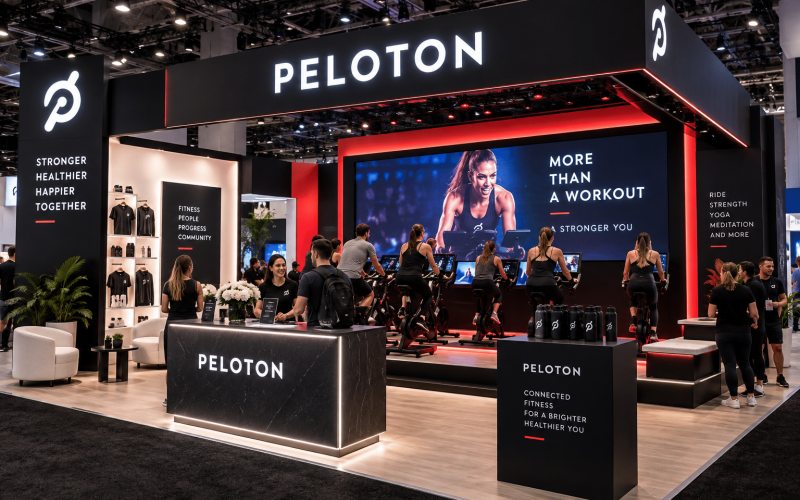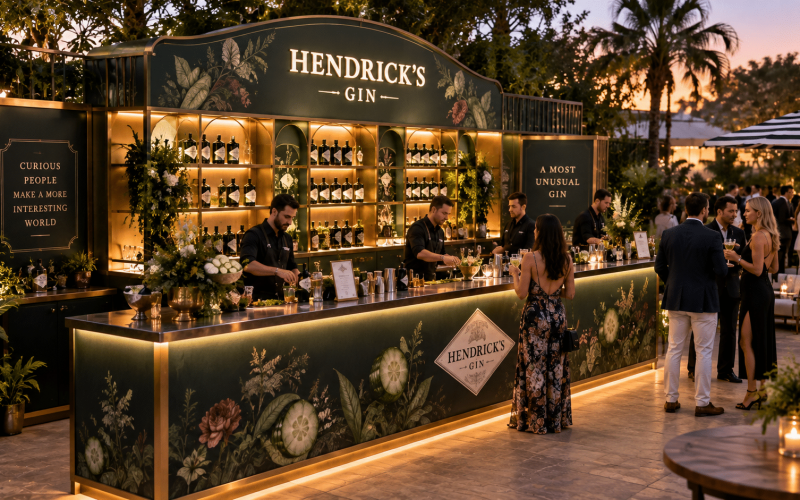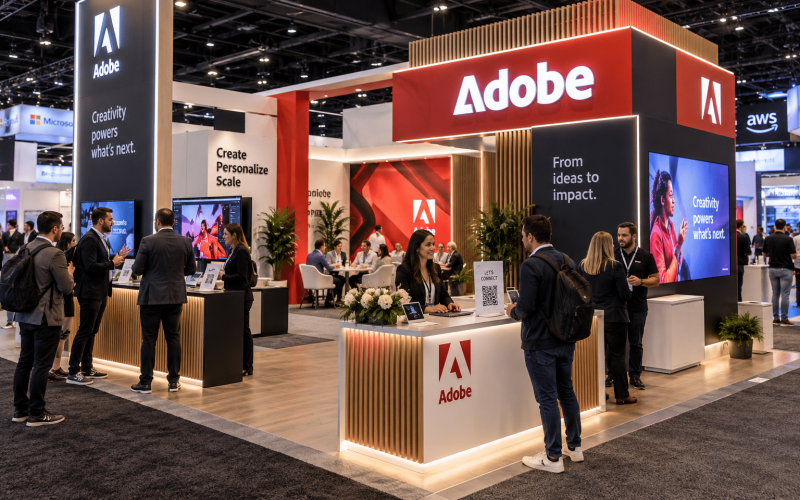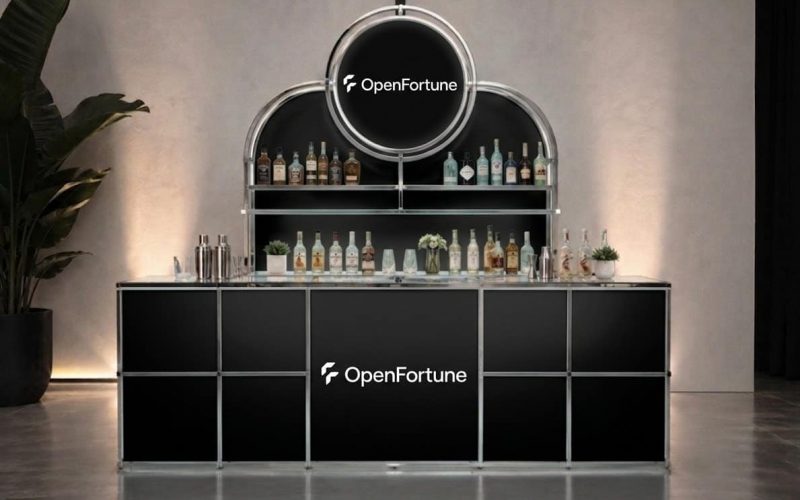
A crowded show floor can make a good concept disappear in seconds. At live events, attendees do not experience a brand as a logo on a wall or a slide in a deck. They experience it through the space they enter, the objects they touch, the line they choose to join, and the story they can repeat afterward.
For brand marketers, agencies, and event producers, that changes the standard for execution. The goal is not simply to make an activation look finished. It is to build an environment that earns attention, supports participation, and performs reliably under real event conditions.
What Live Events Need to Deliver Brand Impact
The strongest event environments connect creative intent to attendee behavior. A bold visual can stop someone walking by, but visual impact alone rarely creates a meaningful interaction. The physical experience needs to answer a practical question: what should a person do next?
That answer may be sampling a product, competing in a game, speaking with a brand representative, creating content, or stepping into a product demonstration. Each action needs a dedicated physical setting. Counters need the right working height. Game elements need clear sightlines. Seating needs to create an invitation to stay without blocking traffic. Branded structures need to be noticeable from a distance and useful once attendees arrive.
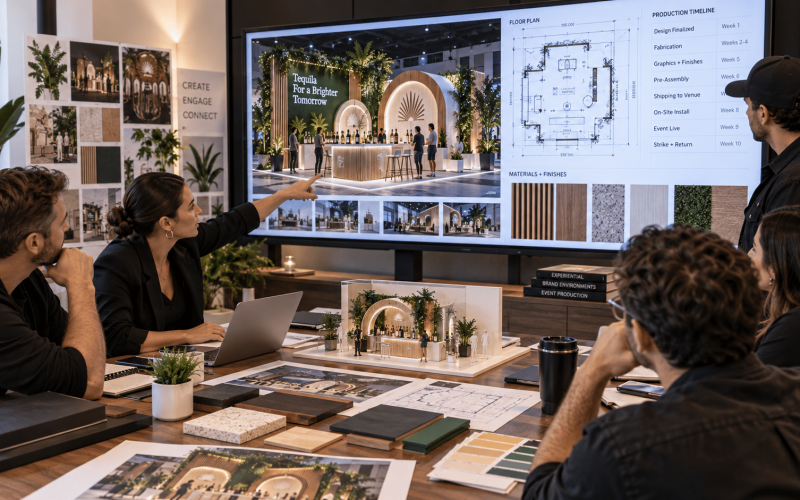
This is why fabrication should be involved before a design is treated as final. A concept may look compelling in a rendering but create problems when translated into materials, dimensions, shipping requirements, venue rules, and staffing needs. Early production input protects the idea while identifying smarter ways to build it.
Start With the Attendee Journey
A live environment should be planned as a sequence, not a collection of attractive pieces. Consider the attendee’s path from the aisle to the exit. Where do they first see the activation? What tells them they are welcome? What keeps them engaged long enough to understand the message? Where do they go after the main interaction?
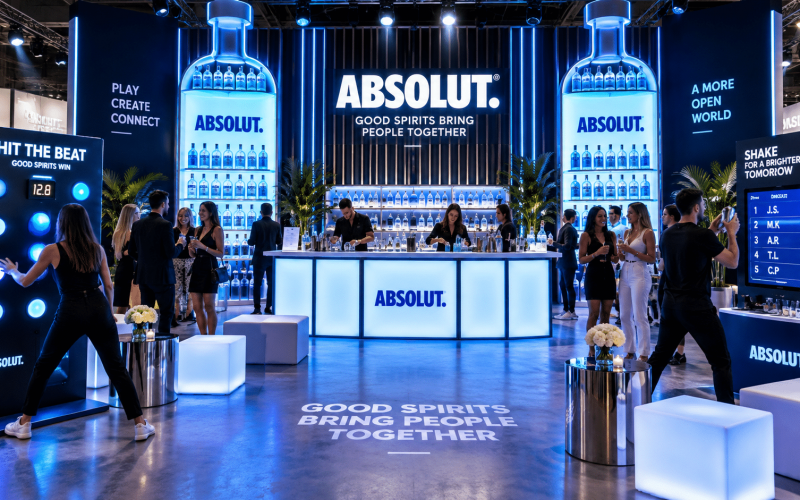
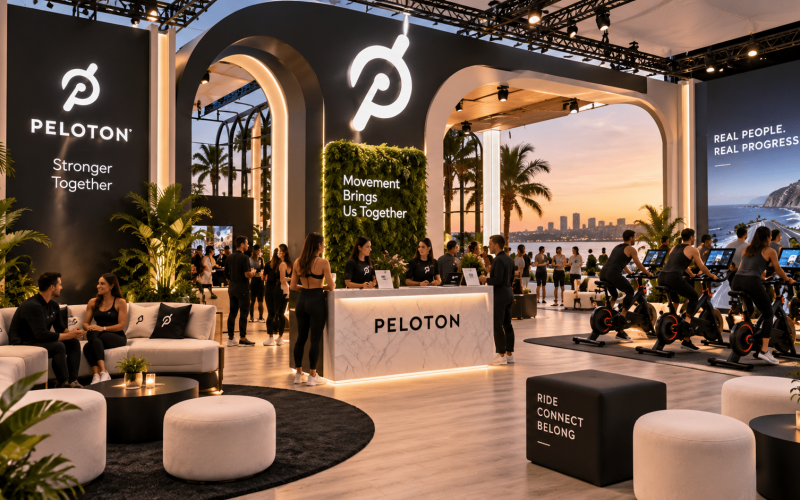
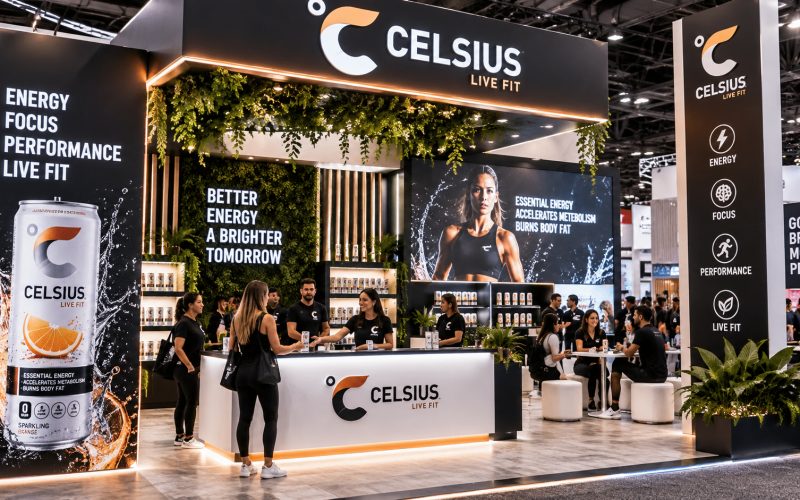
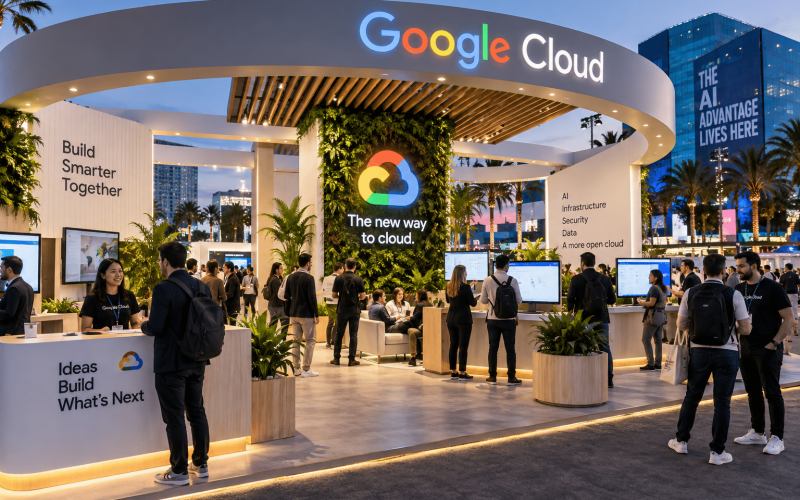
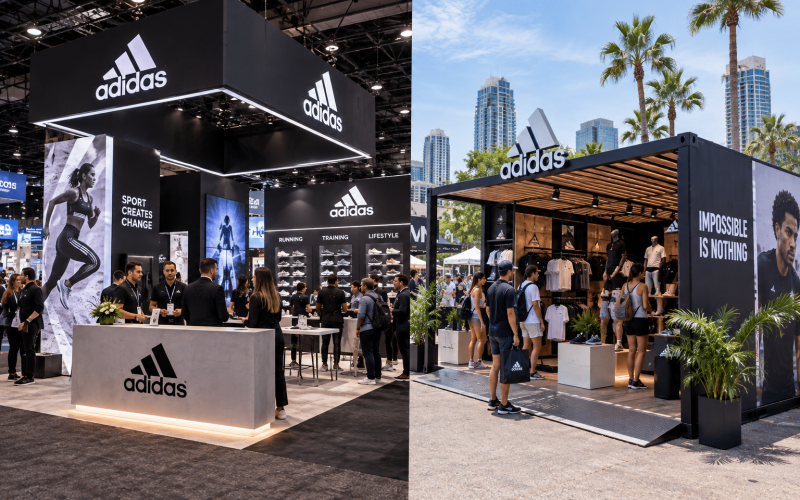
The entry point needs to work quickly. On a busy trade show floor, people often decide whether to approach in a few seconds. A tall branded structure, illuminated feature, clear product display, or visible activity can create that first signal. The best choice depends on the venue, audience, and surrounding competition. A premium product launch may need a controlled, gallery-like entry. A consumer festival may benefit from energy, movement, and an interaction that is easy to understand at a glance.
Once a visitor enters, the layout should reduce uncertainty. Avoid placing the key action behind a confusing queue or hiding staff behind oversized scenic elements. If a guest has to ask where to stand or what to do, the design is asking too much of them. Good spatial planning makes participation feel obvious without feeling over-directed.
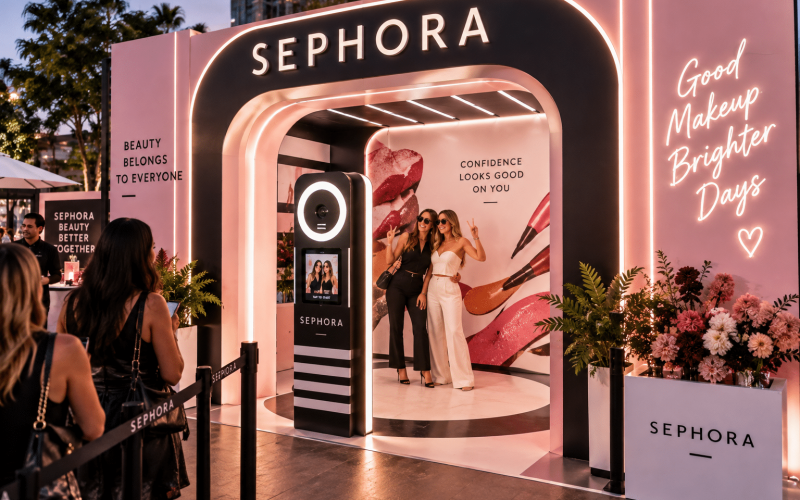
The exit is equally valuable. It is the moment to support a shareable photo, a take-home item, a product handoff, or a concise next step. Not every experience needs a giveaway, but every experience should leave attendees with a clear impression of what the brand offered them.
Build the Physical System Around the Idea
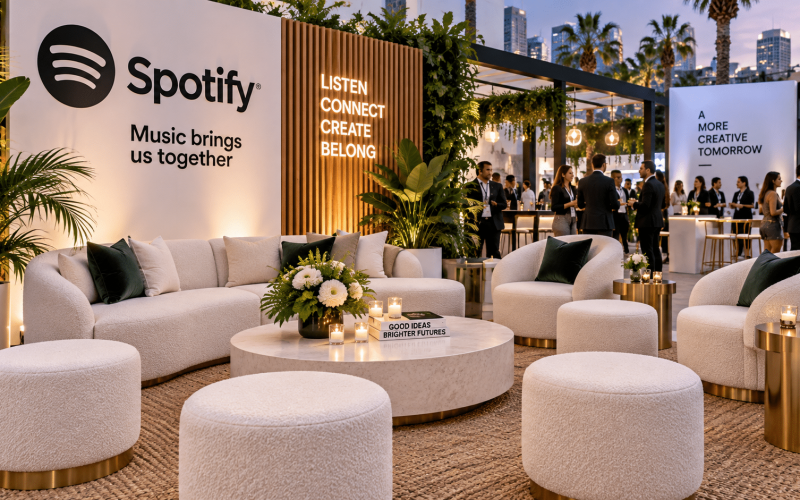
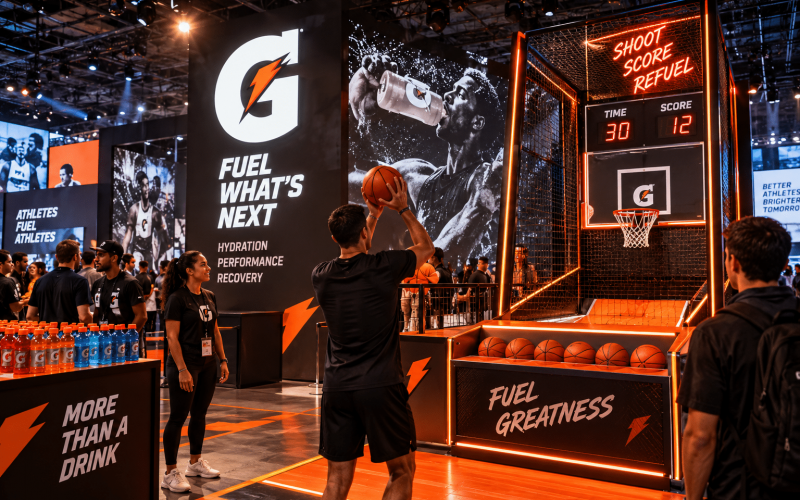
Custom fabrication is most effective when it supports a central idea rather than decorating around one. If the activation is built around product discovery, the structure should make product handling and education easy. If competition is the hook, the game, scoreboard, prize display, and spectator area should all reinforce that energy. If the objective is premium hospitality, furniture, finishes, lighting, and service surfaces must carry the same level of intention.
Material selection matters here. High-gloss finishes, polished metal, acrylic, dimensional lettering, printed graphics, wood textures, and soft goods all communicate different things. The right combination depends on brand guidelines, expected use, transportation, and the event schedule. A visually delicate material may not be the best fit for a multi-city tour with frequent setup and teardown. Conversely, an asset built only for durability can feel generic if the finish work does not reflect the brand.
The practical solution is usually not choosing between appearance and performance. It is designing for both. Fabricated assets can be engineered in modular sections, finished for a polished on-site presence, and built for repeatable installation. This approach also makes it easier to refresh graphics, replace individual components, or adapt the footprint for future events.
Custom assets versus rental components
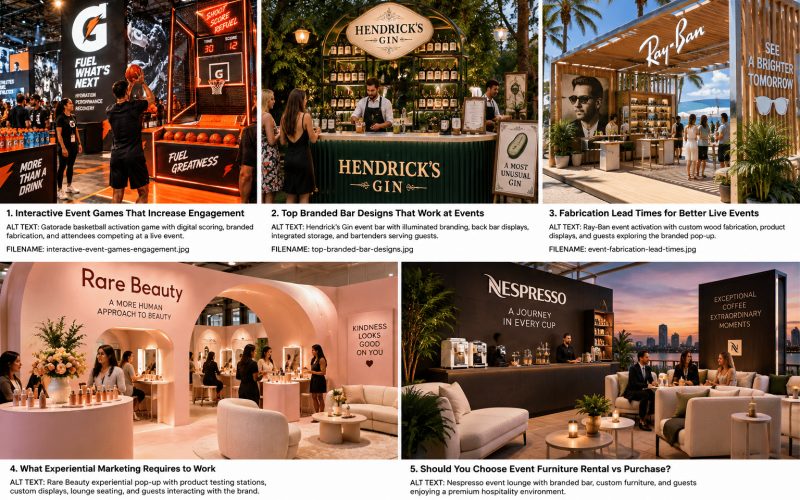
Not every element requires a custom build. Rental furniture, counters, shelving, lounge pieces, and support equipment can provide speed and flexibility, particularly for regional programs, trade shows, or short lead times. They are often the efficient choice for functional elements that do not need to become the hero of the experience.
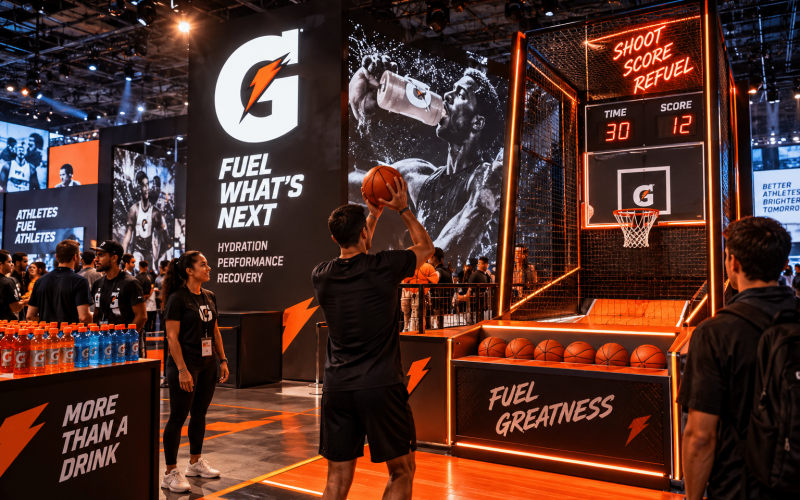
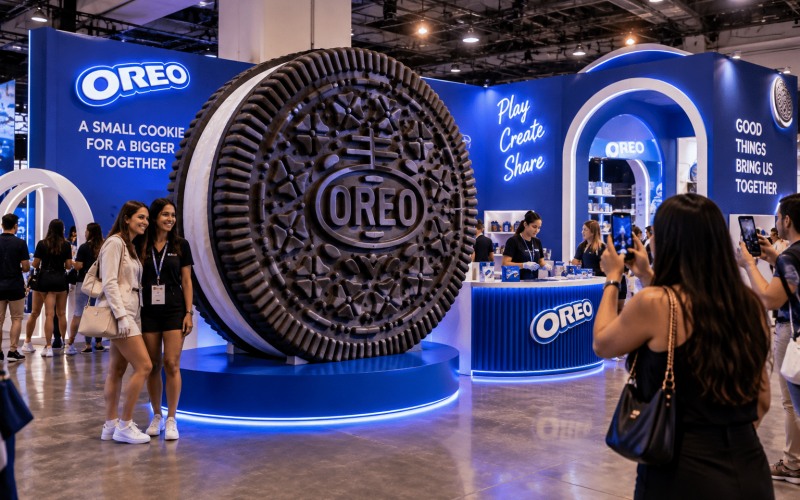
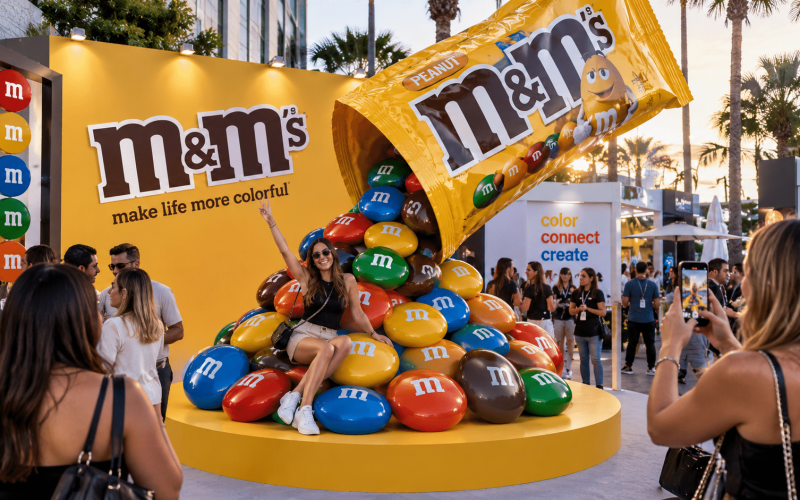
Custom products are the better investment when the physical object is central to the campaign or must communicate something no off-the-shelf item can. That may include a branded game, oversized product replica, immersive display wall, dimensional logo feature, sampling station, or trade show booth with a highly specific layout.
The most effective programs often combine both. A custom centerpiece creates distinction, while rental furnishings complete the environment without tying budget to assets that offer little long-term value. The decision should be based on campaign lifespan, reuse potential, creative importance, and event logistics, not on a blanket preference for one approach.
Design for Operations, Not Just the Render
Event producers know the gap between a successful render and a successful show day. Freight windows can be tight. Loading docks can be limited. Union requirements, fire codes, ceiling heights, power access, floor conditions, and venue-approved materials can influence the build. A fabrication partner should account for these conditions while the project is being developed, not after production is underway.
Staffing is another design input that is frequently underestimated. A product demonstration counter needs storage, cable management, and enough working room for representatives. A photo moment needs a reset plan if a prop gets moved or a line forms. An interactive game needs durable controls, accessible instructions, and a clear process for managing winners. These details determine whether the activation feels controlled or chaotic.
For touring activations, consistency adds another layer of complexity. Assets need to pack efficiently, survive transit, and install in a predictable sequence. Modular fabrication can reduce on-site labor and create flexibility across venues, but only when the parts are clearly labeled, manageable to handle, and designed around realistic setup time. There is always a trade-off: more modularity can improve transport and adaptation, while larger preassembled pieces can deliver a cleaner finish and faster deployment in the right setting.
Measure the Interaction You Actually Built
A packed footprint is not automatically a successful one. Attendance can be useful, but it should be read alongside the quality of engagement. Did visitors complete the intended activity? Did they spend enough time with the product or message? Did the environment allow staff to have productive conversations? Did the experience generate content, leads, samples, or return visits that align with the campaign goal?
The physical build influences every one of those outcomes. A well-positioned display can increase product handling. Comfortable seating can lengthen conversations. A clear queue can prevent walkaways. A memorable game can give attendees a reason to invite friends over. These are not decorative considerations. They are performance decisions.
Before production begins, define the one or two behaviors that matter most. Then review the environment through that lens. If lead capture is the priority, the check-in and follow-up point need to be integrated naturally into the experience. If social content is the priority, the camera angle, lighting, brand visibility, and traffic flow need to support it. If product trial is the priority, the demonstration area must be intuitive, clean, and easy to restock.
Bring Production Into the Conversation Early
The best live event work is collaborative from the start. Creative teams establish the idea and visual direction. Producers define the event realities. Fabricators translate both into structures, custom products, and environments that can be built, moved, installed, and used as intended.
Bringing that expertise in early does not limit creativity. It gives the idea a stronger path to the show floor, where audiences will judge it by what they can see, touch, and remember. When the physical experience is planned with the same care as the campaign itself, every branded detail has a job to do.