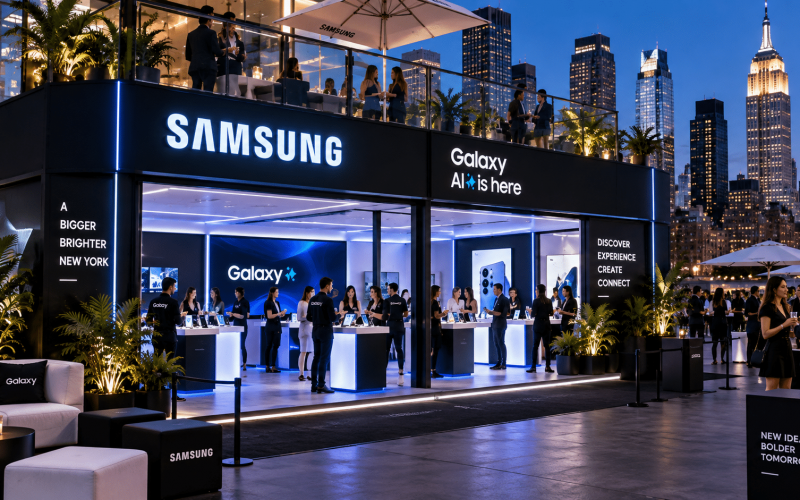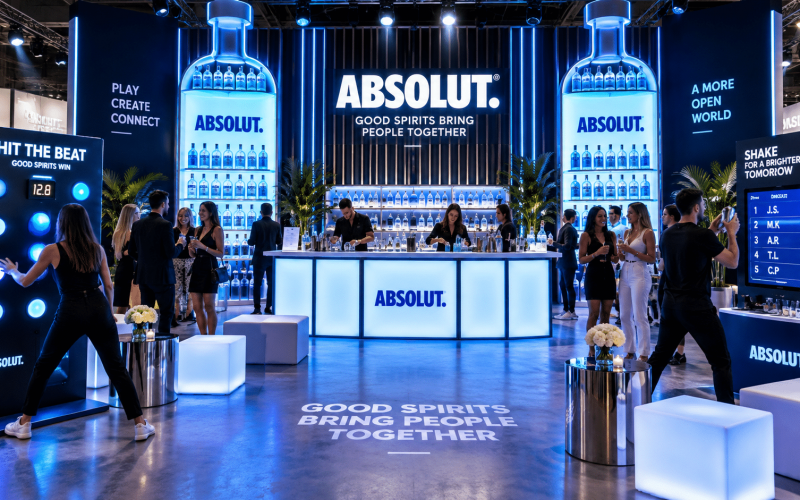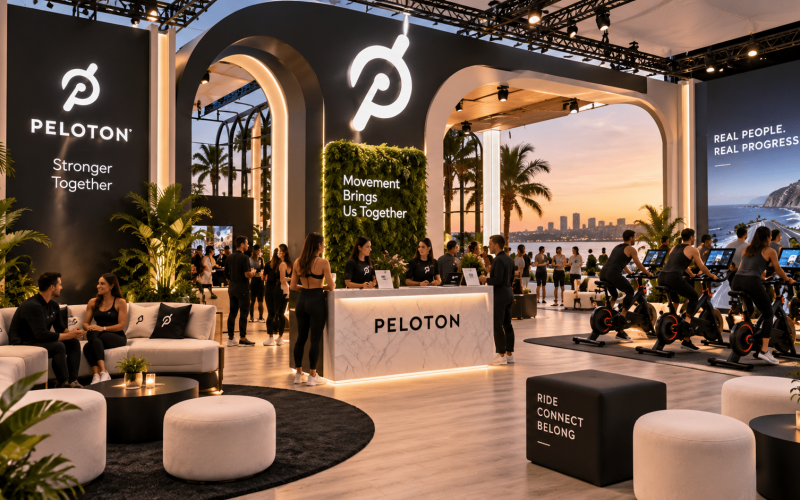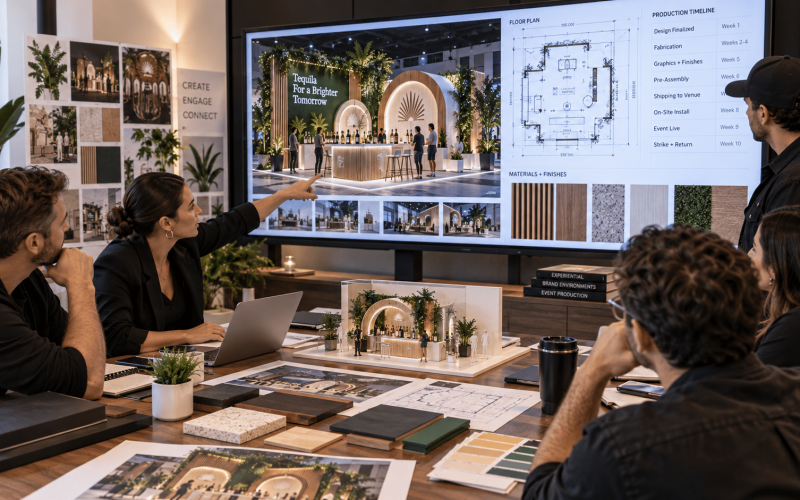
The strongest brand activation design trends are not driven by novelty alone. They solve the real pressure facing event teams: make an immediate visual impact, give attendees a reason to participate, keep the experience on-brand, and build it within a schedule and budget that can withstand live-event reality. The best activations are designed as working environments, not just attractive renderings.
For brand marketers and agencies, that shifts the conversation from “What will photograph well?” to “What will hold attention, operate reliably, and create a useful brand moment?” The trends below reflect where experiential design is moving and what fabrication decisions help turn those ideas into viable event assets.
Brand Activation Design Trends Built for Real Events
1. Modular systems with a custom face
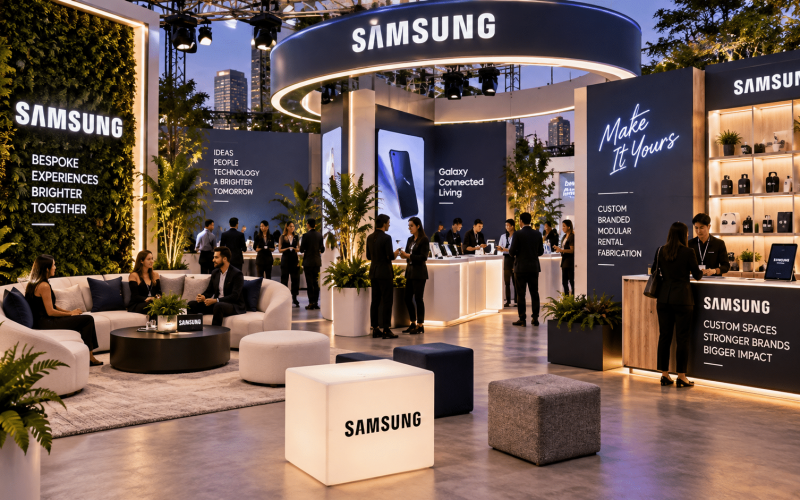
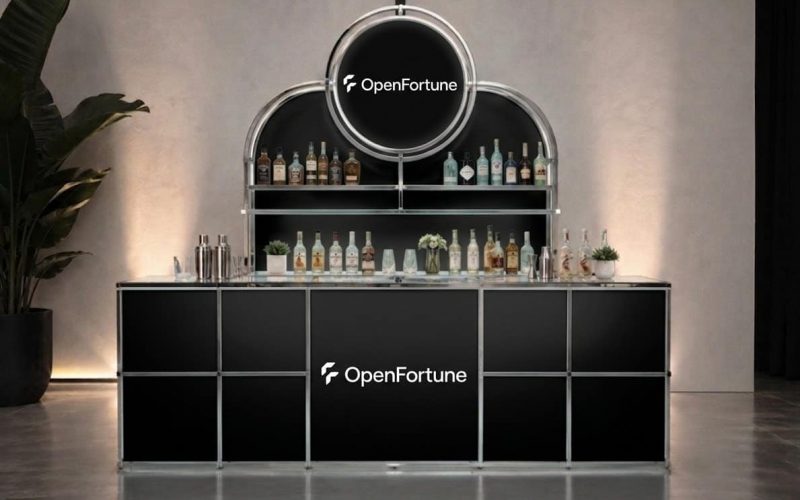
Custom does not have to mean single-use. One of the most practical directions in activation design is the use of modular structures that can be reconfigured for different footprints, venues, and campaign phases while retaining a distinct branded look.
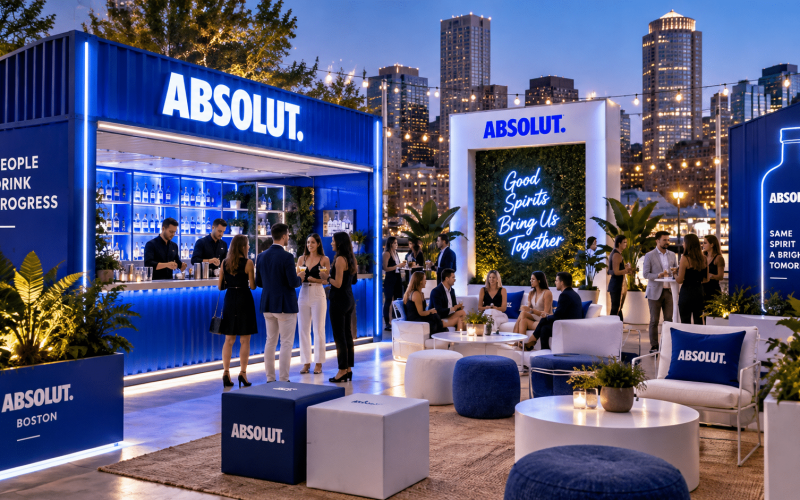
A well-planned system might use repeatable wall frames, counters, shelving, seating, and storage components beneath custom graphic skins, dimensional logos, lighting features, or sculptural focal points. This approach reduces rebuild time and makes it easier to scale an activation from a retail pop-up to a trade show booth or multi-city tour.
The trade-off is that modularity needs to be considered early. A system built only around one event layout can become restrictive. The fabrication plan should account for likely footprint changes, venue access limits, shipping requirements, and the number of campaign uses expected from each asset. Custom components should be reserved for the areas where they create the greatest audience impact.
2. Tactile design over flat visual statements
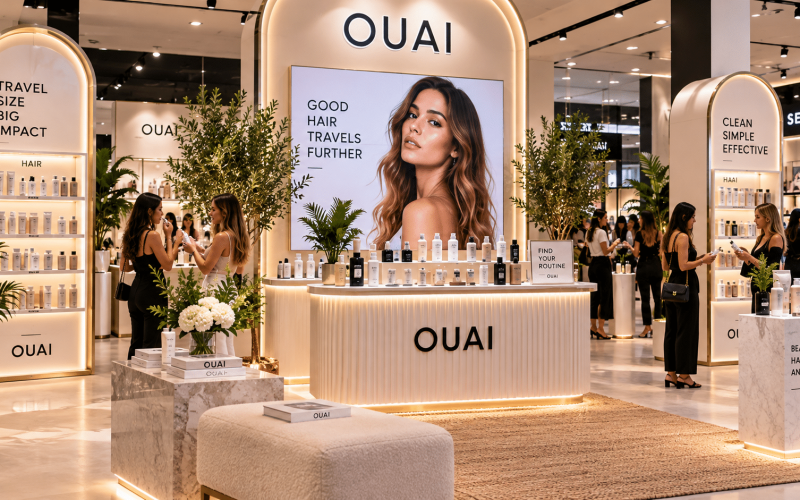
Digital media has made audiences quick to scroll past polished graphics. Physical activations have an advantage when they give people something they can touch, test, open, sit in, assemble, or personalize. Texture, dimensionality, material contrast, and hands-on product interaction are becoming more important than large-format graphics alone.
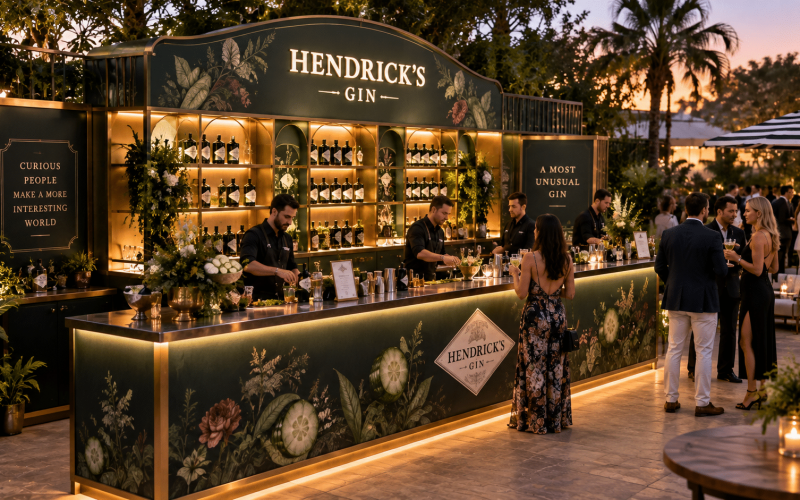
That does not mean every activation needs a complicated mechanical feature. A textured product display, an oversized material sample, a custom scent bar, or a seating vignette that reflects a brand’s point of view can create a stronger memory than another photo wall. The physical cue has to fit the product and the audience.
Fabrication quality matters here because attendees notice the difference between an object that feels intentional and one that feels temporary. Finished edges, stable surfaces, durable coatings, integrated storage, and carefully placed lighting all affect whether the environment supports a premium brand impression.
3. Participation designed around a clear payoff
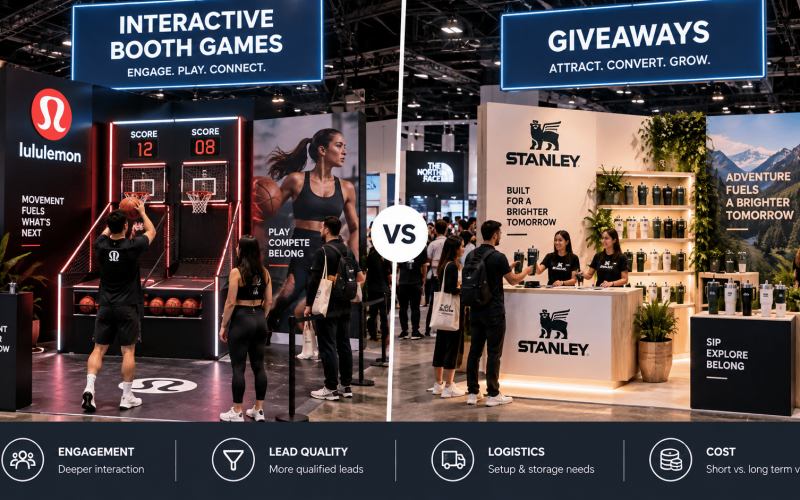
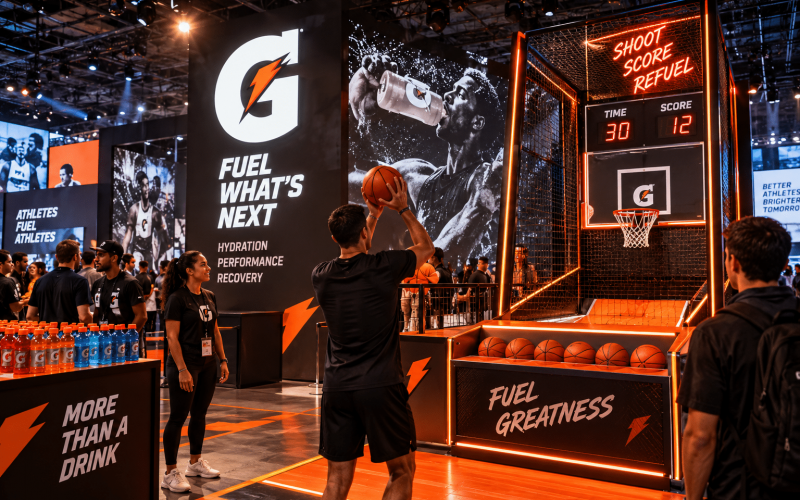
Interactive games and challenges remain effective, but the standard is higher than a prize wheel placed beside a branded backdrop. Participants need to understand the activity in seconds and receive a clear payoff: a product sample, useful information, a personalized result, a social asset, or a chance to compete.
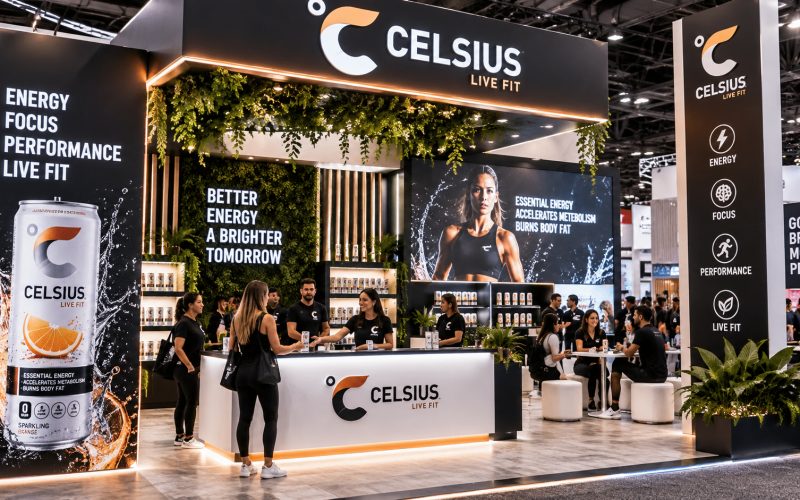
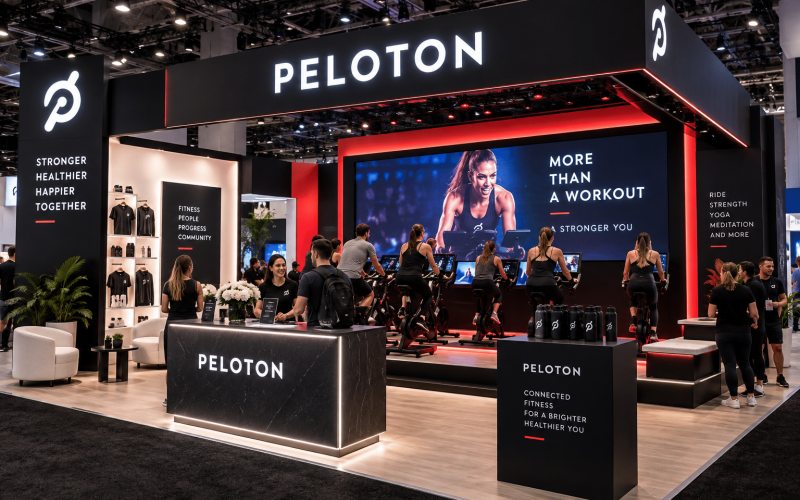
The current trend is toward interactions that connect directly to the brand rather than treating engagement as a separate entertainment feature. A fitness brand may use a timed movement challenge. A food or beverage brand may create a guided flavor selection. A technology company may build a hands-on demonstration that reveals a product benefit through play.
Design the participant journey before finalizing the structure. Consider where the line begins, what bystanders can see, how staff reset the experience, and where winners or participants exit. A game that is exciting for one person but blocks traffic or requires constant troubleshooting will create operational problems fast. Custom game elements should be durable, intuitive, and easy for event staff to manage throughout a long day.
4. Content-friendly spaces that do more than look good on camera
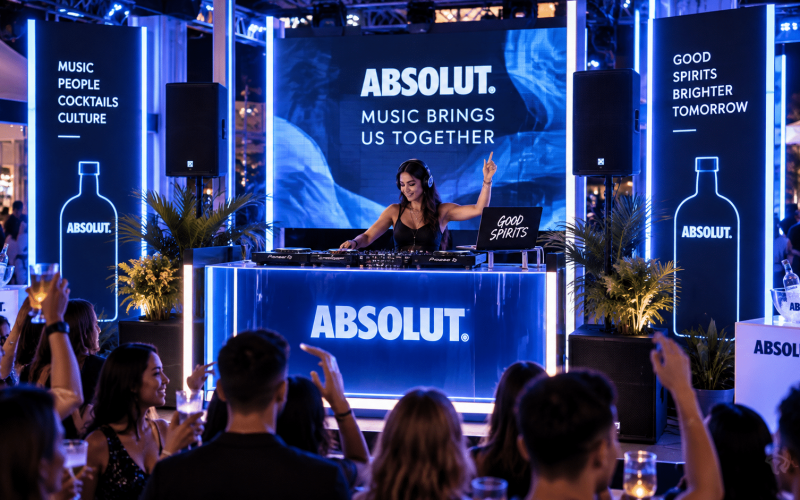
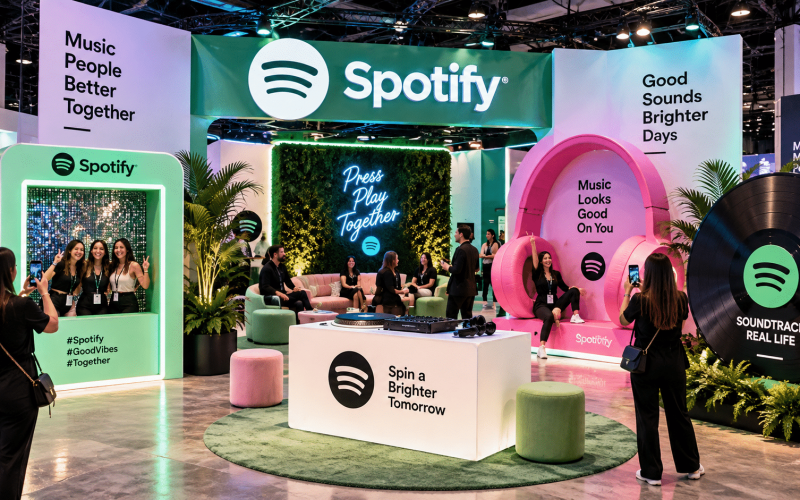
Photo moments are still part of most activation plans, but the strongest versions are designed for both attendee content and in-person visibility. They have depth, a readable brand element, good lighting, and enough physical scale to register in a busy event environment.
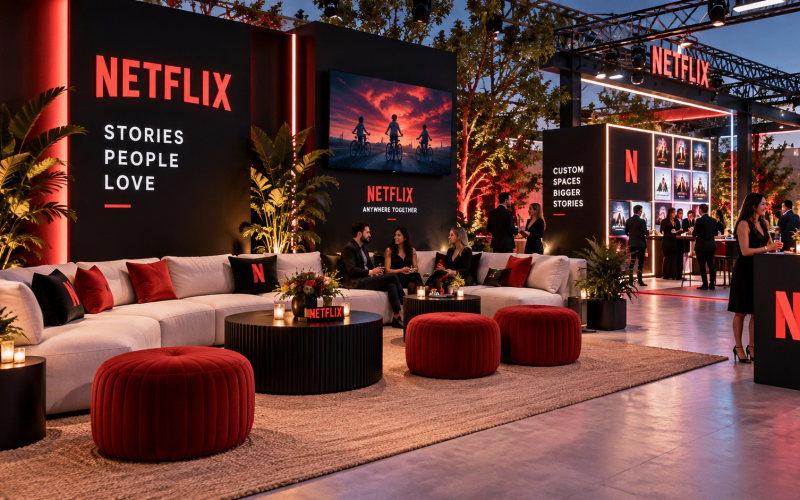
The common mistake is building a backdrop that works only from one exact angle. A better approach is to create a photogenic zone that also acts as a visual anchor from across the room. Dimensional letters, layered scenic elements, custom furniture, reflective finishes, and controlled lighting can give a space presence without making it difficult to navigate.
It depends on the campaign objective. If organic social sharing is the priority, the design should clearly frame the guest and make the desired image easy to capture. If brand visibility on a trade show floor is the priority, elevated signage, lighting, and a recognizable silhouette may matter more than a single camera-facing moment. One environment can serve both goals, but only if circulation and sightlines are planned from the start.
5. Utility integrated into the brand environment
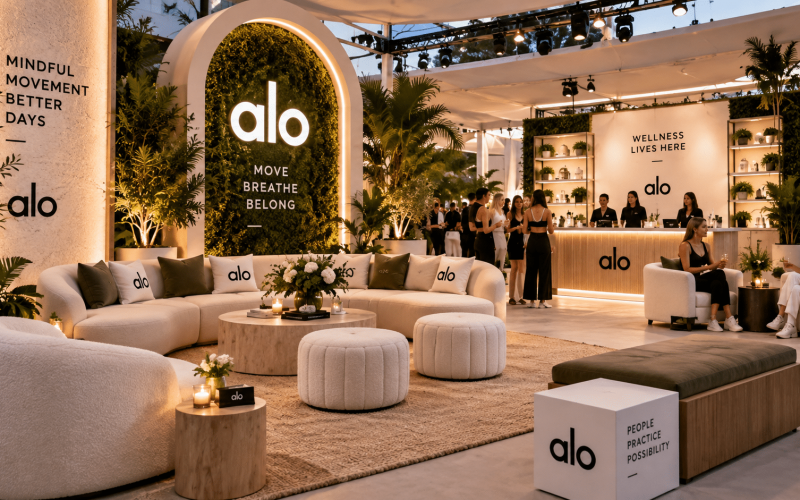
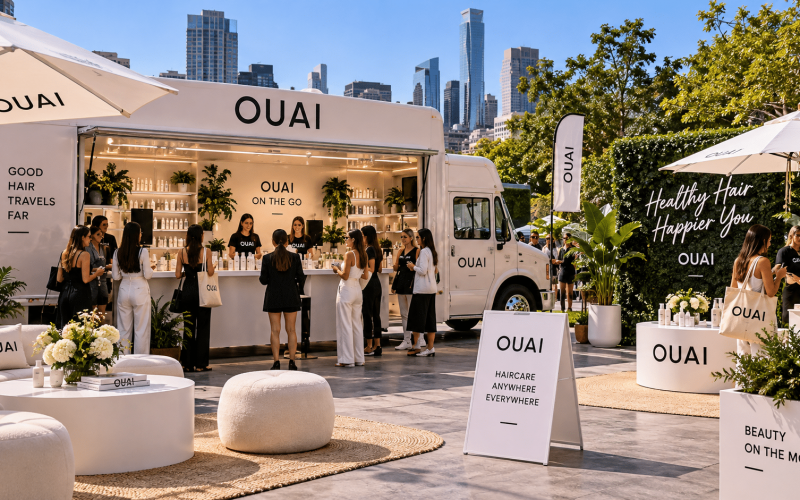
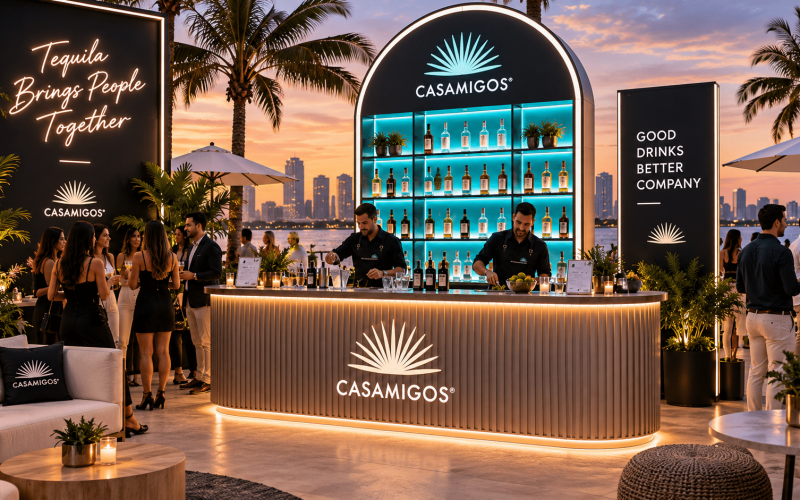
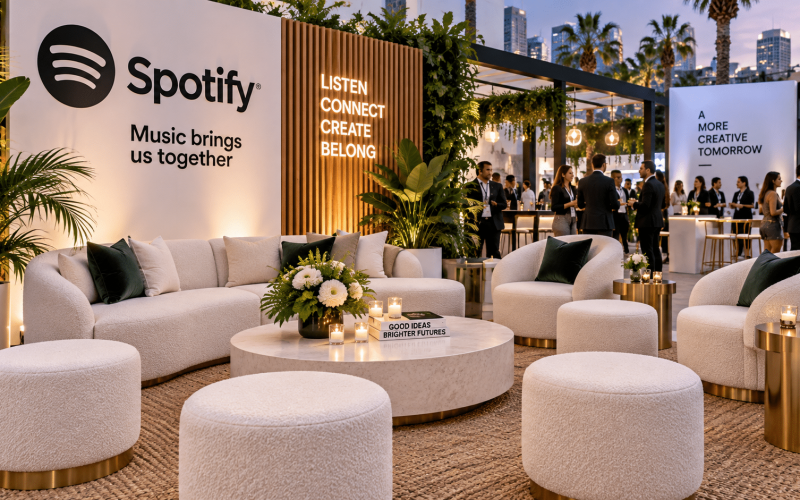
Attendees spend more time in spaces that give them a practical reason to stay. Charging stations, lounge seating, bag storage, water service, work surfaces, and shaded areas can all become part of the brand experience when they are designed with the same care as the hero display.
This is especially relevant at conferences, festivals, and trade shows, where people are managing long days, crowded aisles, and limited downtime. A custom charging bar or comfortable branded lounge can generate meaningful dwell time without demanding that every visitor complete a high-energy interaction.
Utility does not need to dilute the creative concept. It can reinforce it. A travel brand can build a well-appointed rest stop. A wellness brand can create a recovery lounge. A consumer electronics company can use charging as a natural product demonstration point. The key is to keep cables, power distribution, cleaning needs, and accessibility requirements within the fabrication and floor-plan discussion rather than treating them as last-minute additions.
6. Data capture with a lower-friction entry point
Lead capture remains a priority, particularly for B2B exhibits and product launches. However, attendees are more selective about what they will provide in exchange for a small giveaway. The design trend is moving toward a more transparent value exchange: participate, receive something useful or personal, then opt into continued contact.
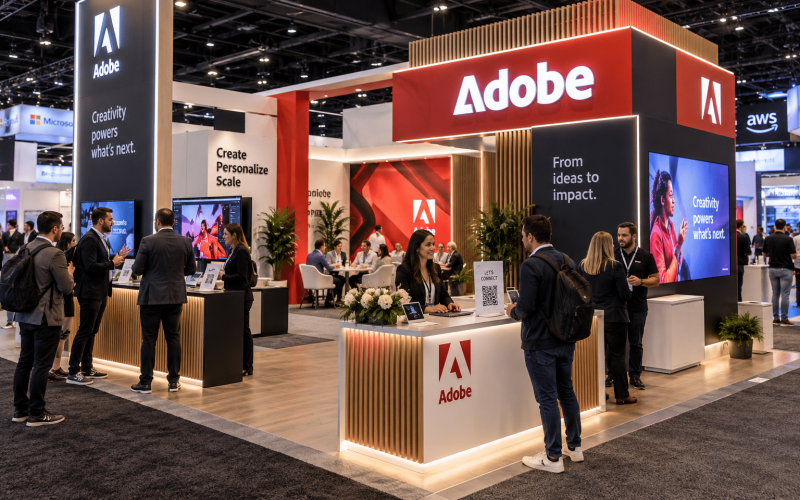
A custom activation can support this by creating distinct zones for attraction, participation, fulfillment, and lead capture. Rather than stopping every passerby with a form, staff can invite engaged visitors into the next step after they have experienced the product or activity.
Physical design affects data quality. If the registration station is positioned at the entrance, it may slow the line and discourage casual visitors. If it is completely separated from the experience, staff may lose the connection between the interaction and the follow-up. The right placement depends on expected traffic, staffing levels, privacy needs, and how much information the campaign actually requires.
7. Reusable materials and smarter asset planning
Sustainability is becoming less about broad claims and more about practical asset decisions. Brands and agencies are asking whether walls can be re-skinned instead of rebuilt, whether furniture can return to inventory, whether crates can serve as storage, and whether materials will survive multiple deployments.
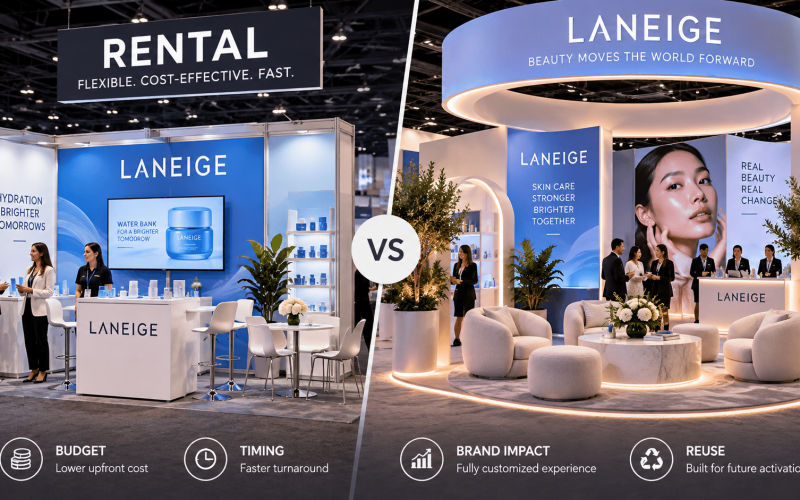
Reusable does not always mean lower cost on the first event. Custom fabricated assets can require a higher upfront investment than disposable scenic elements. But for campaigns with multiple stops, recurring trade shows, or evolving retail programs, a durable core structure can reduce waste and improve consistency over time.
The best path is often a hybrid one: retain high-quality, reusable structural pieces and replace the campaign-specific elements that need to change. Custom furniture, counters, frames, shelving, and game bases can have a longer service life, while graphics, product messaging, and smaller decorative layers can be updated for each market or launch.
Design for the Build, Not Just the Render
A successful concept considers fabrication constraints while the creative direction is still flexible. Materials, load-in paths, assembly time, venue regulations, freight dimensions, electrical needs, and storage all influence the final result. When these questions are delayed, teams are often forced to simplify the most visible elements or accept avoidable production costs.
A fabrication-first partner can help identify where a concept needs engineering, where rental components make sense, and where custom-built assets will have the greatest payoff. At Portadecor, that practical alignment between creative intent and physical execution is central to producing activation environments that work beyond the pitch deck.
The right trend is the one that gives your audience a reason to stop, participate, and remember the brand without creating unnecessary complexity for the event team. Start with the audience behavior you want to create, then build only what is needed to make that moment credible, durable, and unmistakably yours.