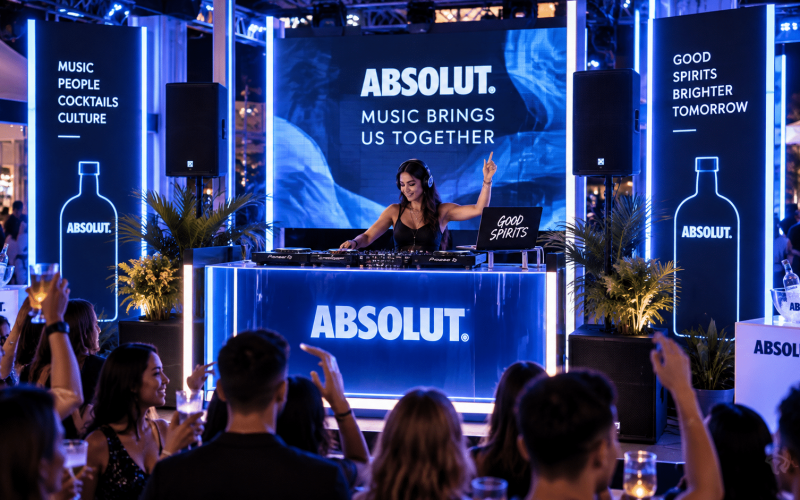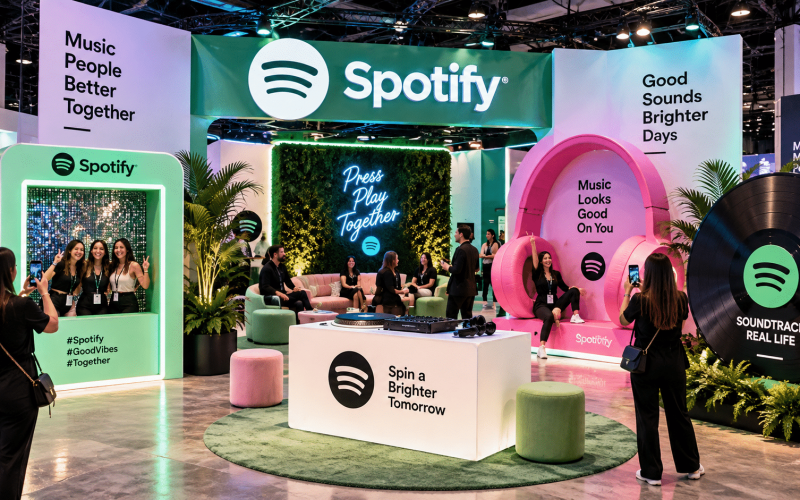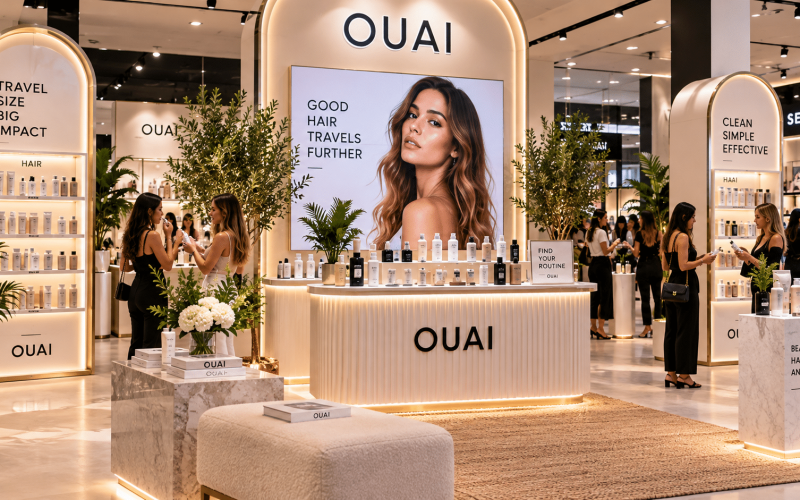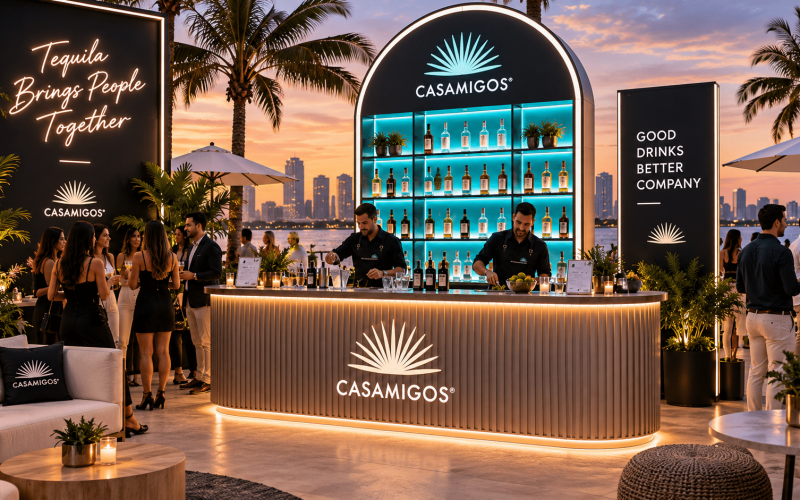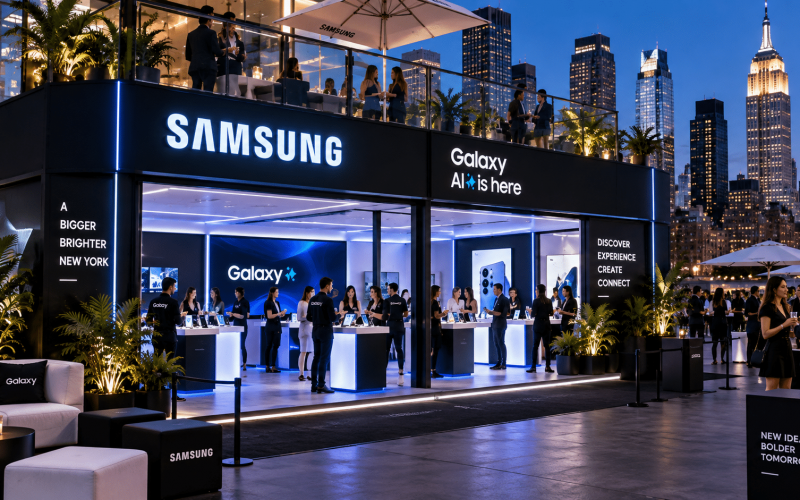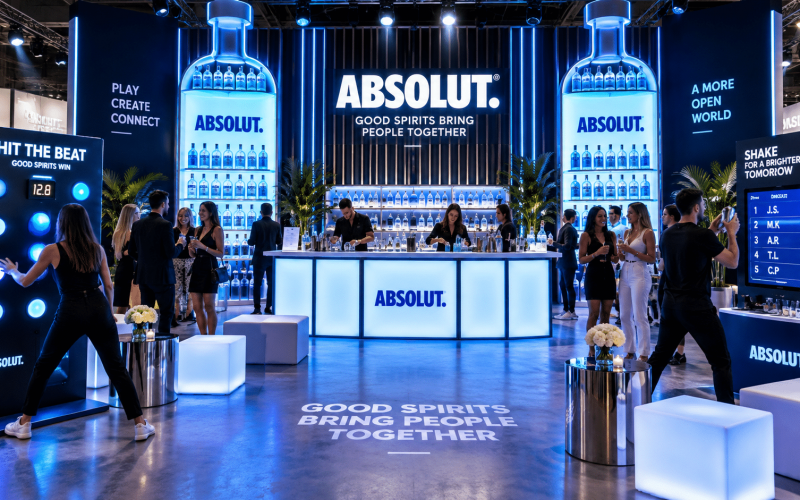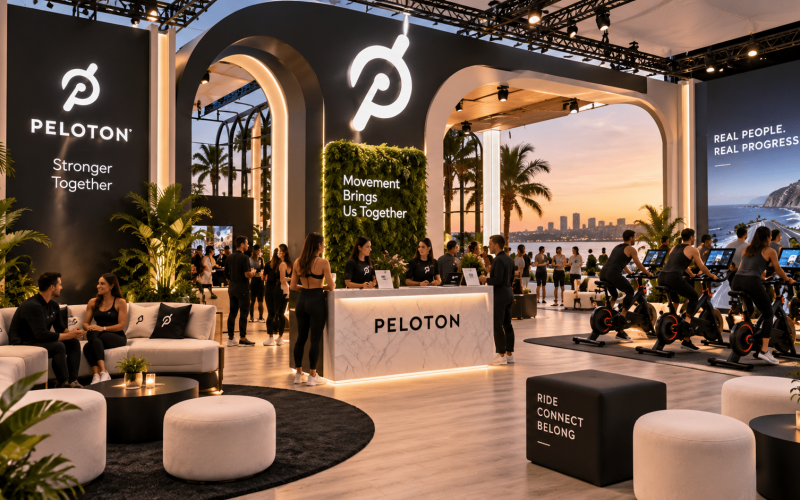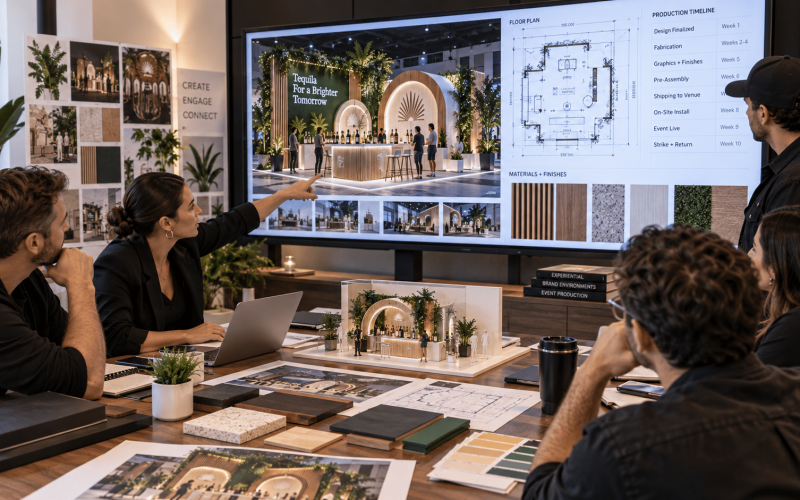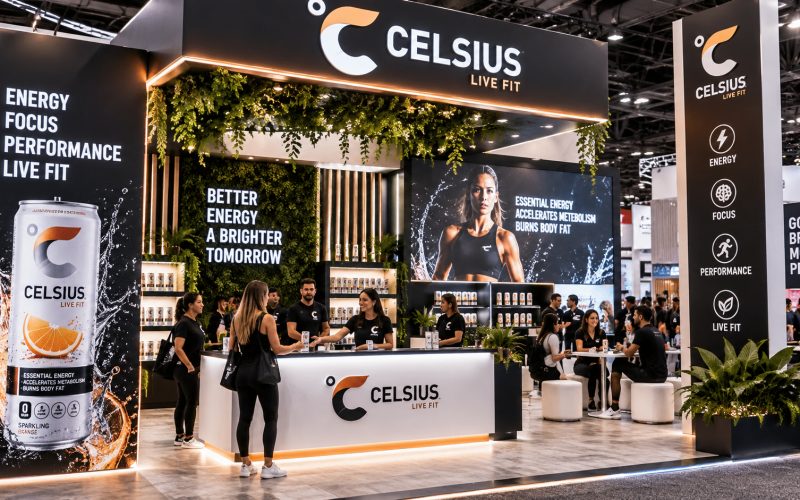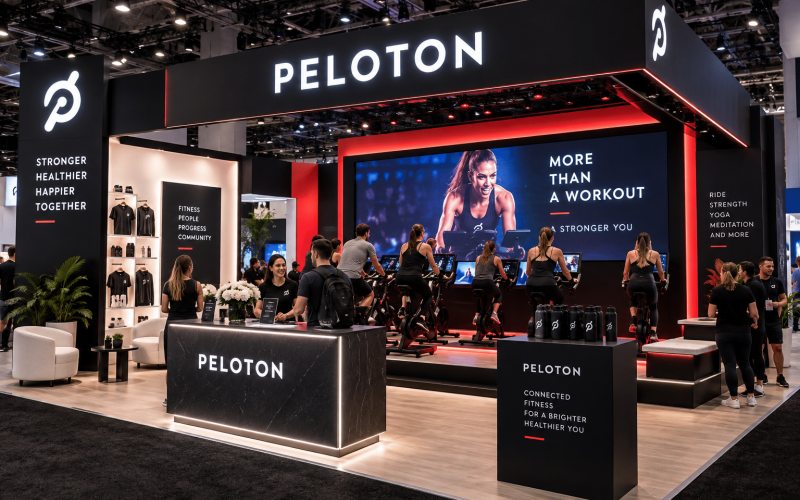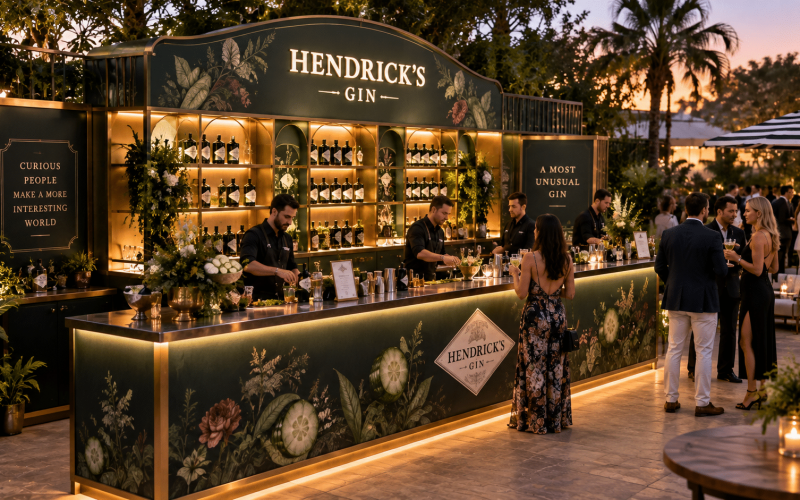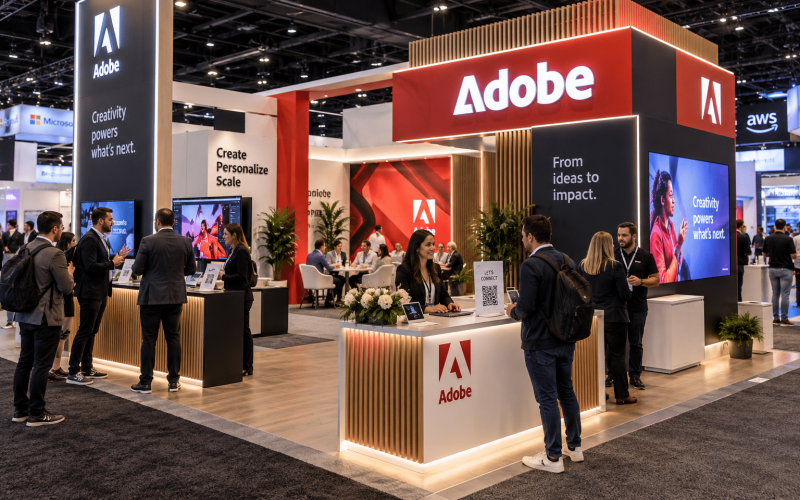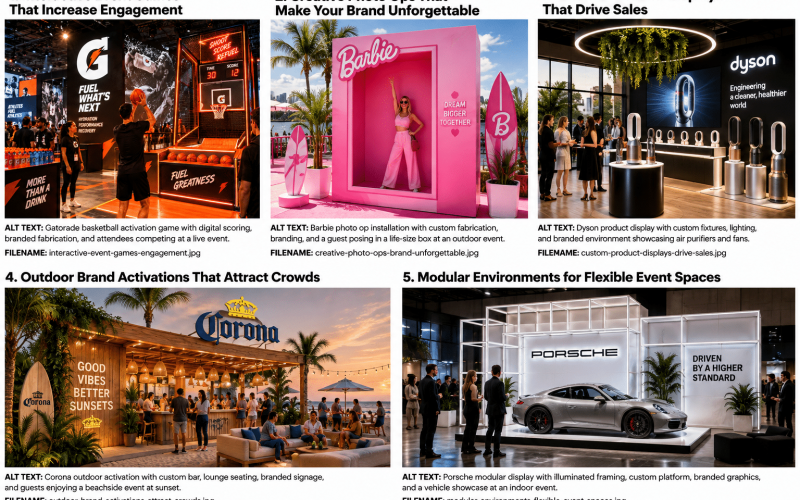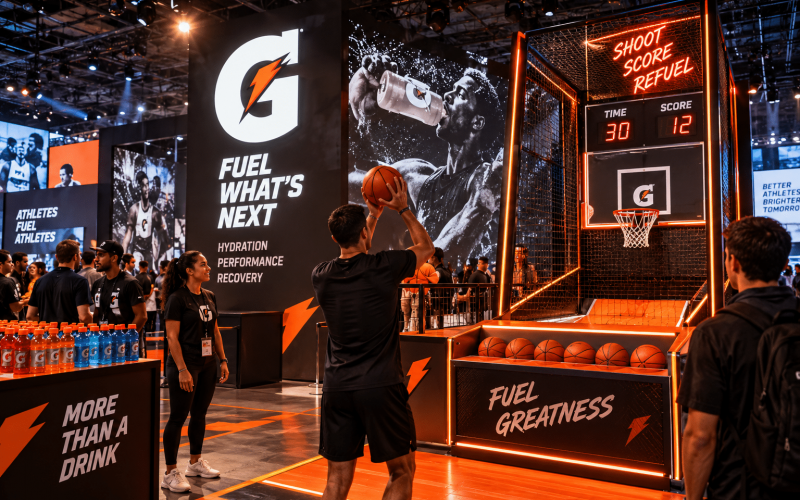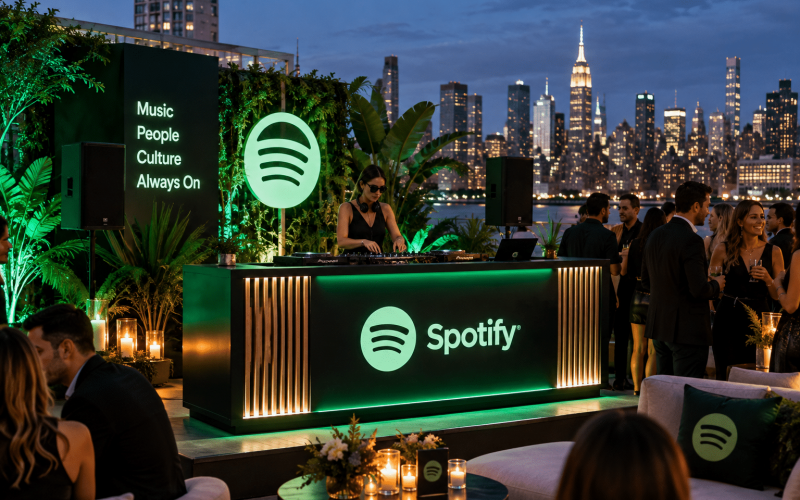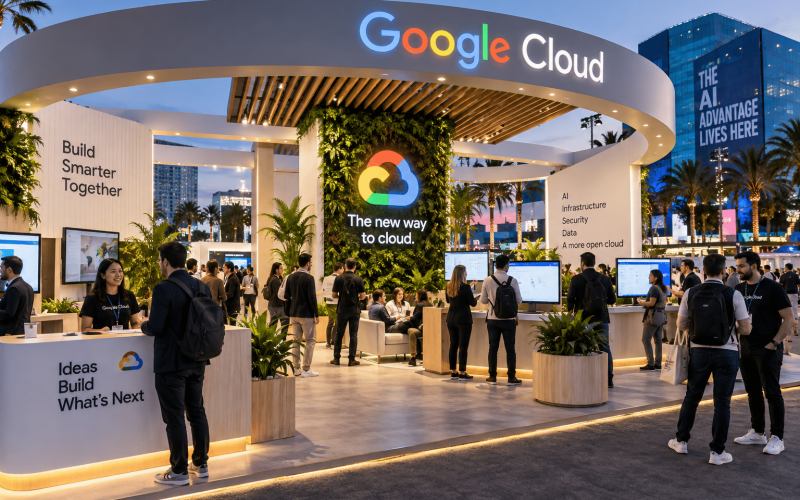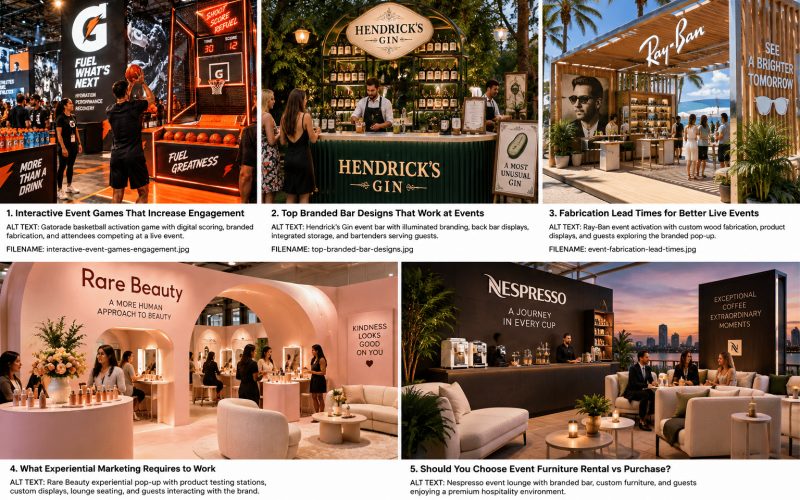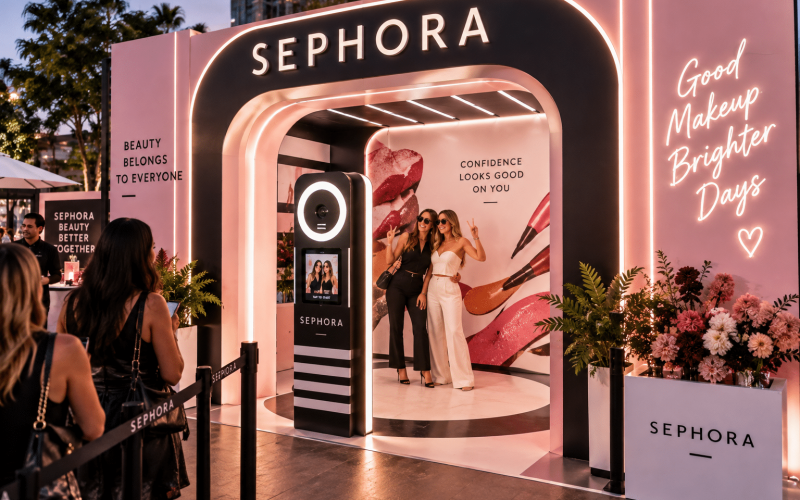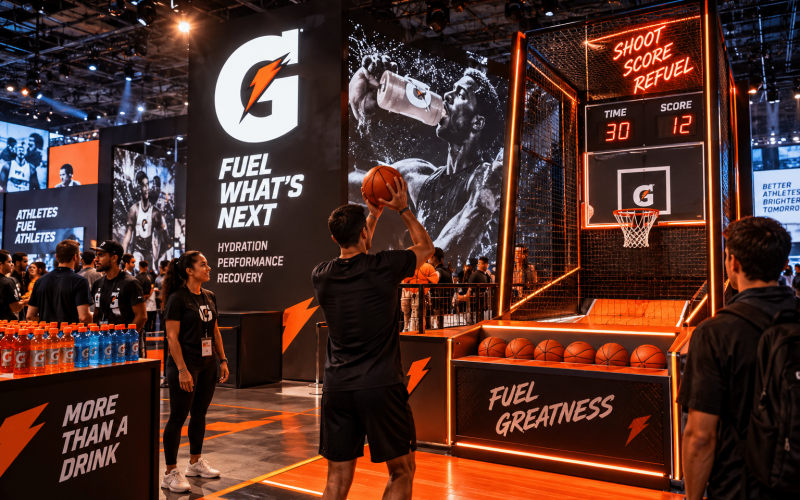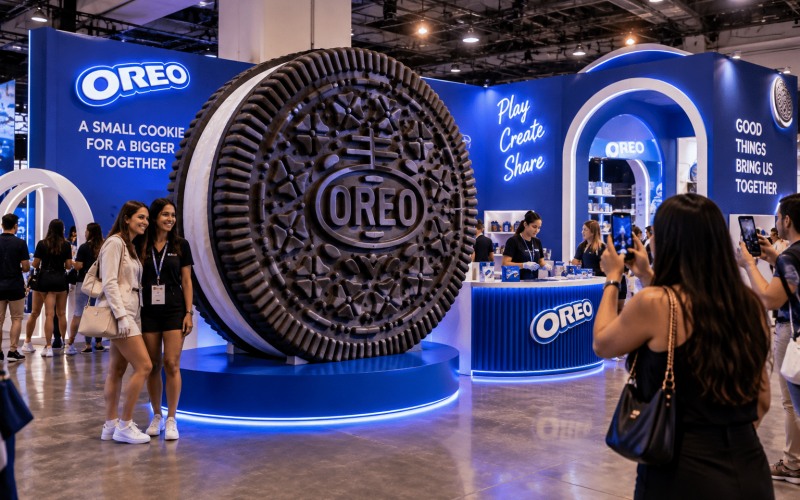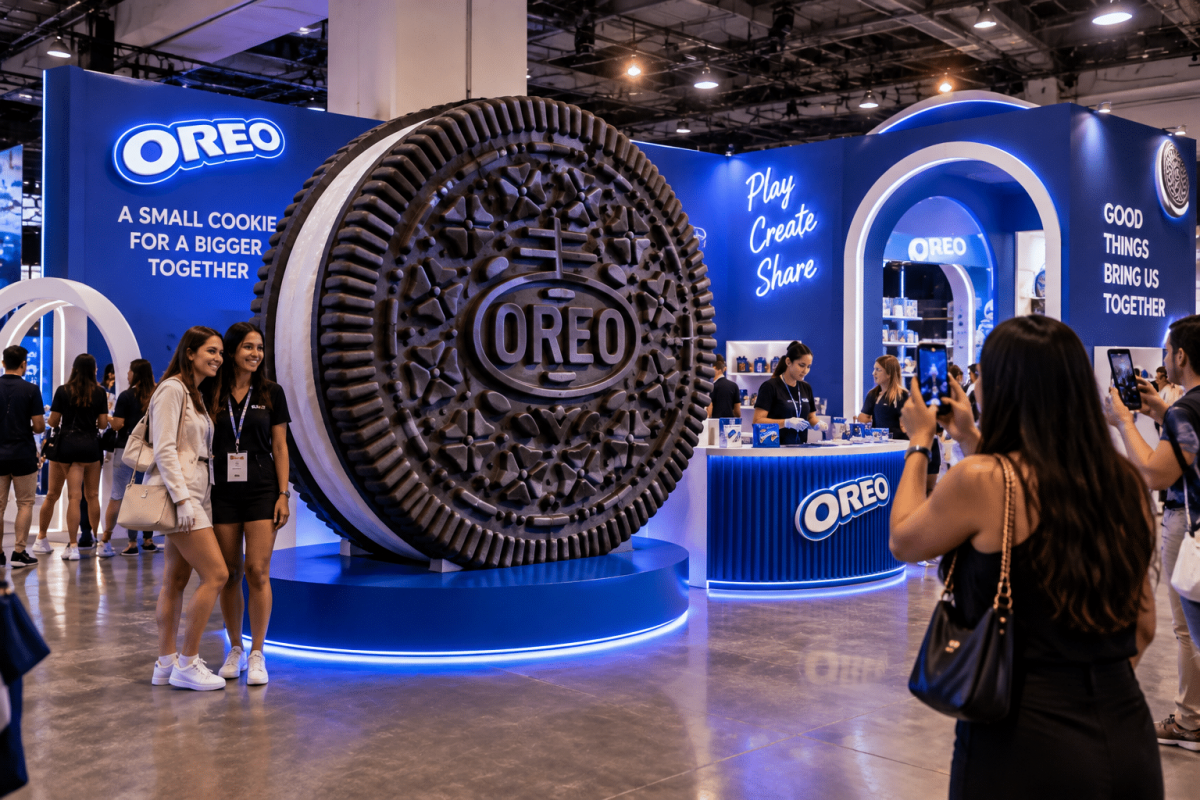
A six-foot product replica may be the first thing guests photograph. A branded game wall may keep a trade show aisle active when neighboring booths are quiet. A custom bar, display plinth, prize dispenser, or interactive set piece can turn a standard footprint into a destination. Custom event props are not decorative extras. They are working brand assets built to create attention, guide participation, and make an experience easier to remember.
For brand marketers, agencies, and event producers, the question is not simply whether a prop will look good in a rendering. The question is whether it will perform in a live environment with real guests, tight load-in windows, repeated use, changing lighting, and a crew that needs to set it safely and quickly.
What Custom Event Props Need to Accomplish
The most effective event props have a clear job. They might stop foot traffic, support a product demonstration, create a photo moment, organize a queue, hold merchandise, or give guests a reason to interact with brand staff. When a prop has no defined role beyond filling space, it often becomes expensive scenery.
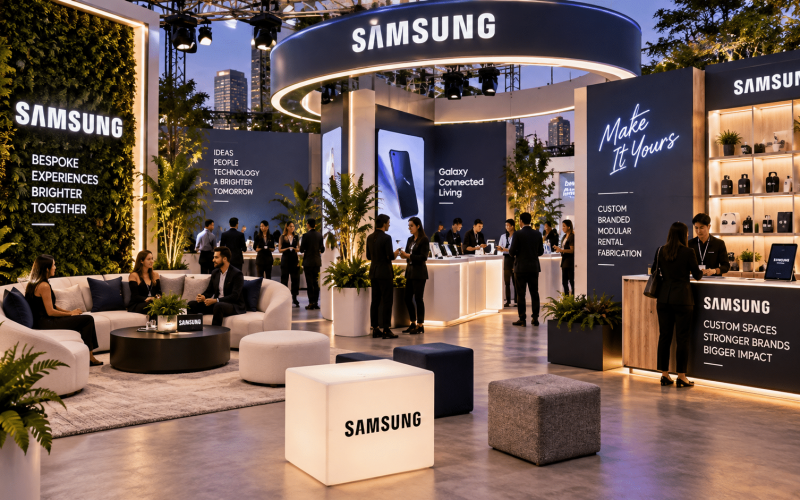
Start with the audience action you want. A consumer sampling activation may need a branded service counter with hidden storage and a durable work surface. A product launch may need a reveal mechanism, display cases, and dimensional logos that read clearly in photographs. A trade show booth may need structures that establish hierarchy across a busy show floor while keeping product access and conversations practical.
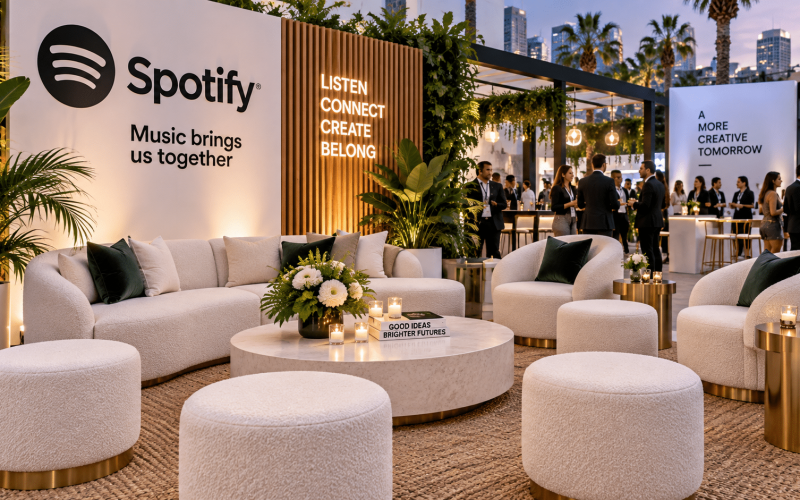
This is where fabrication changes the outcome. A custom-built element can be sized for the venue, engineered around the activity, finished in the right brand colors, and designed to work alongside event furniture, graphics, lighting, and technology. The result should feel like one physical environment rather than a collection of unrelated branded pieces.
Plan Custom Event Props From the Guest Journey Back
A strong fabrication brief begins with behavior, not a wish list of materials. Consider what guests see from a distance, where they enter, what draws them closer, and what they do once they arrive. That sequence reveals which assets deserve the largest visual investment and which should stay simple.
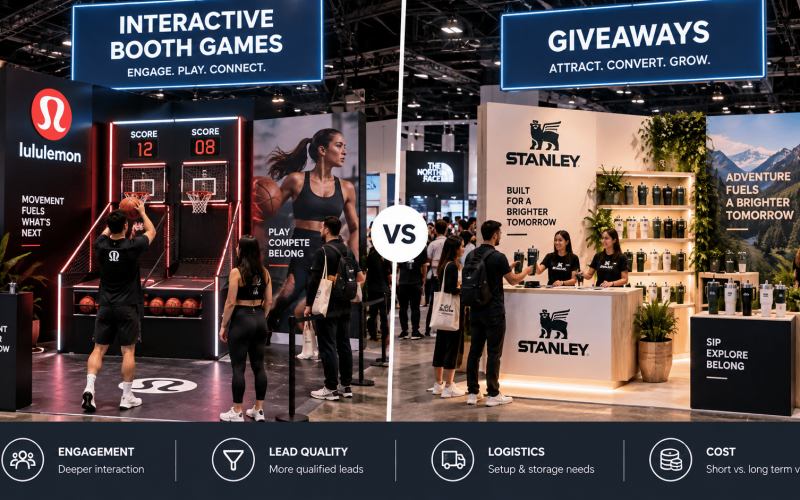
For example, a larger-than-life product model can create the initial visual hook, but it needs a supporting interaction to extend dwell time. That may be a game, a sample station, a content capture area, or a product test. Likewise, a selfie wall may attract photos, but it should be positioned to avoid blocking registration, exits, or staff circulation.
Early planning should account for the practical constraints that determine whether an idea is feasible. Share the event footprint, ceiling height, venue rules, floor conditions, load-in route, production schedule, brand standards, and expected guest volume. A prop that fits the booth diagram may still be difficult to move through a freight elevator or impossible to assemble within a short installation window.
Design for sightlines and participation
Scale is a production decision, not just a creative one. A small dimensional logo can disappear across a convention hall, while an oversized structure may overpower a compact pop-up. The right scale depends on viewing distance, surrounding architecture, and the density of the event environment.
Also consider how people physically approach the piece. Interactive props need enough clearance for lines, staff support, accessibility, and reset time between participants. If guests are meant to touch, spin, sit on, open, or play with an element, the design needs to account for repeated use rather than a single photo shoot.
Build brand recognition into the form
Applying a logo to a generic object is sometimes appropriate, especially for event rentals or support furniture. For a flagship activation, however, the form itself should help communicate the campaign. That can mean translating a package shape into a sculptural display, using signature colors as architectural surfaces, or creating a game mechanic tied directly to a product benefit.
Brand alignment includes finish quality. Printed graphics, vinyl wraps, painted surfaces, dimensional lettering, acrylic, upholstery, wood, and metal all create different visual impressions. The right approach depends on the intended lifespan, photography requirements, touchpoints, budget, and transport plan. High-gloss surfaces can look striking under controlled lighting but show fingerprints and scratches more readily. Soft finishes can make a lounge feel premium but require more careful cleaning and handling.
Fabrication Choices Affect Cost, Durability, and Logistics
There is no single best material for custom event props. The correct choice depends on how long the asset will be used, how far it must travel, whether it will be indoors or outdoors, and how much guest contact it will receive.
Lightweight fabricated components can reduce shipping and labor costs, especially for touring activations. Heavier materials may be appropriate for large freestanding elements or furniture that needs stability. Modular construction can allow a substantial piece to break down into manageable sections, but every connection point introduces assembly time and must be engineered for reliable alignment.
A fabrication partner should evaluate the prop as a complete production system: the visible finish, internal structure, base or anchoring method, electrical needs, packing method, assembly instructions, and repair plan. This is particularly important for interactive game elements, moving components, and props that hold products, prizes, or technology.
Safety belongs in the creative conversation from the beginning. Freestanding props need stable bases. Overhead or elevated elements require venue-approved rigging plans. Public-facing edges should be finished appropriately, and electrical components should be specified for the event environment. It is more efficient to solve these requirements during design than to alter a nearly finished build days before installation.
Decide What to Build and What to Rent
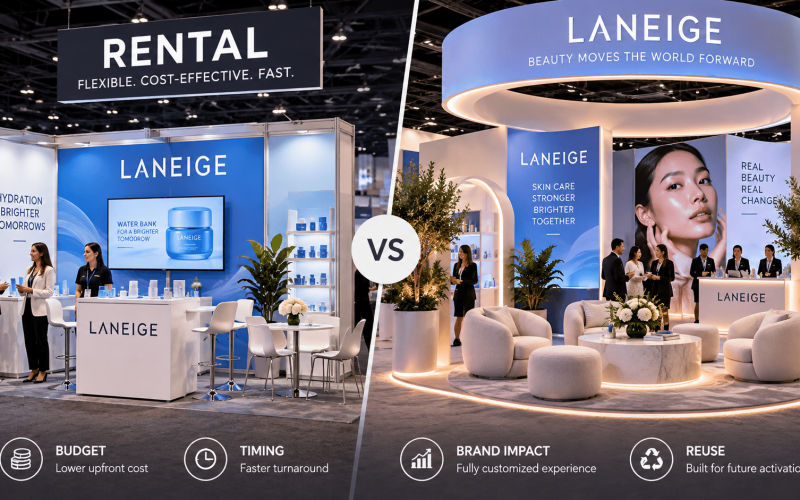
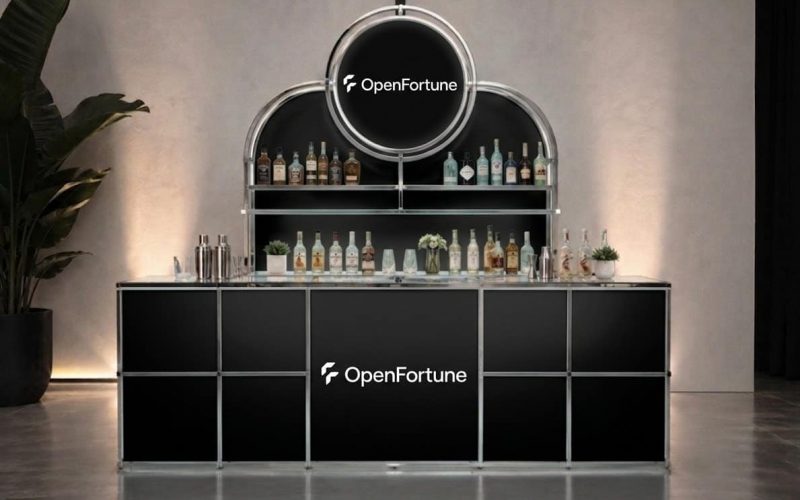
Custom fabrication and rentals work best together when each is used for the right purpose. Build the pieces that carry the campaign idea, make the interaction distinctive, or need a precise brand treatment. Rent standardized support elements such as seating, tables, bars, stanchions, storage, and certain display components when they do not need to be unique.
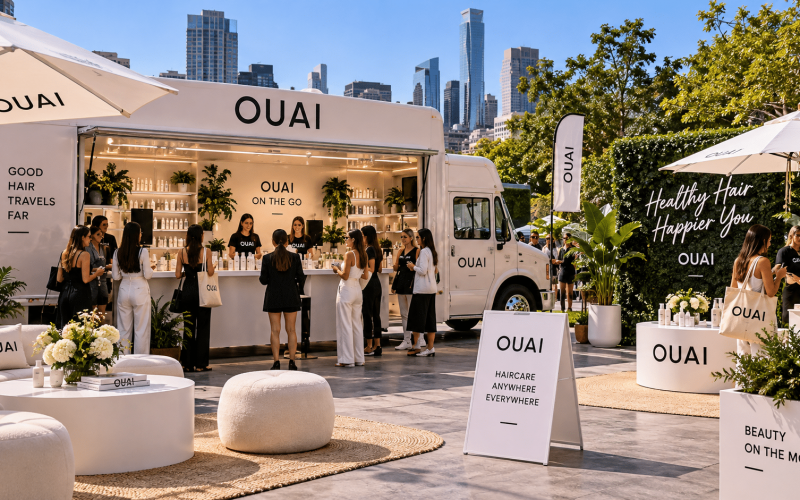
This approach protects the budget without weakening the experience. A custom branded bar front paired with rental backbar components, for instance, can look fully integrated while avoiding the cost of manufacturing every operational piece from scratch. For regional events in New York, New Jersey, Boston, and Connecticut, rental inventory can also reduce the logistics burden for short-term programs.
Ownership deserves a direct discussion. If an asset will travel to multiple markets, support recurring launches, or become a recognizable part of a brand activation program, custom ownership may be the right investment. If it is tied to a single event theme or a brief campaign window, renting or fabricating reusable components with interchangeable graphics may be more practical.
Make the Asset Easy for Event Teams to Use
A visually impressive prop can still create problems if it needs specialized handling, unclear assembly, or constant adjustments. Event teams benefit from assets that arrive labeled, pack efficiently, and have straightforward setup requirements. For multi-city programs, standardized crates, clear hardware kits, and photo-based instructions reduce risk from one stop to the next.
Staff workflow matters as much as guest experience. A sampling counter needs room for supplies, waste, refrigeration if required, and staff movement. A game station needs a reset procedure that does not stall the line. A photo moment needs lighting, queue control, and an obvious path in and out. These operating details should shape the fabricated asset instead of being treated as afterthoughts.
Before the event, review the complete setup in a pre-production check. Confirm dimensions, brand finishes, graphics placement, hardware, power access, and any interactive functions. A practical review can identify small issues that are easy to correct in the shop but costly to solve on the show floor.
Measure More Than the Photo Opportunity
Custom event props are often judged first by visual impact, and that is reasonable. They are highly visible investments. But the stronger measure is whether they support campaign performance.
Track the metrics that match the prop’s intended purpose. A game may be evaluated by participants per hour, completed entries, and lead capture rate. A product display may be evaluated by demonstrations, samples distributed, or conversations initiated. A content moment may be evaluated by shares, branded content volume, or time spent in the experience.
Qualitative feedback is useful too. Ask brand ambassadors which elements naturally started conversations, where guests hesitated, and which areas created congestion. Those observations can improve the next fabrication run, especially when a concept is designed to tour or return for future events.
The best next step is to treat each prop as part of the event operation, not a final layer added after the booth or activation is planned. When the creative concept, fabrication method, logistics, and guest interaction are considered together, the finished asset has a far better chance of earning attention and delivering useful results.