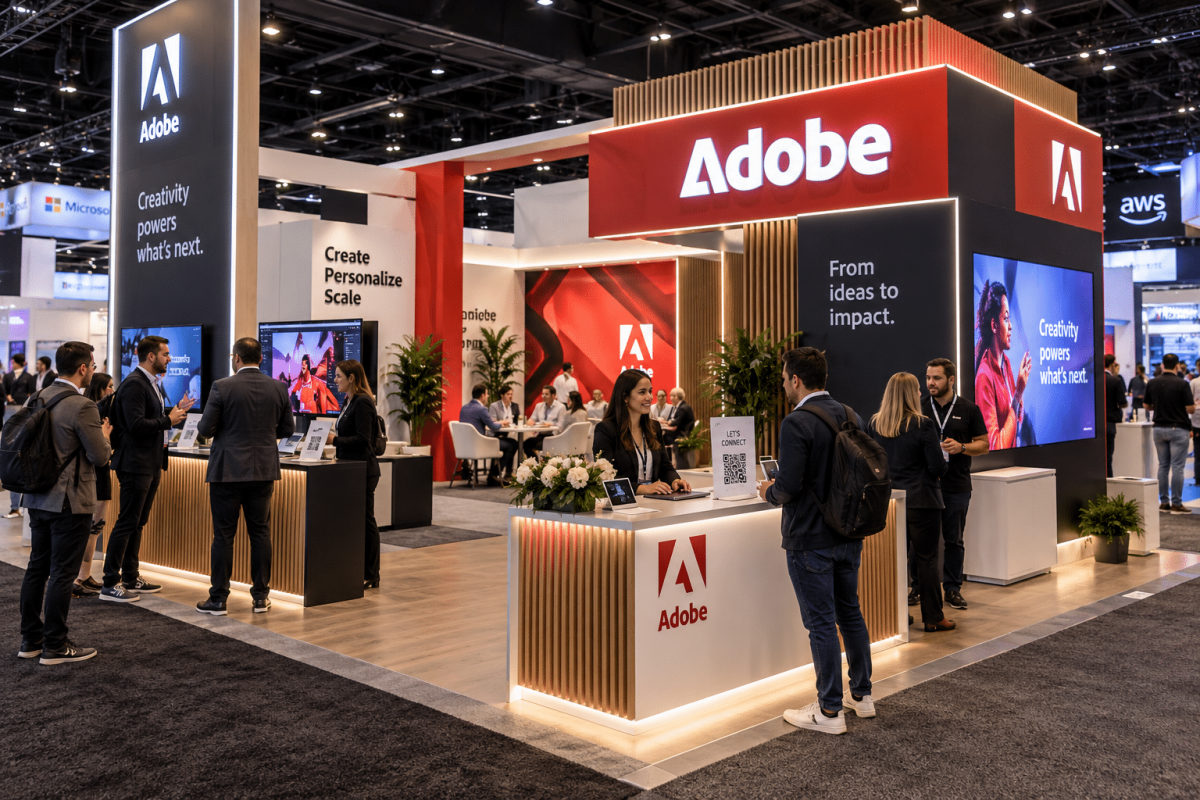
A branded bar is rarely just a place to serve drinks. At a trade show, product launch, pop-up, or hospitality activation, it becomes a high-traffic brand touchpoint where guests pause, talk, photograph the environment, and form an impression of the entire experience. The top branded bar designs balance visual impact with the practical demands of service, storage, power, staffing, and repeated use.
For marketing teams and event producers, the question is not simply whether a bar looks on-brand in a rendering. The real test is whether it can be fabricated, transported, installed, staffed, and used by hundreds of guests without compromising the brand presentation. A well-designed bar turns a necessary operational station into a deliberate part of the activation.
What Makes Top Branded Bar Designs Effective?
The strongest branded bar environments start with the guest journey. Where will attendees first see the bar? Is the purpose to distribute beverages quickly, host product sampling, support VIP hospitality, or create a social backdrop that draws people into the space? Those answers determine the footprint, counter height, service side, display elements, and amount of visible branding.
A bar designed for a fast-moving convention floor needs a different approach than one built for an intimate evening launch. High-volume service favors a long, open counter with multiple ordering points and clear space behind the bar for staff movement. A premium event may prioritize layered finishes, integrated lighting, and a more controlled guest-facing experience. Both can be highly branded, but their fabrication requirements are not the same.
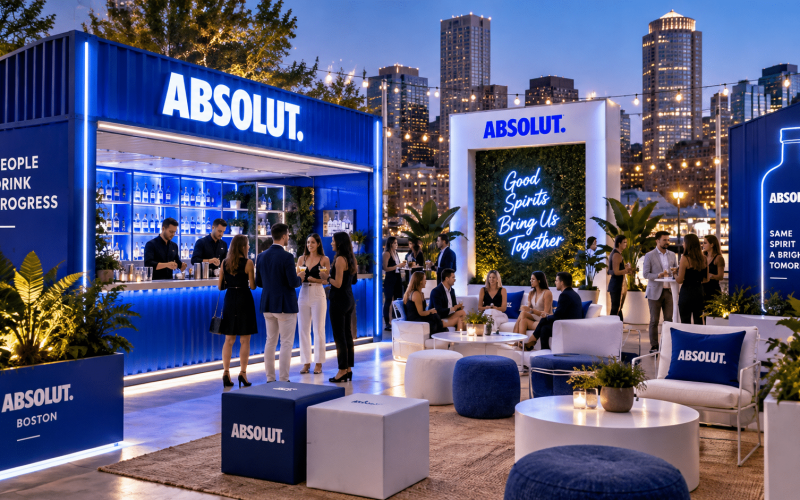
The most successful concepts also put branding where guests will actually see it. The front bar fascia is often the primary branding surface, particularly in a busy event hall where sightlines matter. Back bars, overhead structures, menu panels, illuminated logos, and branded shelving can add dimension without forcing every surface to carry a graphic. Strategic restraint often produces a stronger visual result than covering the entire unit in logos.
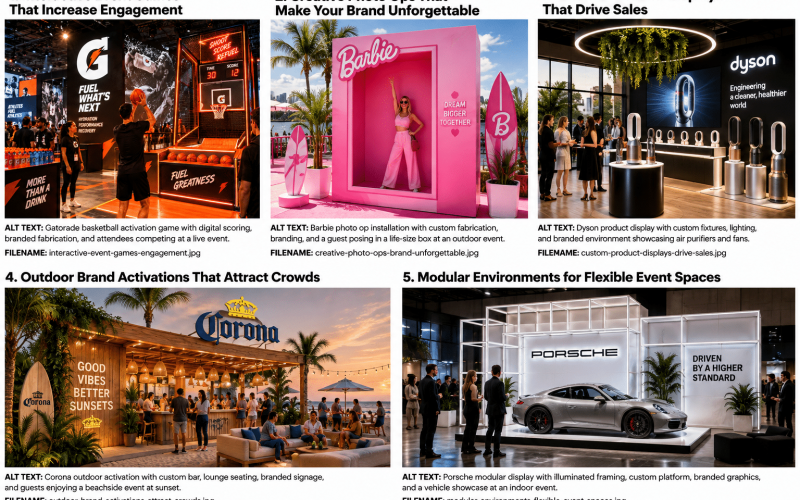
Four Bar Design Directions for Brand Activations
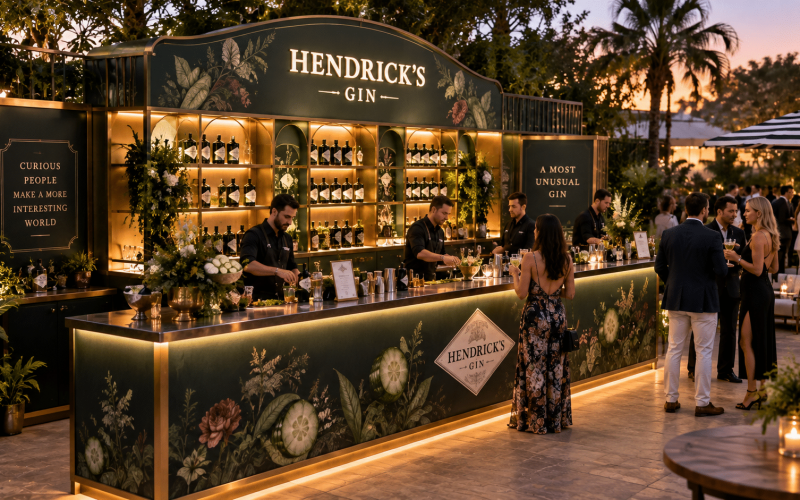
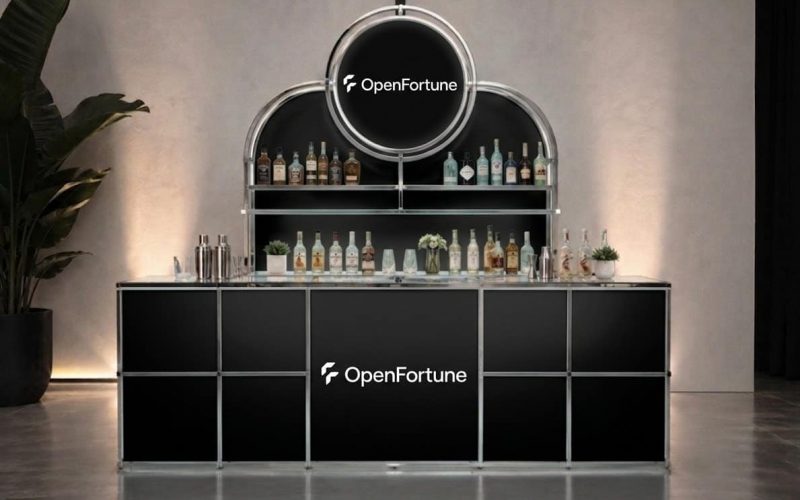
Illuminated Logo Bars
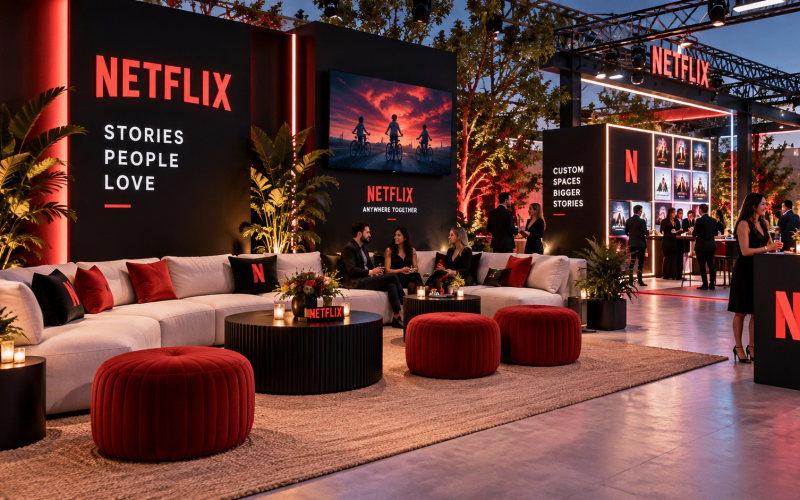
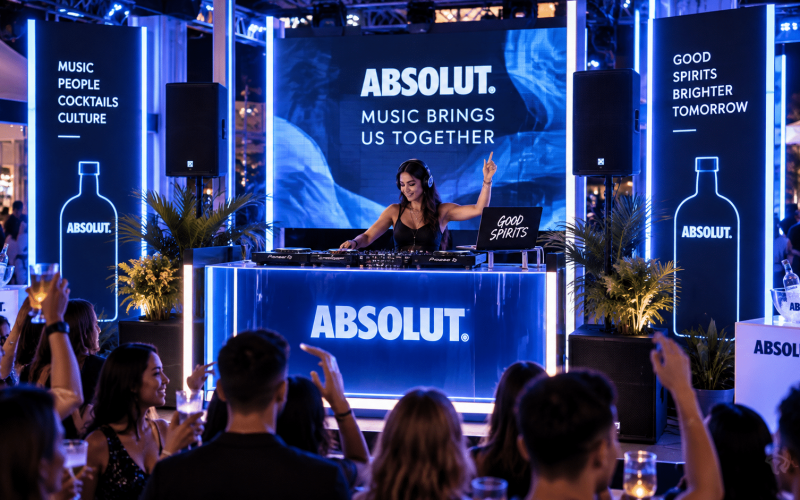
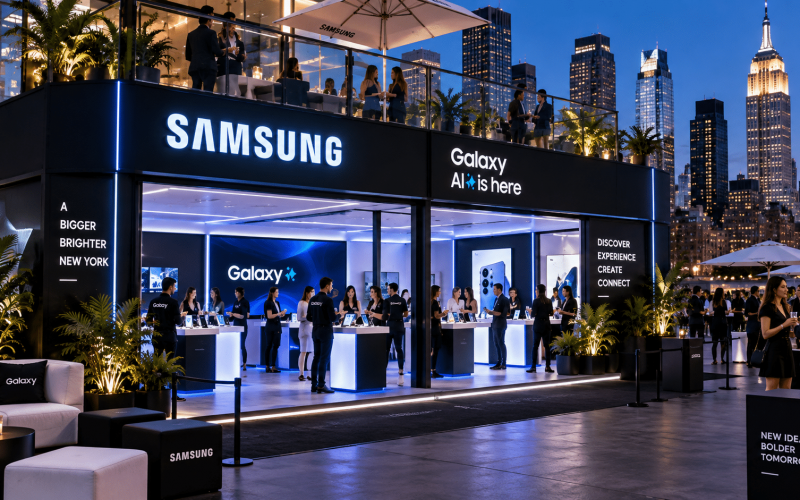
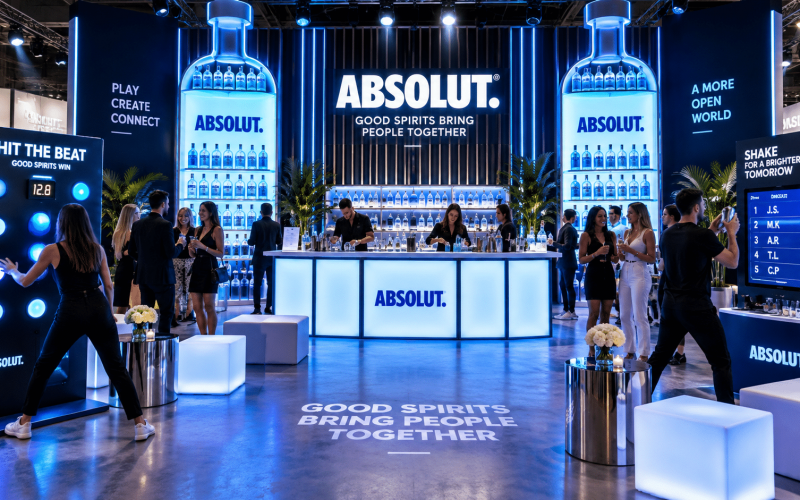
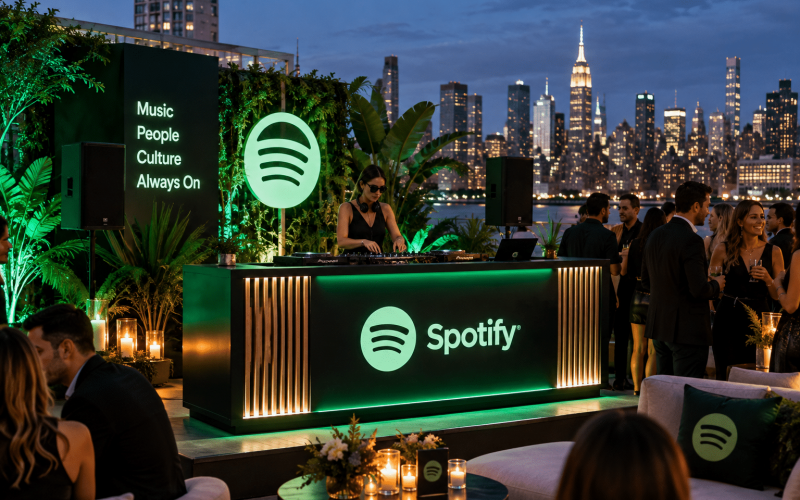
An illuminated logo bar gives a brand immediate presence in lower-light venues, evening events, and high-energy launch environments. The logo can be integrated into the front panel, framed in an acrylic face, or supported by internal lighting that creates a clean glow across the facade. This direction works especially well when a brand needs to be recognizable from across a room.
The trade-off is that lighting introduces production details that cannot be treated as an afterthought. Power access, cable management, heat, dimming requirements, and the durability of the illuminated components all need to be addressed during fabrication. A bright front panel may also compete with product displays or projected content nearby, so the lighting level should support the environment rather than overpower it.
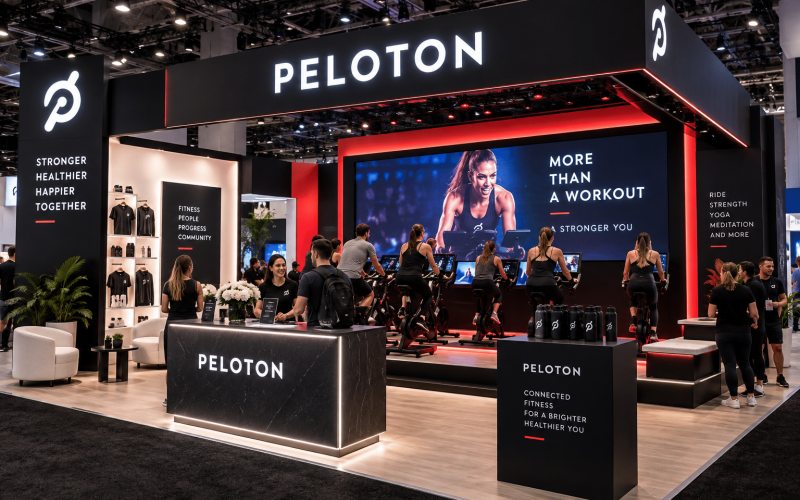
Modular Branded Bar Systems
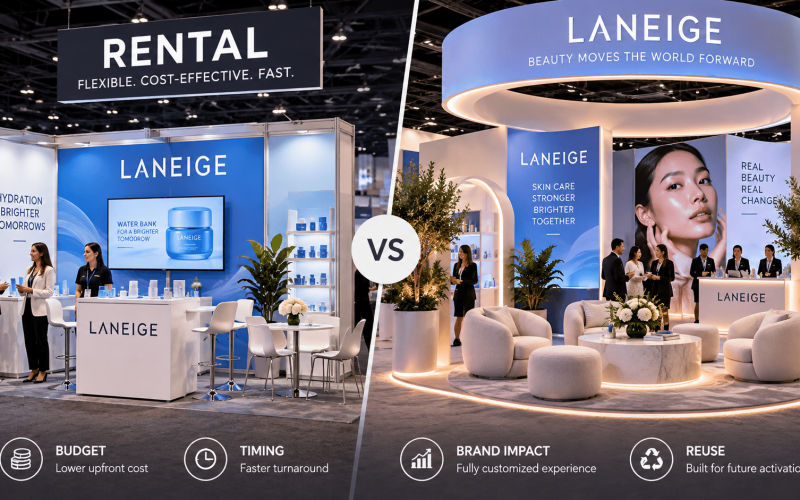
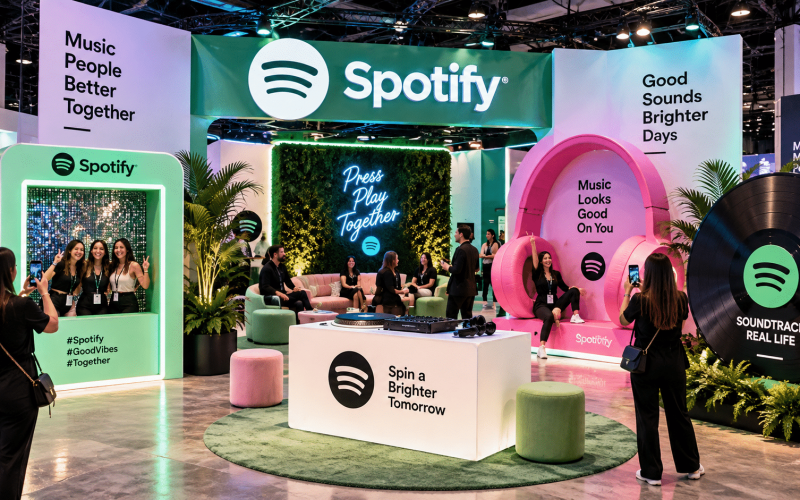
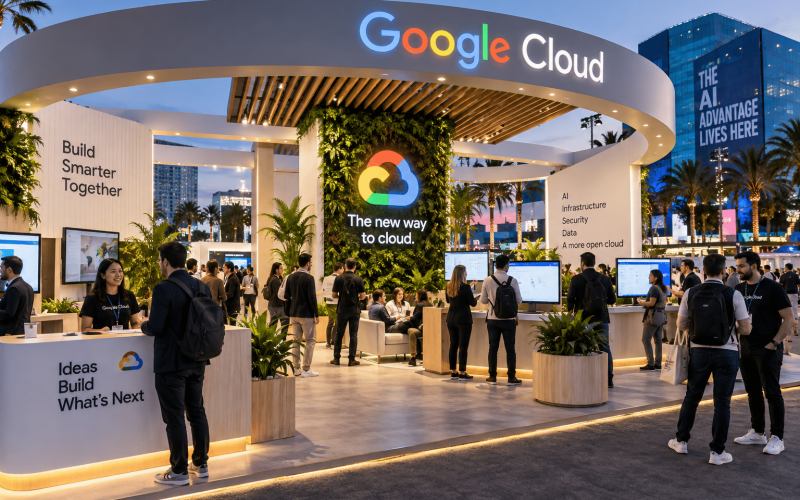
Modular bars are a practical option for brands that need to adapt one design across different venue sizes, markets, or event formats. Individual counter sections can be configured as a straight bar, L-shape, U-shape, tasting station, or multiple smaller service points. Replaceable graphic skins and interchangeable branded panels make it possible to refresh the appearance while retaining the core structure.
This approach is particularly useful for touring activations and event rental programs. It reduces the need to fabricate an entirely new piece for every stop while still allowing the configuration to fit each floor plan. The key is to ensure the modular connections remain clean and secure. A flexible system should not look temporary once it is assembled on-site.
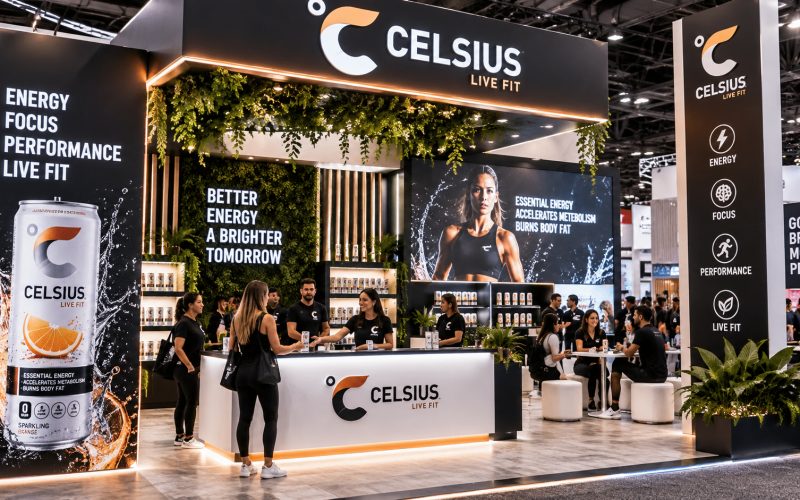
Product Sampling and Demo Bars
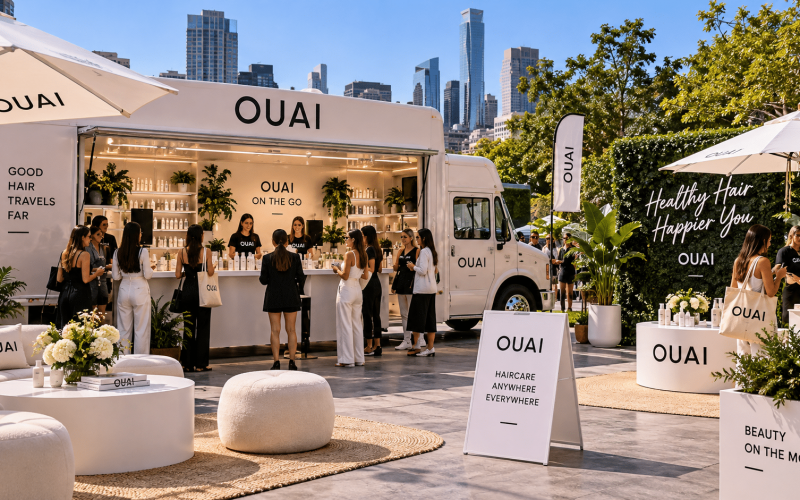
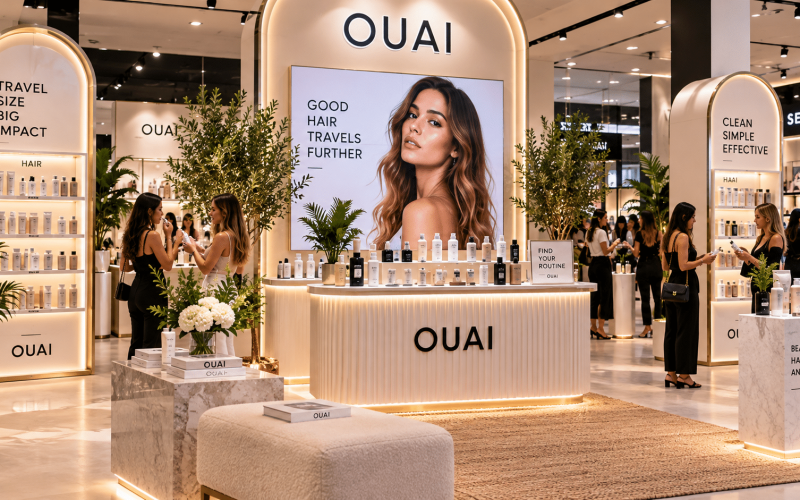
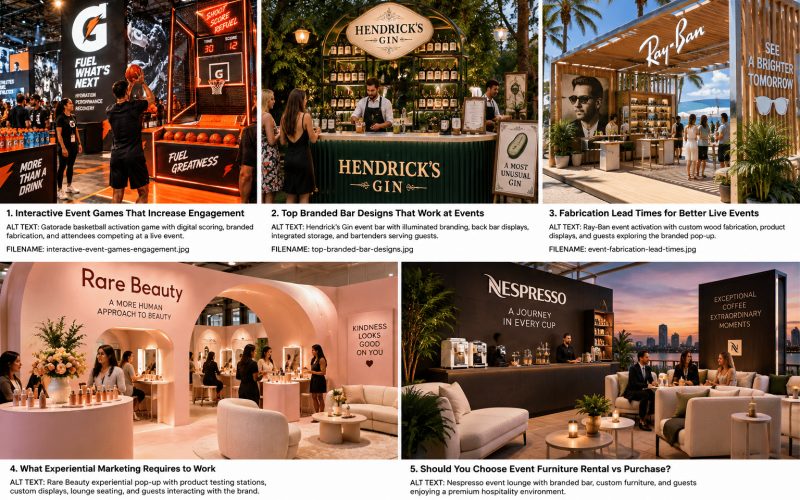
For beverage, food, beauty, and consumer product campaigns, the bar often functions as a demonstration station as much as a hospitality counter. It may need room for equipment, refrigeration, sinks, product inventory, waste handling, handwashing access, or an integrated display for featured products. The guest-facing surface needs to look polished while the staff side supports a quick and compliant workflow.
This is where fabrication planning has a direct impact on campaign performance. A beautiful counter that leaves no place for supplies will slow every interaction. Conversely, an overly equipment-heavy station can make the guest experience feel clinical. The right design conceals operational necessities where possible while keeping the product and brand story visible.
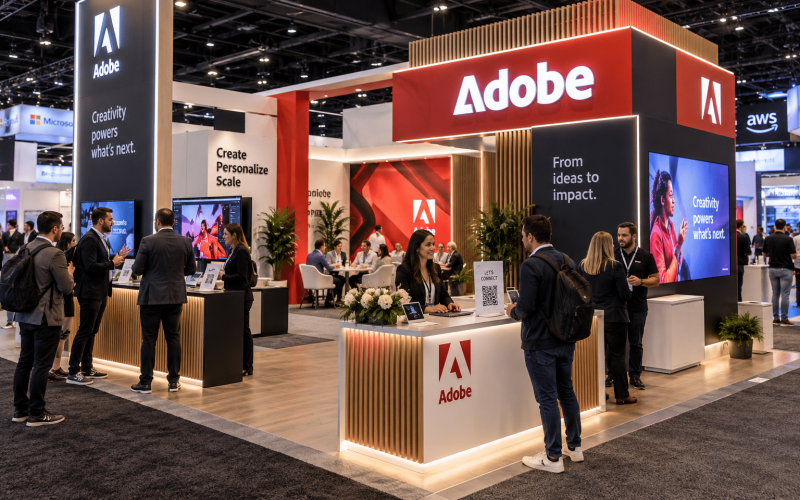
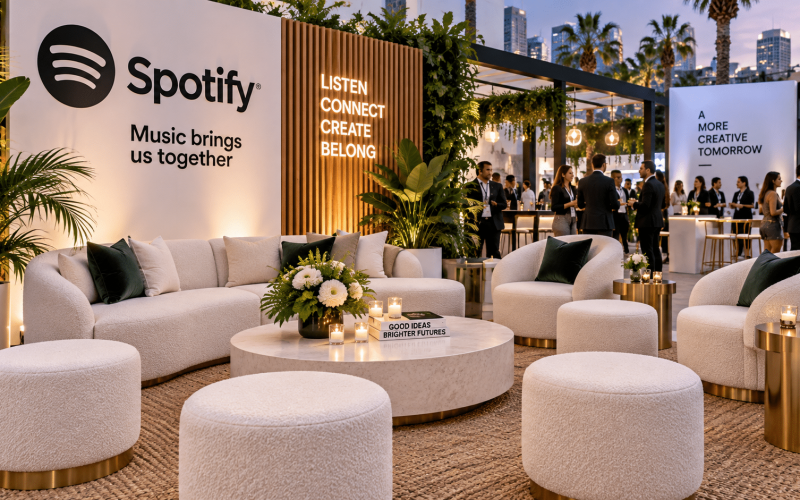
Lounge-Integrated Hospitality Bars
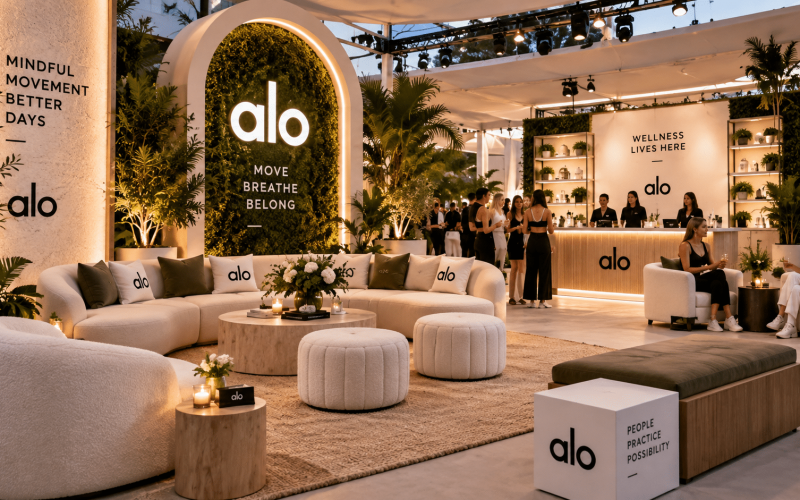
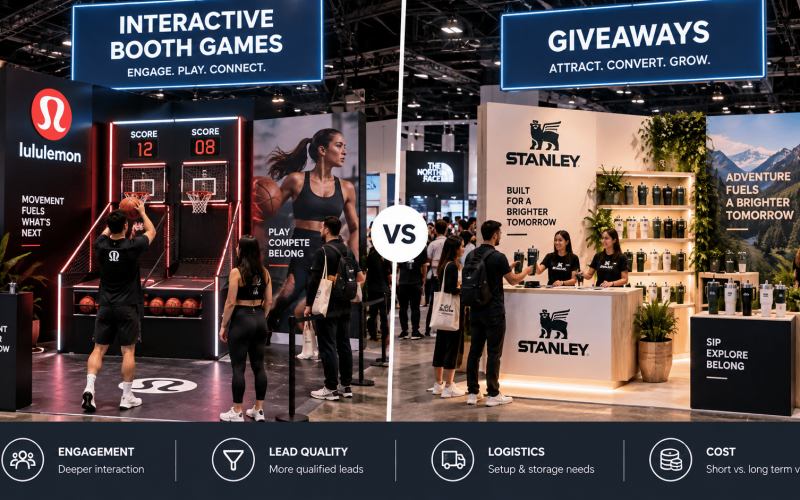
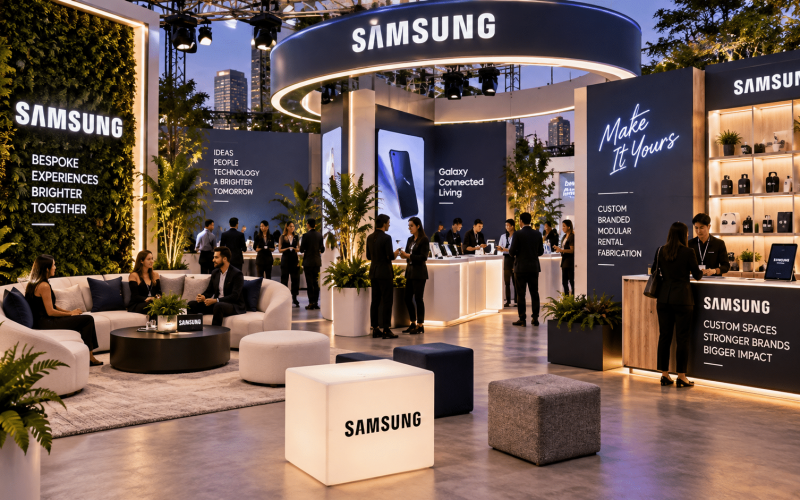
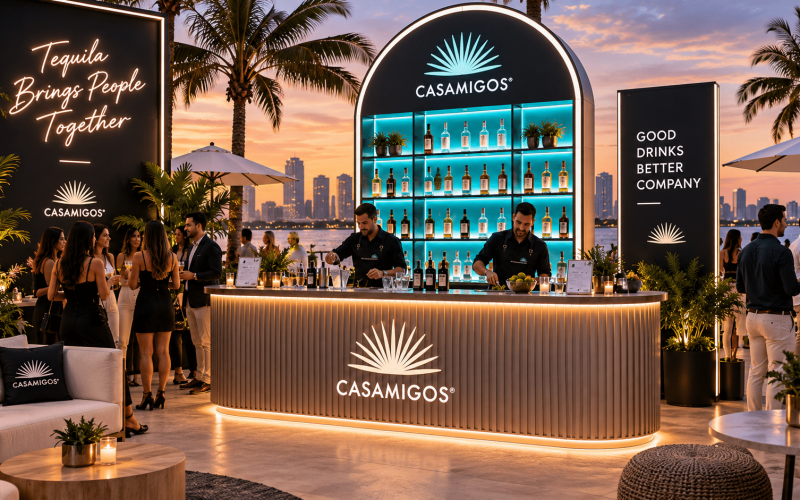
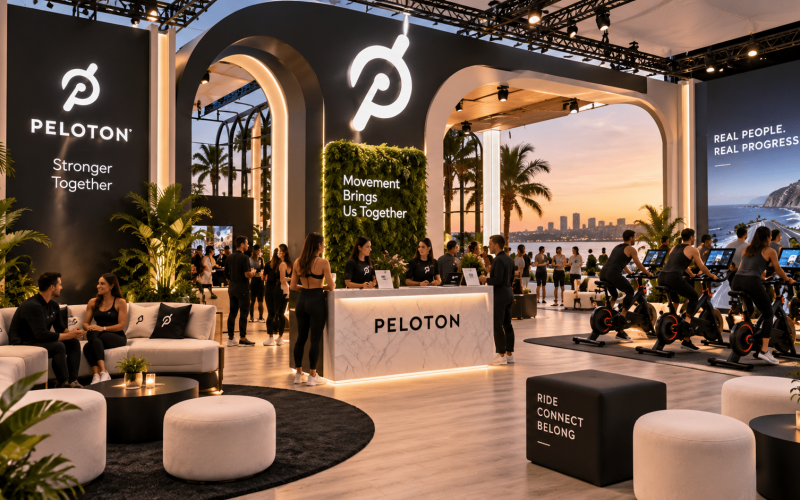
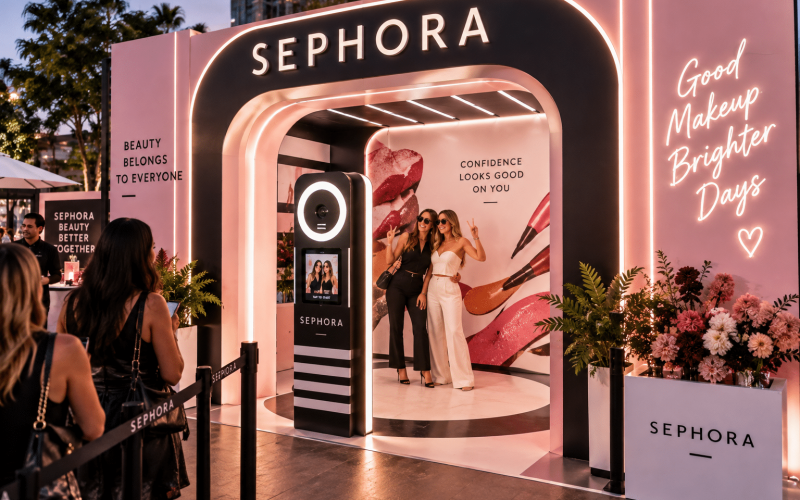
A bar can also anchor a larger branded lounge. Instead of operating as a standalone counter, it becomes part of an environment with seating, charging areas, product discovery zones, and hospitality moments. This design direction is effective when the objective is to keep guests in the footprint longer and create a setting that feels more intentional than a quick giveaway station.
In these applications, the finishes matter. Wood textures, powder-coated metal, acrylic, dimensional signage, upholstered seating, and custom shelving can work together to create a more elevated setting. The bar should still be designed for efficient service, but it also needs to connect visually to the booth or activation architecture around it.
Design for Service Before Surface Graphics
A branded bar can be visually impressive and still fail operationally if service flow is ignored. Before finalizing colors, logo placement, or decorative details, determine how many staff members will work behind the bar at the same time. Consider where they enter, where supplies are stored, how beverages are replenished, and where used materials go during peak periods.
Counter depth is a frequent source of trouble. A shallow counter may preserve floor space but leave insufficient room for point-of-sale equipment, product displays, glassware, or guest interaction. Too much depth can create distance between staff and attendees. The appropriate dimension depends on the type of service, which is why the fabrication partner should understand the event operation, not only the visual concept.
Accessibility should be part of the design from the beginning. A welcoming activation accounts for varying guest needs, maintains clear circulation around the structure, and considers usable counter access where appropriate. These requirements are easier to resolve in the concept and engineering phase than during installation.
Choose Materials for the Event Reality
Material selection should reflect the event schedule and the intended lifecycle of the asset. A one-night VIP event may justify specialty finishes that would be less practical for a cross-country tour. A multi-city activation needs durable surfaces, protected edges, manageable packing requirements, and components that can withstand repeated assembly.
Common options include laminated panels for clean branded faces, vinyl graphics for campaign flexibility, acrylic for light transmission, metal for structural durability, and wood-based finishes for a warmer hospitality look. There is no universal best material. The right selection depends on visual goals, budget, freight constraints, expected guest volume, and whether the piece will be rented, reused, or produced as a one-time custom build.
For event teams working under tight timelines, fabrication should also account for repairability. Replaceable graphic panels, removable countertop components, and standardized hardware can extend the useful life of a branded bar and simplify updates between campaigns.
Integrate the Bar Into the Full Activation
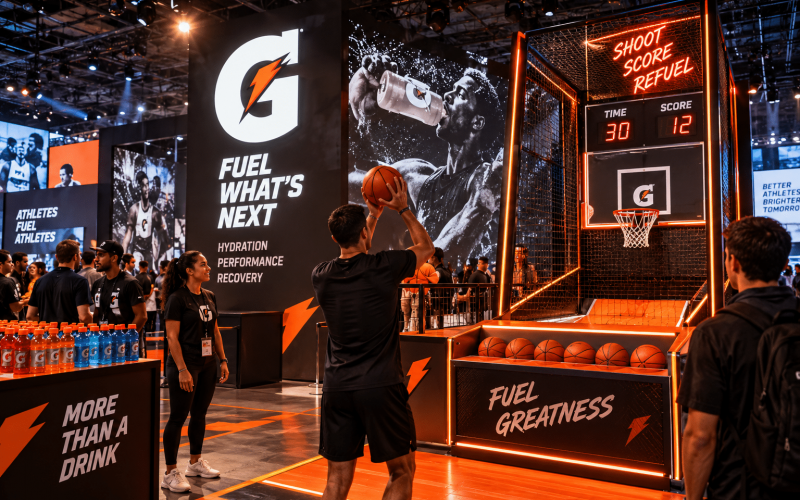
The bar should not feel like an isolated furniture piece dropped into the middle of a branded environment. Its forms, finishes, and messaging should relate to the trade show booth, product displays, game elements, photo moments, or lounge furniture around it. A consistent color system and material palette will make the overall footprint feel planned, even when multiple assets serve different functions.
This does not mean every object needs identical branding. A bar can carry the primary logo while adjacent elements use supporting colors, product imagery, or campaign language. The goal is hierarchy. Guests should understand the brand quickly, then discover the details as they move through the space.
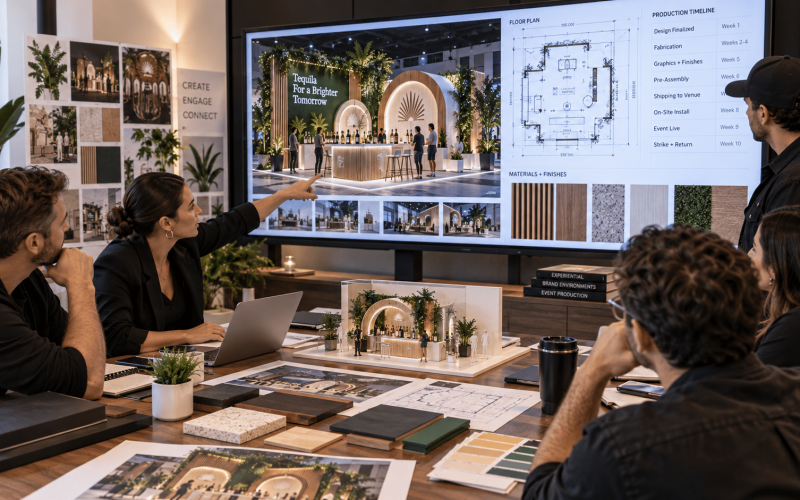
For agencies and internal marketing teams, early collaboration between creative, production, and event operations is what turns a strong concept into a reliable physical asset. Portadecor approaches branded bars as event-ready custom products, considering fabrication, transport, installation, and guest engagement alongside the visual design.
The best branded bar is the one guests notice without having to think about why it works. It supports the staff, frames the product, holds up under event pressure, and gives the brand a place to make every interaction feel intentional.