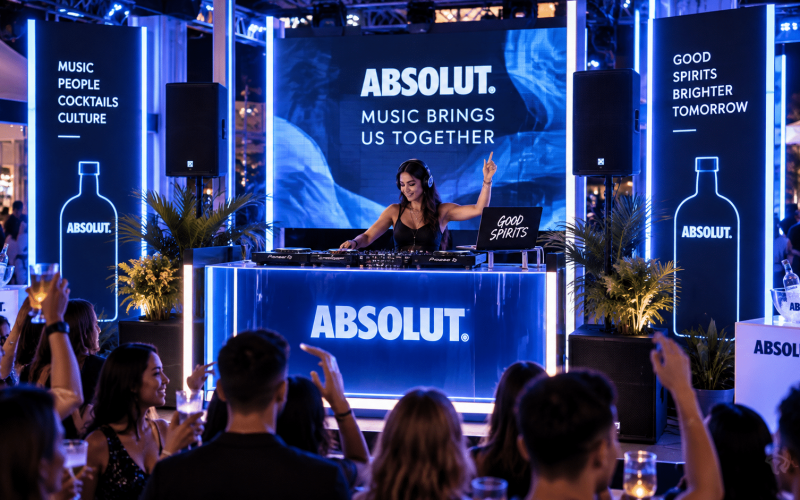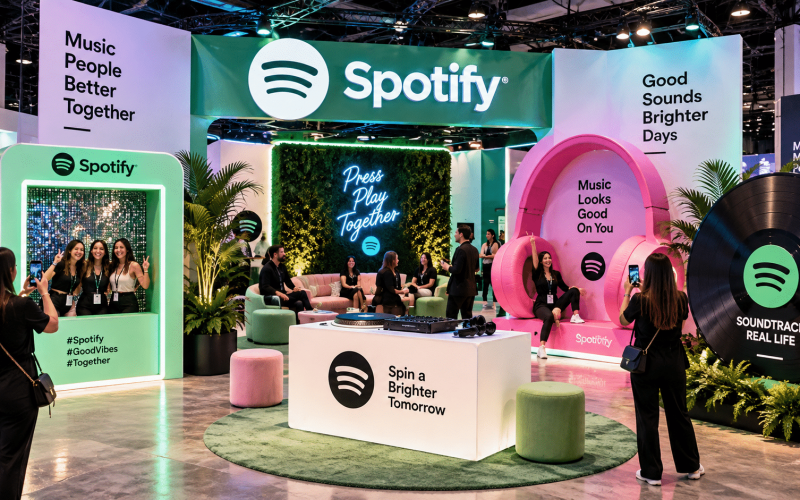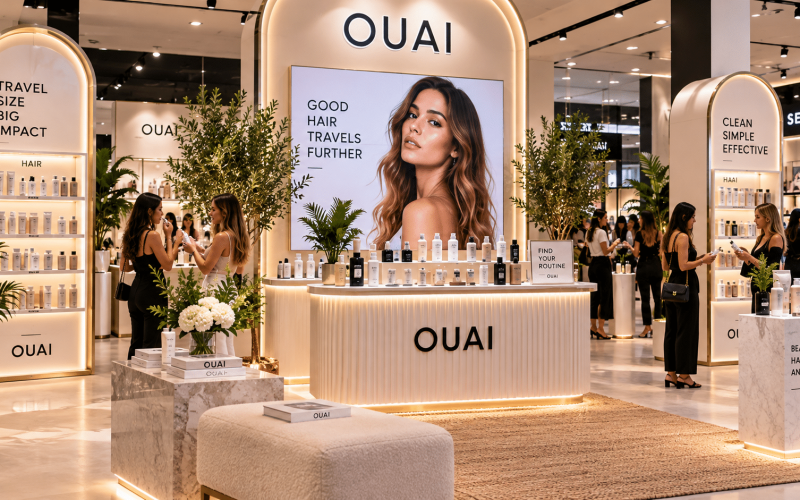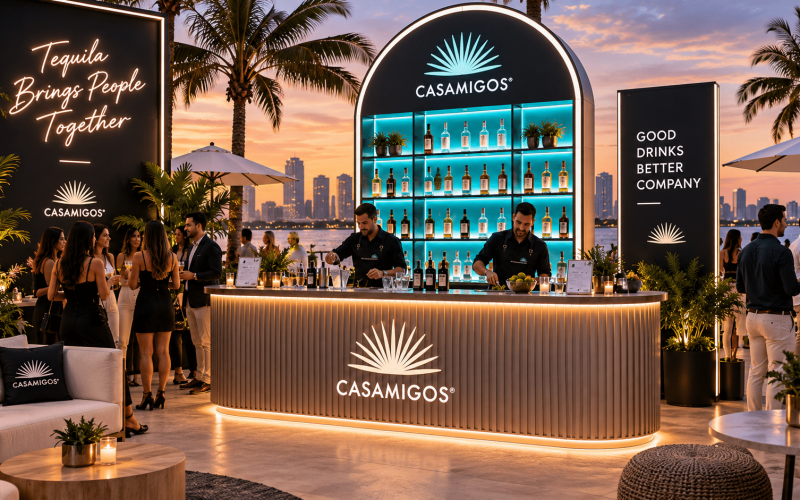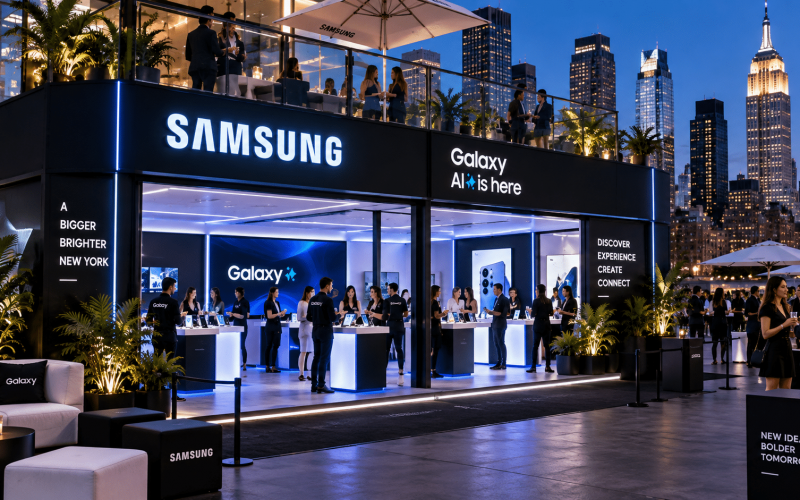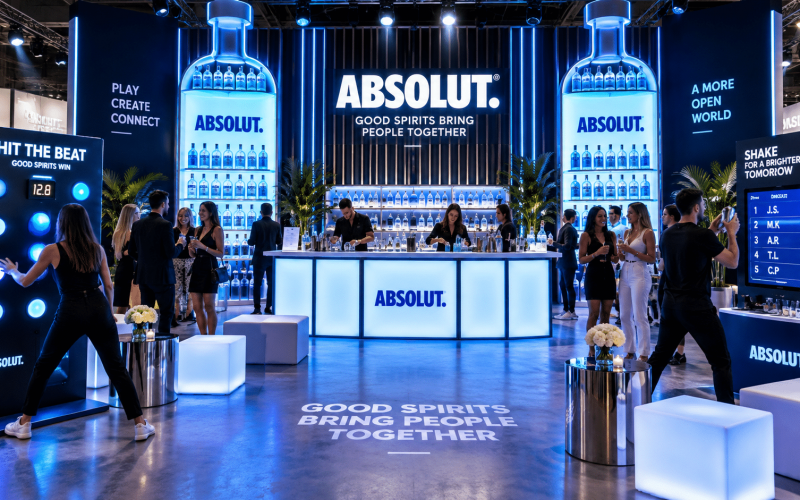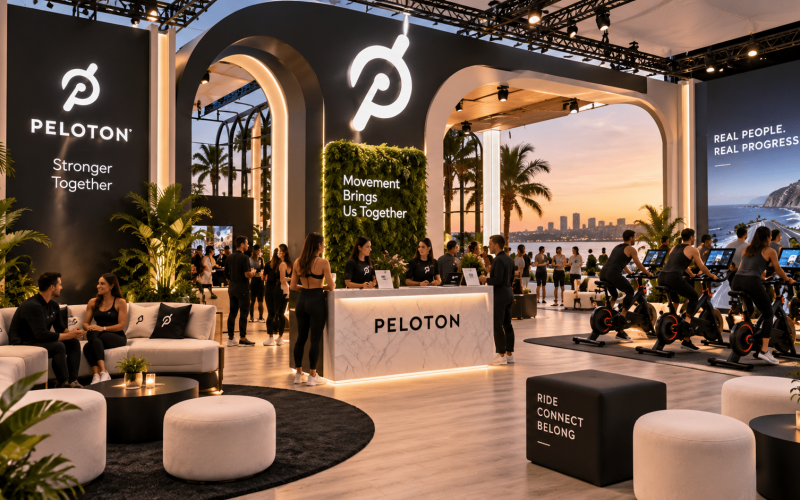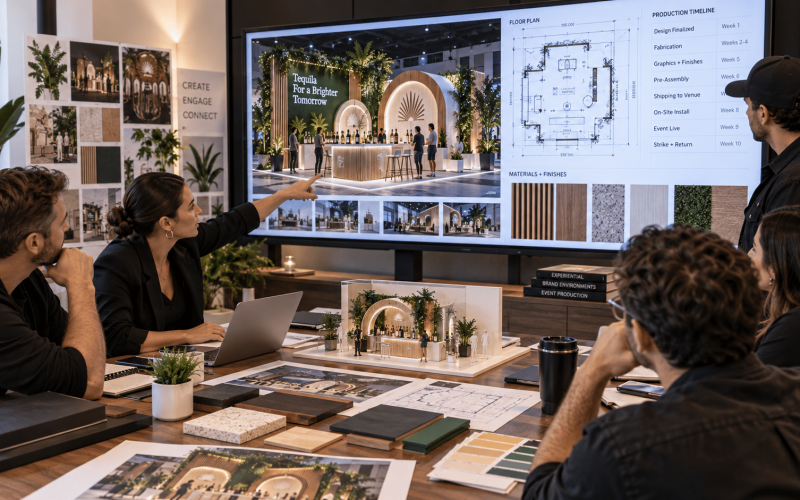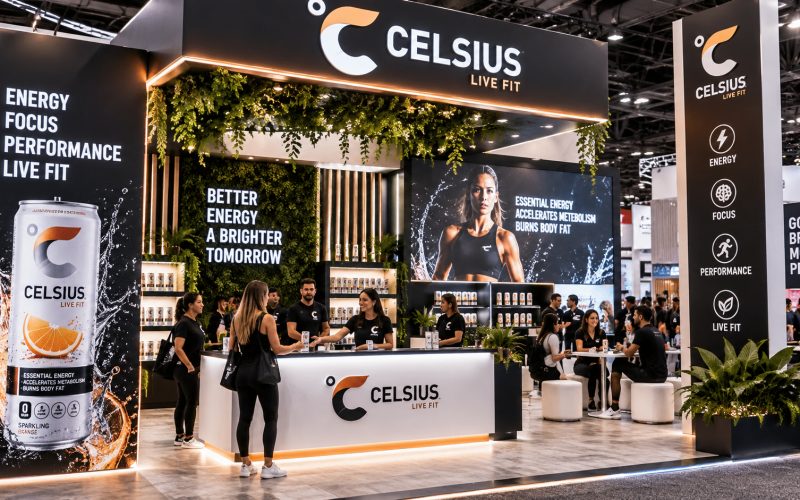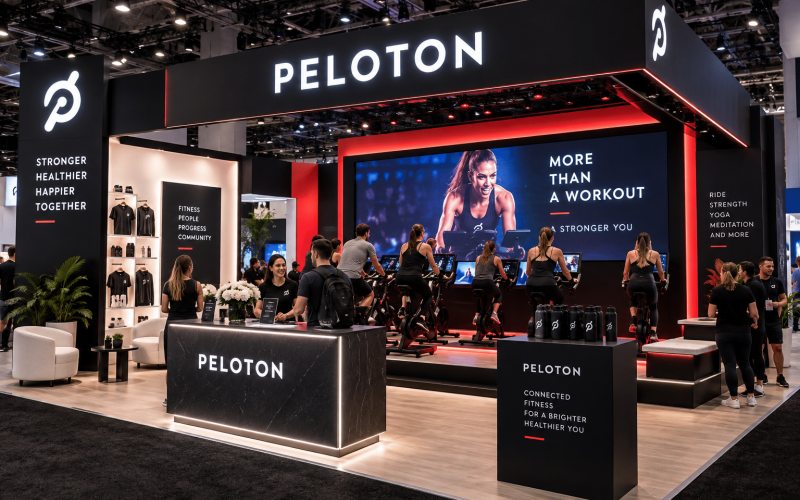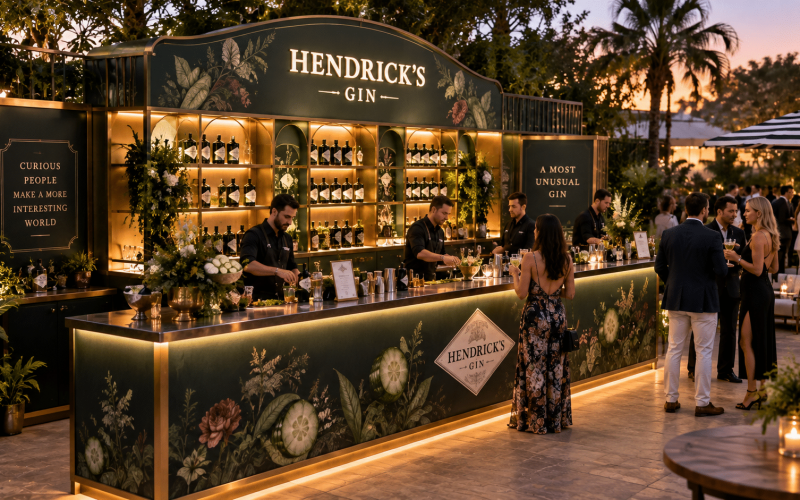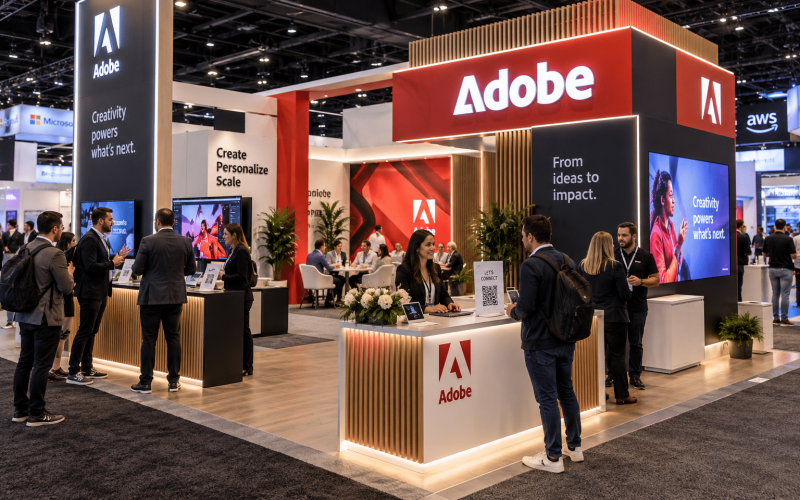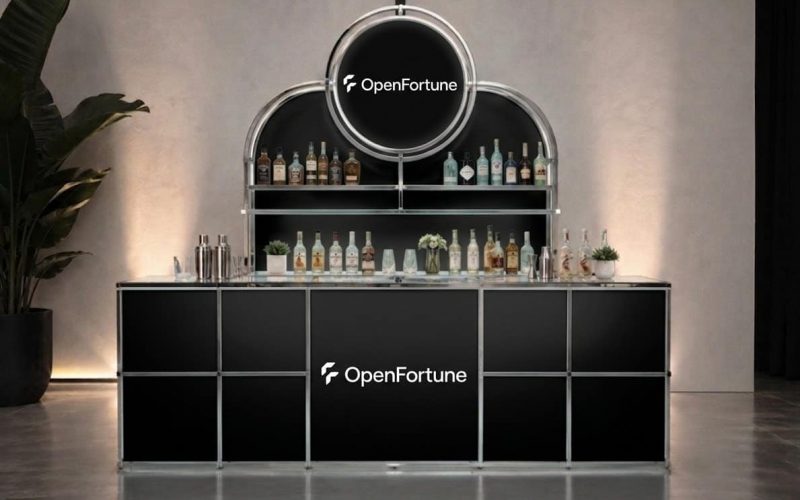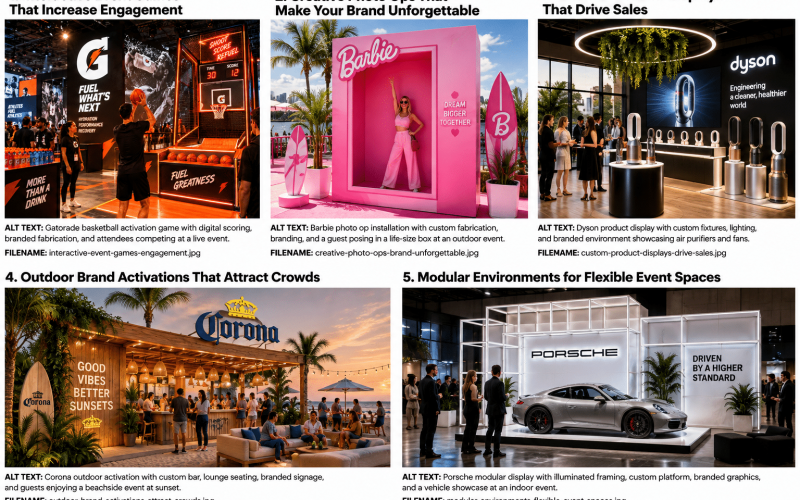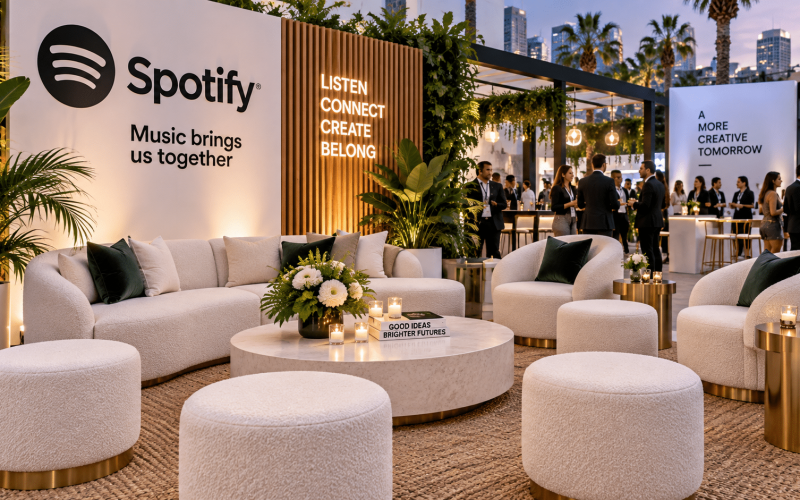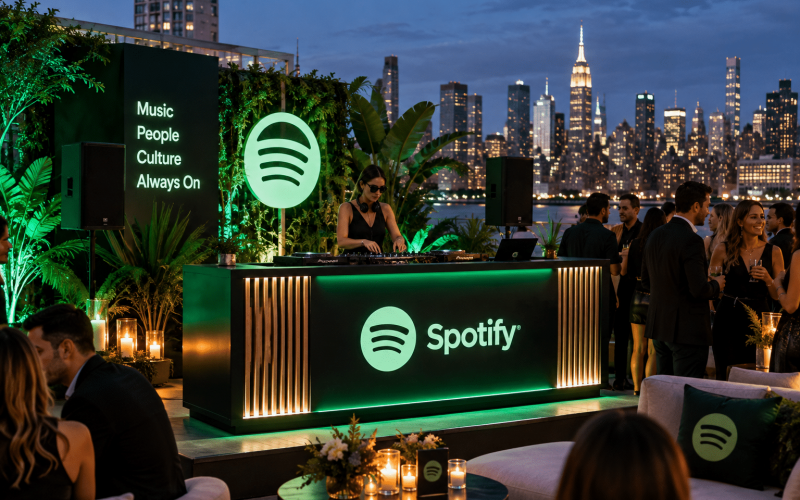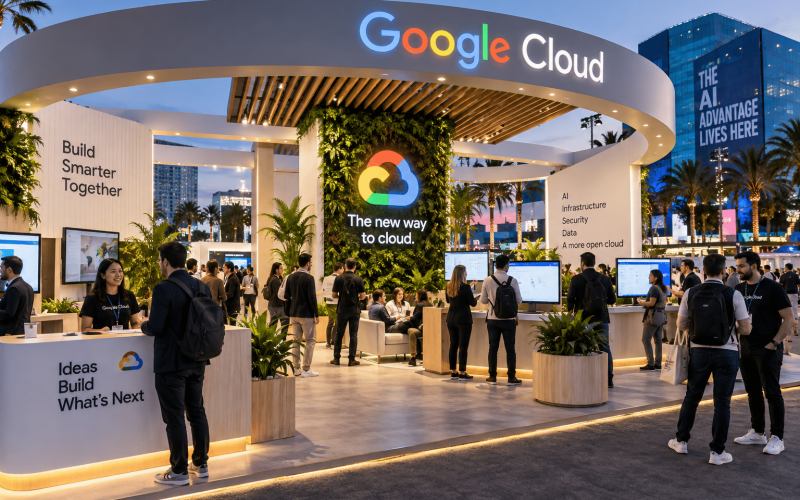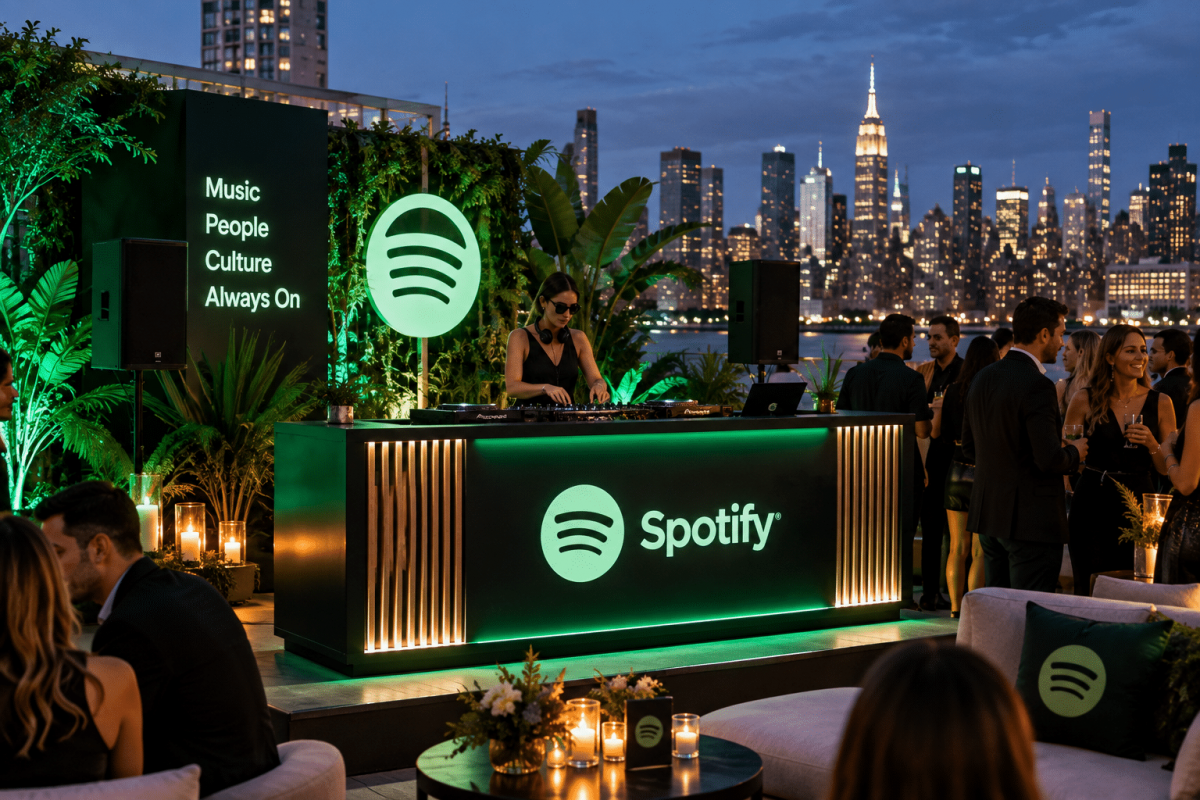
A temporary event structure has only a few seconds to communicate the brand, pull attendees in, and support the experience happening inside it. That is why temporary branded structures fabrication is more than producing printed walls or adding a logo to a counter. It is the process of turning a campaign concept into a physical environment that can be transported, installed, used hard, and removed without compromising the intended brand experience.
For brand marketers, agency teams, and event producers, the fabrication decision affects nearly every part of a live activation. It influences sightlines, guest flow, staffing, product display, content capture, venue compliance, and the speed of load-in. A structure that looks exceptional in a rendering but does not account for real-world event conditions creates expensive production problems. The best outcome is a build that makes the creative idea easier to execute.
What temporary branded structures need to accomplish
Temporary does not mean disposable or low-impact. A branded structure may be used for one product launch, tour through several markets, or become a reusable asset for trade shows and annual events. Its required lifespan should shape the materials, finish quality, hardware, and packing method from the beginning.
Most structures need to do several jobs at once. They establish a recognizable brand presence from across the room, organize an activation footprint, and give staff a practical place to engage guests. Depending on the campaign, the build may also house a product demo, interactive game, sampling station, photo moment, registration point, retail display, or hospitality area.
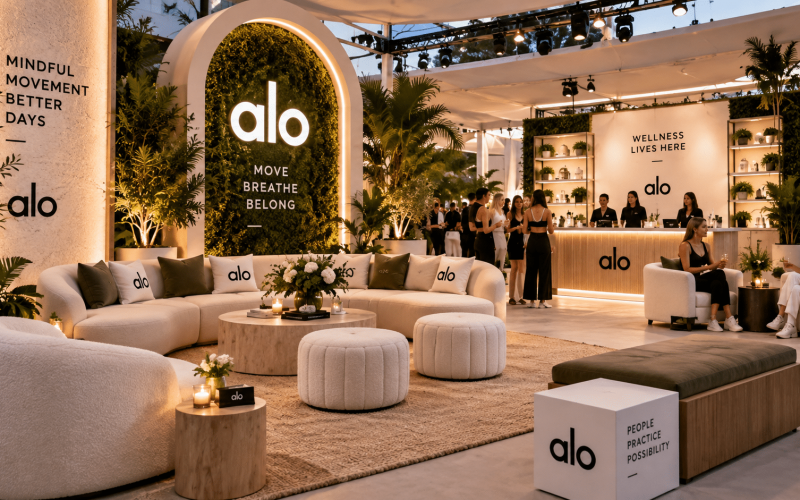
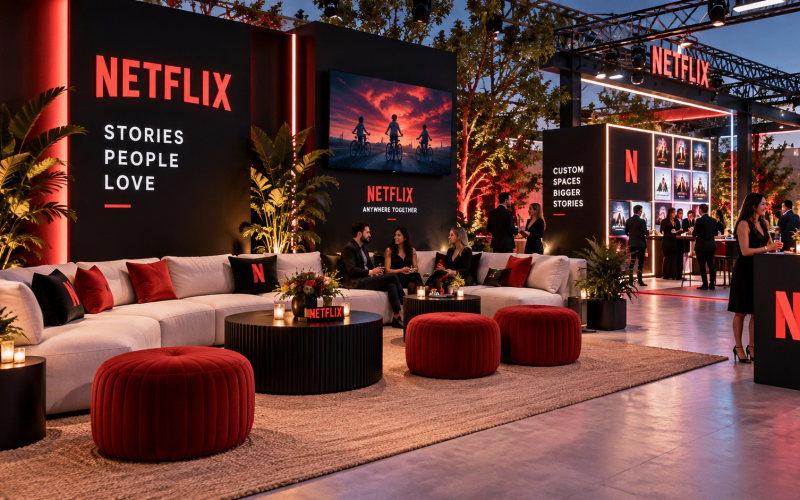
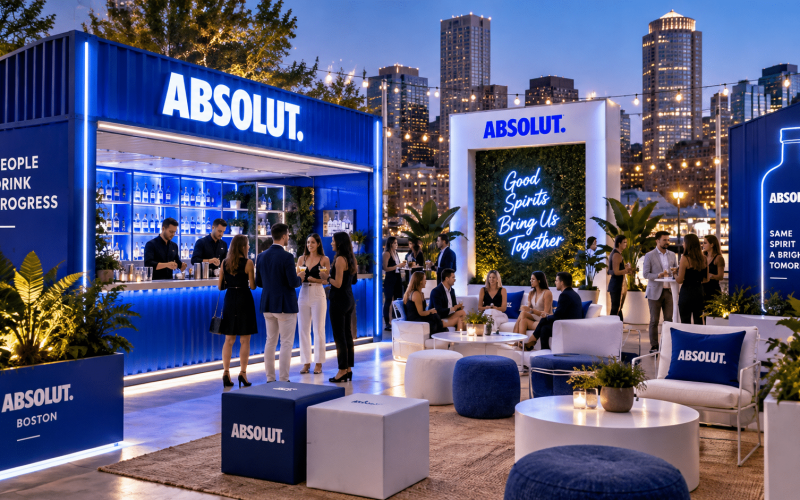
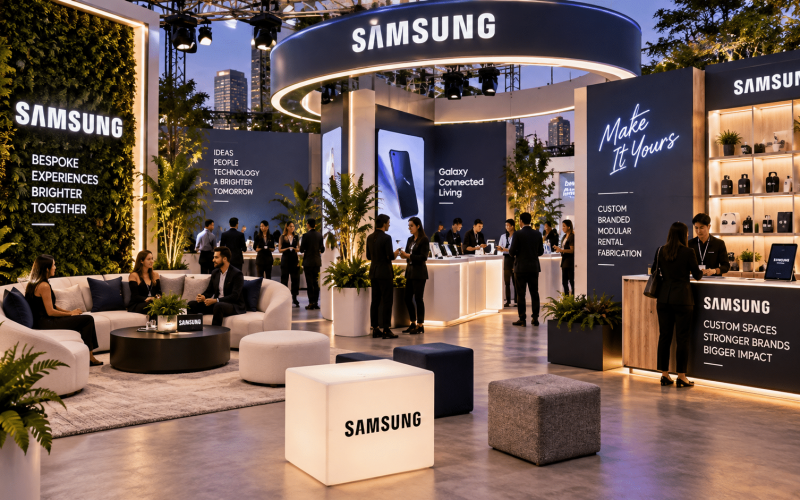
That combination makes fabrication a production discipline, not simply a graphic application. Branded panels, dimensional lettering, custom furniture, counters, arches, kiosks, display systems, and scenic elements have to work together as one environment. The structural components, branded surfaces, lighting integration, electrical access, and guest-facing details all need to be considered before the shop starts cutting material.
Start with the event reality, not only the renderings
A strong concept is essential, but a fabrication partner needs the operating conditions behind the concept. An image can show a dramatic entry portal or an enclosed product lounge. It cannot always show where the power drop sits, whether the venue permits hanging elements, how a pallet reaches the floor, or how guests move through a tight booth footprint.
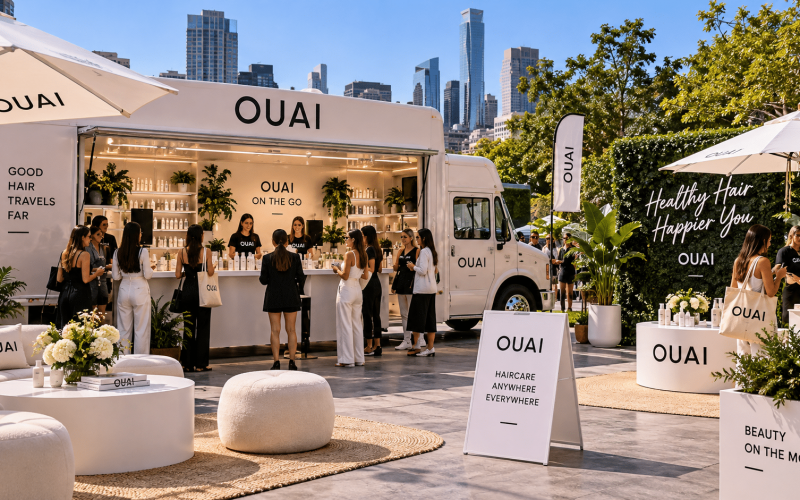
Early production planning should account for the venue, schedule, audience volume, staffing model, and transportation route. An indoor trade show booth has a different set of constraints than an outdoor street-team activation. A one-day press event can prioritize a highly finished custom build, while a multi-city campaign may need modular components that fit in standardized cases and can be installed consistently by different crews.
The questions that matter most are practical:
- How long will the structure be in use, and how many times will it travel?
- What are the exact footprint, height, fire-safety, and access requirements?
- Which elements must be custom-built, and which can be supported by rental inventory?
- How will staff operate the space during peak attendee traffic?
- What needs to be replaced, refreshed, or rebranded between events?
Those answers define the right fabrication path. They also prevent a common mistake: building a beautiful centerpiece that leaves too little room for the actual interaction the campaign is designed to create.
Choosing the right fabrication approach
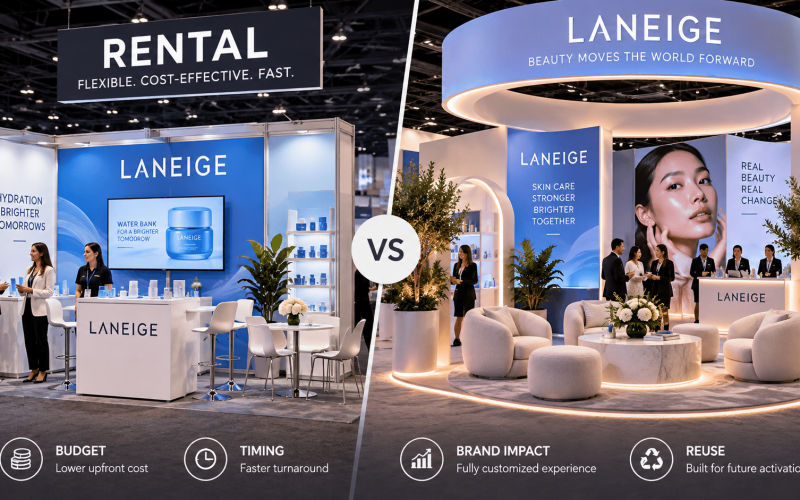
There is no universal material or construction method for temporary branded structures. The right choice depends on the visual goal, deployment schedule, budget, and expected reuse. Custom wood fabrication can deliver substantial, polished environments and integrate shelving, storage, counters, and dimensional details. Lightweight aluminum framing and tension-fabric systems can reduce shipping weight and speed installation. Printed panels, vinyl graphics, acrylic, metal, laminate, LED features, and routed signage can be combined to create a more layered finish.
The trade-off is usually between permanence, portability, and cost. A highly custom scenic environment can deliver a major visual payoff for a flagship launch, but it may require more labor and freight than a touring program can justify. A modular system can be efficient for repeat deployment, but it should not feel generic or force the campaign into a standard layout.
The most effective programs often use a hybrid approach. Custom-built hero elements create the signature visual moment, while rentable furniture, flooring, stanchions, display pieces, or support equipment round out the footprint. This lets teams focus fabrication dollars where guests will notice them most while keeping the overall event package more flexible.
Build for assembly, service, and breakdown
Every fabricated piece should have a plan for how it arrives, connects, and leaves. Large structures may need to break into manageable sections. Hardware should be concealed where possible but still accessible to installers. Repeating parts should be labeled, protected during transit, and designed so the finished face is not damaged during assembly.
This matters even more for structures that include technology or interactive elements. Screens, sensors, game components, charging ports, and lighting require protected cable paths, ventilation where needed, and access for troubleshooting. A polished exterior cannot compensate for a station that becomes difficult to operate once doors open.
Fabrication teams should also plan for the practical details attendees rarely see: weighted bases, clean interior storage, replaceable graphic faces, adjustable leveling, safe edge treatments, and durable high-touch surfaces. These decisions protect the guest experience and reduce on-site fixes.
Brand consistency happens in the details
A logo alone does not make a branded environment feel on-brand. The physical expression of the campaign comes through in proportions, materials, texture, color accuracy, lighting, typography, and how people are invited to interact with the space.
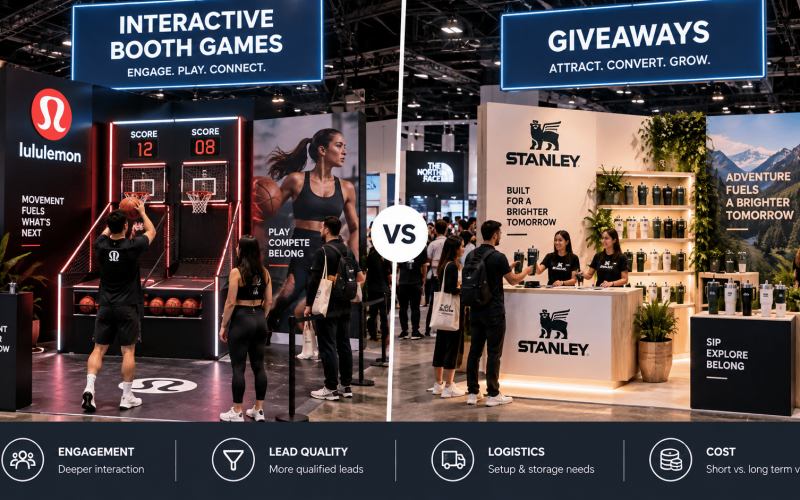
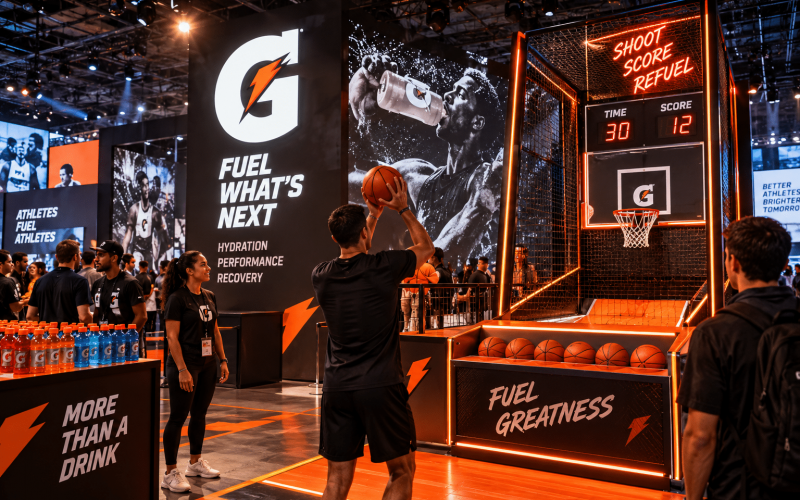
For example, a premium consumer brand may need refined finishes, controlled lighting, and hidden operational components to support an elevated product moment. A sports or entertainment activation may benefit from oversized graphics, bold game mechanics, visible scorekeeping, and materials built for fast, high-volume engagement. Neither approach is inherently better. The structure needs to reflect what the brand wants attendees to feel and do.
Color matching deserves particular attention. Printed graphics, painted surfaces, laminate, fabric, and illuminated signage can all render color differently. When brand standards are strict, material samples and production proofs help identify mismatches before the final build. The same is true for dimensional logos and custom typography, where letter depth, mounting method, shadow, and lighting can change how a mark reads on camera and in person.
At Portadecor, the goal of fabrication is not to separate creative from operations. It is to build branded assets that give agencies and marketing teams a practical way to deliver the experience they sold internally and to their client.
How to protect the schedule without reducing quality
Temporary branded structures often sit on the critical path for an event. Design changes, late venue information, shipping windows, permit requirements, and revised brand assets can all affect the production calendar. The solution is not to rush fabrication at the end. It is to identify decisions that lock in cost and timing early.
Dimensions, material selections, graphics, technology requirements, and installation conditions should be confirmed before final production. If creative changes are expected, teams can preserve flexibility by designing replaceable graphic skins, modular signage, or interchangeable content panels rather than rebuilding structural components.
A clear approval process also matters. Fabrication drawings and finish samples give stakeholders a concrete checkpoint before production moves forward. For high-visibility activations, a shop review or pre-event test fit can reveal issues with guest flow, sightlines, and interactive use while changes are still manageable.
It depends on the scale of the program, but planning for contingency is usually worth the effort. Extra graphics, touch-up materials, spare hardware, and documented assembly instructions can protect a live event from a small failure that would otherwise become highly visible.
Measure the structure by what it enables
The right temporary structure is not necessarily the largest one or the most elaborate one. It is the one that helps the event team achieve its intended result: more meaningful product engagement, a clearer brand message, better attendee flow, stronger content opportunities, or a more efficient booth operation.
Before approving a build, connect it to the activation’s success criteria. If the objective is product trial, make room for a clear demonstration and fast reset. If the objective is lead capture, design the entry and queue so people understand where to go. If social content is a priority, consider camera angles, lighting, and how the brand appears in a guest-generated photo.
Temporary branded structures fabrication works best when the physical environment is treated as part of the campaign strategy, not an item to solve after creative is complete. Build around the real experience you need attendees to have, and the finished structure will do more than occupy a footprint. It will give the brand a credible, usable place to show up.