How to Create Activation Games That Draw a Crowd

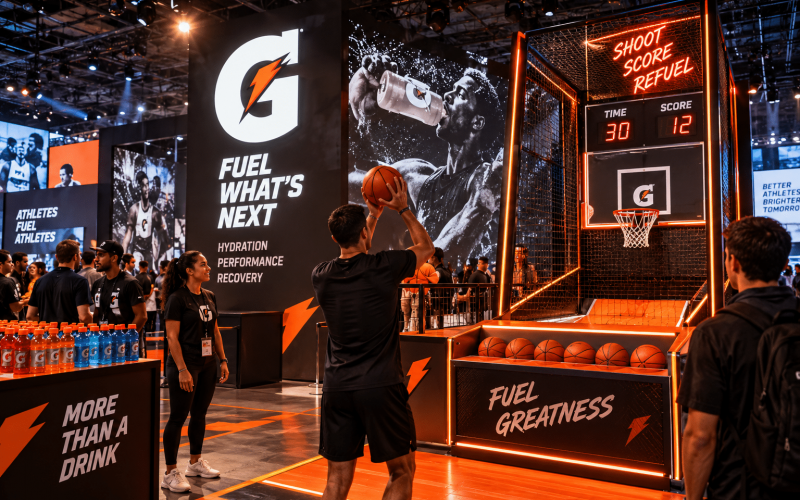
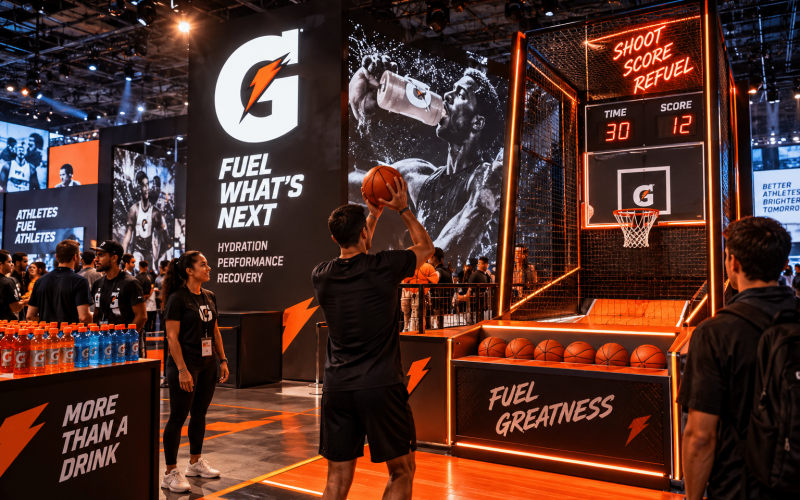
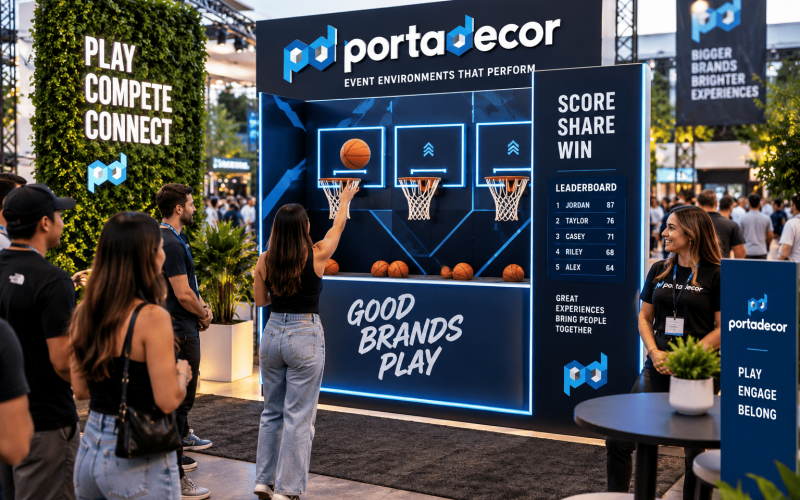
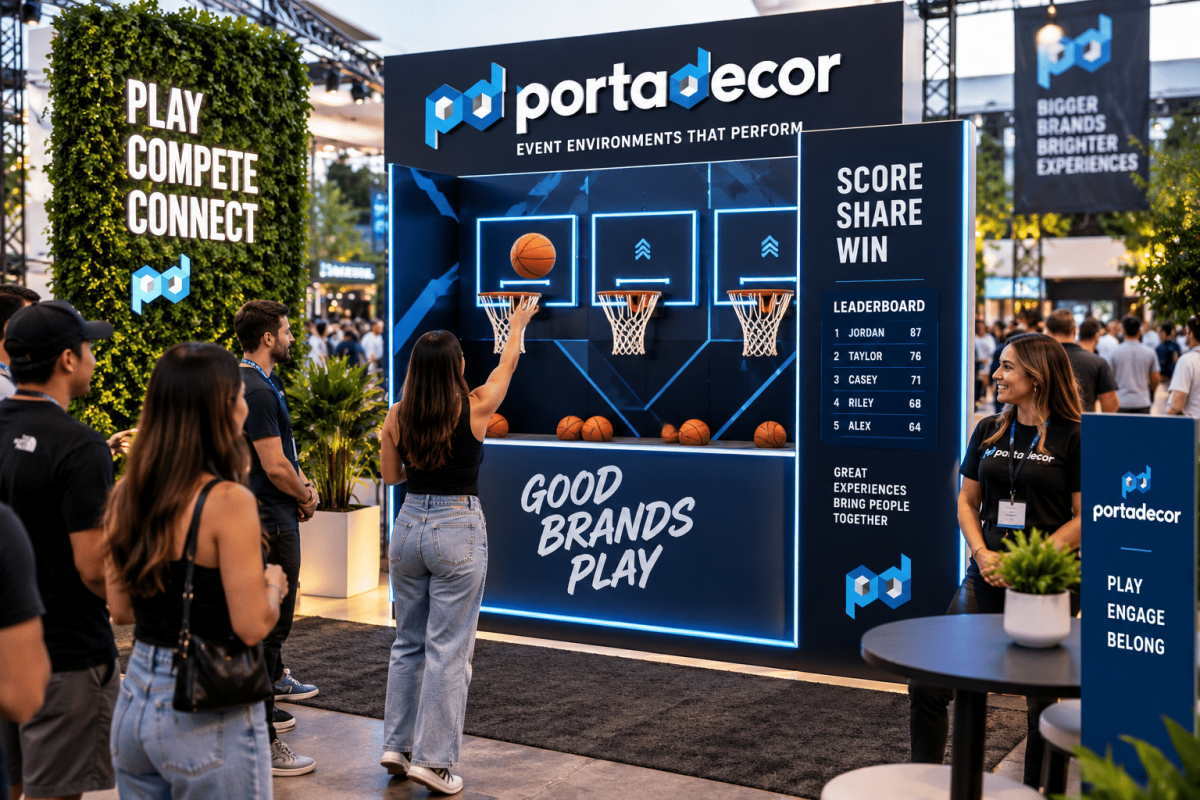
Interactive basketball activation game with branded targets, digital scoring, and guests competing at a live event.

A game can bring people into a brand activation, but it will not keep them there unless the experience is built around a clear audience behavior. When teams ask how to create activation games, the real question is usually how to turn a brand message into a physical interaction that people understand quickly, want to complete, and remember after the event.

The strongest activation games are not standalone entertainment. They connect a simple challenge to a product benefit, campaign theme, or desired action, then support it with fabrication, staffing, and traffic flow that work in a live environment. That requires more planning than adding a prize wheel to a booth.

Start With the Behavior You Want to Create

Before choosing a game format, define what success looks like on the floor. A product launch may need attendees to handle a new item. A trade show booth may need qualified conversations with buyers. A sampling campaign may need social content, opt-ins, or a reason for people to return with friends.

A game should create one primary behavior and support one or two secondary outcomes. Trying to collect detailed lead data, explain five product features, generate video content, distribute samples, and entertain a large crowd in a two-minute game usually creates friction. Decide what matters most, then design the interaction around it.

For example, a beverage brand promoting flavor variety could build a timed matching challenge that requires players to identify product colors, ingredients, or flavor cues. A technology company demonstrating speed might use a reaction game with a visible leaderboard. The mechanics make the product benefit tangible without forcing a long sales pitch.

The key test is simple: if the branding were removed, would the game still feel connected to the campaign? If the answer is no, the concept needs a stronger link between play and message.

How to Create Activation Games Around a Clear Player Journey

Every successful game has a beginning, a moment of play, and a clear exit. At an event, that journey needs to work for people who have never seen the activation before and may only give it a few seconds of attention.

Make the invitation visible from a distance

Attendees should be able to identify the activity and its reward before they reach the queue. Large-format signage, an obvious game object, moving lights, a visible leaderboard, or the sound of active play can all help create a draw. The physical structure should communicate the action. If people need to read a paragraph to understand what to do, the concept is too complicated for most show floors.

The entry point also needs a staffing plan. A brand ambassador can explain rules, reset the game, manage waivers where needed, and move players through the line. Without this role, even a well-designed game can feel confusing or neglected.

Keep the rules to one sentence

The best activation instructions are direct: land three shots, match the pattern, beat the clock, or find the hidden item. A player should understand the challenge in five to ten seconds.

Complexity is not always bad. A multi-step game can work at a private event, VIP lounge, or appointment-based experience where participants have more time. For a high-volume public activation, however, the trade-off is usually unfavorable. Longer instructions reduce throughput, create uneven participation, and make it harder for staff to reset the experience.

Design the payoff before the challenge

The reward does not always need to be expensive, but it should feel immediate and intentional. It may be a branded prize, a product sample, entry into a larger giveaway, a personalized takeaway, or recognition on a leaderboard. The payoff should match the effort required.

A ten-second toss game can support quick-win prizes. A more involved challenge may justify a premium reward or a chance to unlock exclusive event content. Be transparent about the outcome. Players should know whether everyone receives something, whether skill affects the prize, and whether there are eligibility restrictions.

Create an exit that serves the campaign

The game ends, but the brand interaction should have a purpose. This is where a host can offer a sample, direct a qualified attendee to a product specialist, capture a lead with consent, or invite the player to share a photo. Keep this step short and relevant. Requiring a lengthy form after a fast game is one of the quickest ways to create a line and reduce goodwill.

Choose a Format That Fits the Venue and Audience

Game formats should be selected for the event conditions, not just because they performed well on social media. A compact trade show booth has different needs than an outdoor festival footprint or a multi-city retail pop-up.

Skill games such as ring toss, putting, basketball, and target throws are familiar and easy to explain. They work well when a product message can be built into the target, scoring, or game piece. Their limitation is space: players need safe clearance, and missed attempts must not interfere with adjacent booths or foot traffic.

Reaction, timing, and button-based games are useful for technology, automotive, sports, and performance-oriented campaigns. They can create competitive energy with a digital score display, but screens, sensors, power, and software introduce additional production requirements. Plan for cable management, backup equipment, and a manual operating procedure if a component fails.

Puzzle and discovery games can be effective for brands that need to communicate more information. A lockbox challenge, magnetic wall, product-matching experience, or branded scavenger mechanic gives attendees a reason to engage with campaign details. These concepts work best when the puzzle is short and the physical components are durable enough for repeated handling.

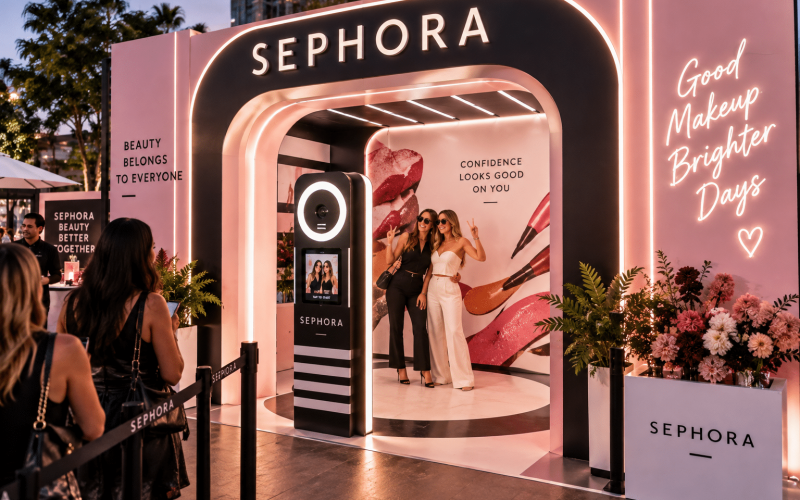
Photo-driven games, including digital prize reveals and interactive backdrops, can produce shareable content. Their value depends on whether the visual output is genuinely worth saving. A generic frame with a logo rarely creates meaningful organic distribution. Custom scenic elements, strong lighting, and a recognizable campaign moment matter more than adding a screen.

Build for Throughput, Reset Time, and Durability

A game that looks impressive in a pitch deck can fail on event day if it cannot process attendees consistently. Estimate the cycle time from the moment a player joins the activity until the next player can begin. Include instructions, play time, prize fulfillment, photo moments, and resets.

If the game takes two minutes and one staff member manages it, the practical capacity may be 25 to 30 people per hour after pauses and crowd management. If your event expects several hundred visitors in a short window, consider parallel play stations, a shorter version of the challenge, or a spectator component that keeps the queue interested.

Reset time deserves special attention. Loose pieces need collection. Digital systems need to return to a start screen. Consumable materials need replenishment. A custom fabrication partner can solve many of these issues through integrated storage, concealed ball returns, protected electronics, replaceable graphics, and modular surfaces that make transportation and setup more efficient.

Durability is not a cosmetic concern. Activation games are touched, leaned on, bumped by carts, moved through loading docks, and used by people with different levels of enthusiasm. Specify finishes, hardware, edge protection, and base weights for the actual environment. Outdoor activations may require weather-resistant materials and wind planning. Indoor venues may impose height limits, fire-rating requirements, or restrictions on sound and power.

Make the Brand Present Without Making It the Obstacle

Branding should clarify the experience, not overwhelm it. Use color, shape, product details, and campaign language to make the game feel proprietary. A custom-built game can incorporate branded targets, sculptural logos, dimensional product replicas, or scenic elements that turn a familiar mechanic into a recognizable brand asset.

Avoid placing essential instructions over heavily patterned graphics or turning every surface into a logo field. Participants need visual hierarchy: where to stand, what to touch, where to look, and what they can win. The brand will be more memorable when the experience feels polished and intuitive.

Accessibility should be part of the concept stage. Provide a playable height where possible, leave clear approach space, offer alternatives to physically demanding mechanics, and make instructions readable. A game does not need to be identical for every participant, but it should give more people a meaningful way to take part.

Prototype Before Fabrication Is Final

Test the game mechanics with real people before committing to final materials, electronics, and graphics. A low-fidelity prototype can reveal whether targets are too difficult, instructions are unclear, prizes create bottlenecks, or the game takes longer than planned.

Run a short test with people who were not involved in the concept. Watch where they hesitate. If they ask the same question repeatedly, change the physical cue or simplify the rule. If only highly competitive players can succeed, adjust the difficulty so casual attendees still leave with a positive experience.

For custom builds, final production should account for freight, installation, storage, and future use. Modular branded skins and adaptable game components can extend the value of an asset across multiple stops while allowing campaign graphics to change. Portadecor approaches activation fabrication with these real-world operating conditions in mind, not just the initial visual concept.

The right game gives attendees a reason to stop, gives staff a clear interaction to manage, and gives the brand a moment that can only happen in person. Start with the behavior you need, then let the mechanics and fabrication serve that purpose.
Share this post with your friends

We Create One-of-a-Kind Custom Event Products That Showcase Your Brand in Bold, Memorable Ways!

Request more information about our custom products!

Fill out the form below and we will get back to you

Related Blog Articles

Gamified brand activation with interactive challenges, digital scoring, custom fabrication, and guests competing at a live event.

Gamified Event Experiences That Drive Engagement

Learn how gamified event experiences turn brand activations and trade show booths into measurable engagement with smart fabrication and event planning.
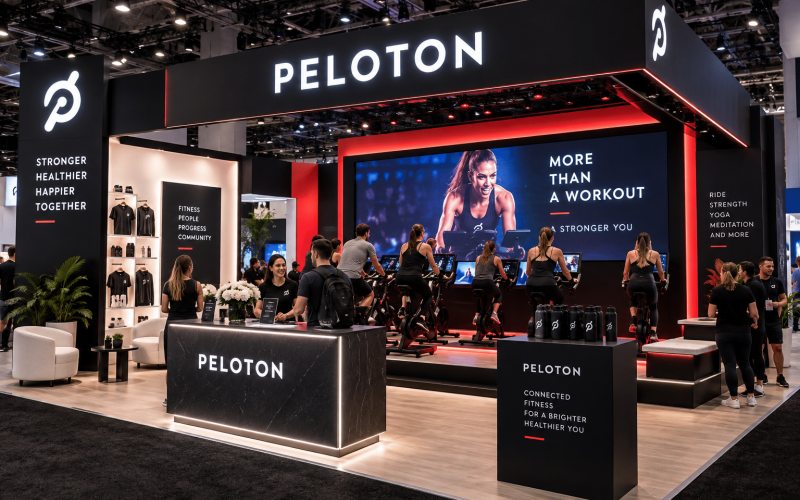
Peloton live event environment combining custom fabrication, lounge furniture, product demonstrations, branded graphics, and guest engagement.

What Live Events Need to Deliver Brand Impact

Live events succeed when every physical detail supports the brand. See how fabrication, furniture, and flow build engagement from arrival to the exit.
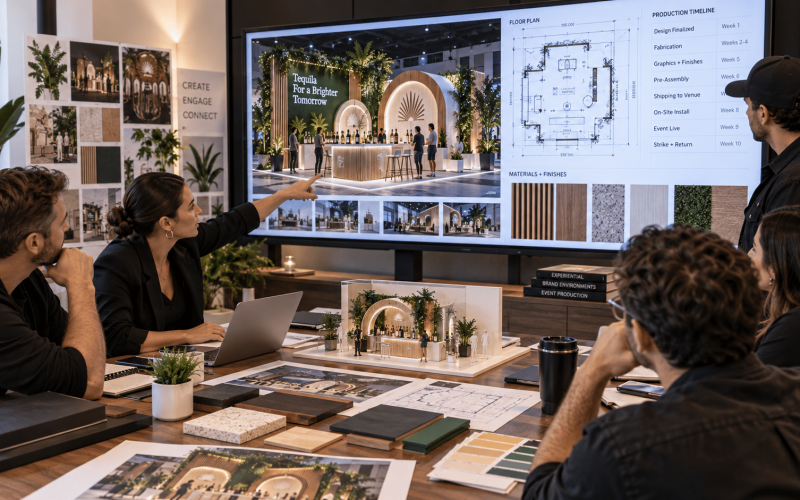
Agency team reviewing event renderings, floor plans, material samples, and production details for a custom brand activation.

Agency Fabrication Briefing Guide for Live Events

Use this agency fabrication briefing guide to define scope, materials, timelines, and logistics for custom brand activations, booths, and event builds.
Custom trade show booth with product demos, meeting areas, and attendees engaging with brand representatives.

Trade Shows That Turn Booth Traffic Into Results

Trade shows perform better when strategy, fabrication, staffing, and lead follow-up work together. Build a booth experience that supports real outcomes.
Peloton trade show booth with live cycling demonstrations, product displays, meeting space, and attendees interacting with brand representatives.

10 Trade Show Lead Capture Examples That Work

See trade show lead capture examples that turn booth visits into qualified sales conversations, better follow-up, and clear event results for your team.
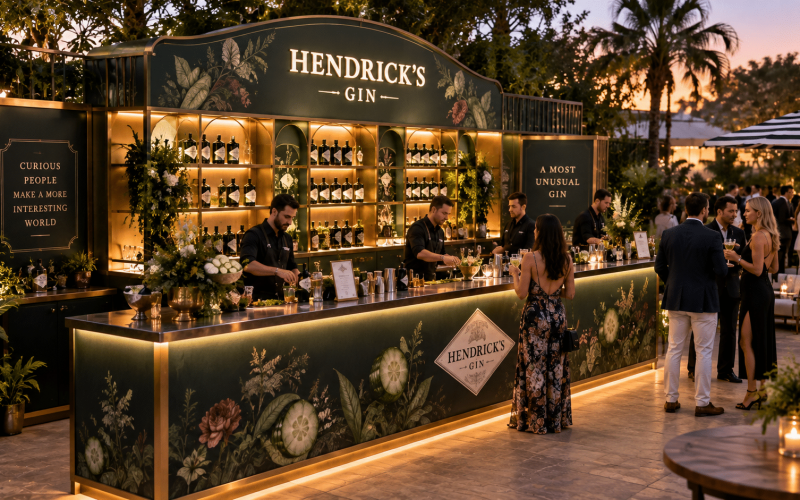
Custom Hendrick’s Gin event bar with illuminated branding, back bar displays, integrated storage, and bartenders serving guests.

Top Branded Bar Designs That Work at Events

See how top branded bar designs combine service flow, durable fabrication, and visible branding for trade shows, pop-ups, and high-volume activations.
Custom branded event bar with illuminated signage, product displays, integrated storage, and guest service areas.

Top Branded Bar Designs That Work at Events

See how top branded bar designs combine service flow, durable fabrication, and visible branding for trade shows, pop-ups, and high-volume activations.
Custom event fabrication project showing a branded exhibit progressing from production planning to a finished event environment.

Fabrication Lead Times for Better Live Events

Understand fabrication lead times for brand activations, trade show booths, and custom event builds - and plan production with confidence for every event.
Experiential marketing and activations. For events and brands.

What Experiential Marketing Requires to Work

Experiential marketing turns brand strategy into live engagement. Learn how to plan, fabricate, operate, and measure experiences that perform on-site.
Branded event lounge with rental sofas, chairs, ottomans, cocktail tables, greenery, and guests networking in a premium event environment.

Should You Choose Event Furniture Rental vs Purchase?

Compare event furniture rental vs purchase for activations, trade shows, and pop-ups. Make the right call on cost, branding, logistics, and reuse today.
Gatorade basketball activation game with digital scoring, branded fabrication, and attendees competing at a live event.

Interactive Event Game Guide for Brand Activations

This interactive event game guide helps brand teams plan engaging activations that attract attendees, support campaign goals, and run reliably on-site.
Custom fabricated. DJ booth., DJ, stand., DJ set up.

Temporary Branded Structures Fabrication

Temporary branded structures fabrication creates activation-ready environments with strong visual impact, safe operation, and efficient event delivery.
Nike experiential activation combining tactile product displays, interactive elements, modular fabrication, and a branded social photo moment.

7 Brand Activation Design Trends That Work

Brand activation design trends shaping live events: modular builds, tactile moments, useful data capture, and fabrication choices that protect budgets.
Samsung product launch environment with custom demo stations, branded displays, guest circulation, and an agency production team supporting the activation.

When Brand Activation Agency Support Drives Results

Brand activation agency support connects creative strategy to fabrication, logistics, and event-ready assets that perform under real-world event pressure.
Sephora custom photo booth with integrated camera lighting, dimensional branding, beauty graphics, and guests posing at a live event.

How to Build Custom Photo Booths for Events

Learn how to build custom photo booths that fit your campaign, from concept and fabrication to tech, transport, and dependable event operations onsite.
Custom fabricated games. Basketball. Football.

Which Booth Games Attract Leads? 7 Smart Picks

Which booth games attract leads at trade shows? Choose interactive formats that earn qualified conversations, capture data, and support your brand goals.
Custom event props. For activations. And trade shows.

Custom Event Props Built for Brand Attention

Custom event props turn campaign ideas into hands-on brand experiences. Learn how to plan, fabricate, and deploy assets built for live events on site.
Custom trade show booths.

Trade Show Booths vs Popups: Which One Fits?

Compare trade show booths vs popups for reach, cost, logistics, and engagement. Choose the right branded environment for your next live marketing campaign.
Custom activations. And 3D props. For experiential. Marketing. And events.

What Makes a Brand Activation Memorable at Events?

What makes a brand activation memorable? Learn how strategy, sensory design, participation, fabrication, and follow-through turn events into recall later.
Dyson pop-up store with custom product displays, illuminated shelving, demonstration counters, and guests exploring the temporary retail environment.

Pop Up Store Fabrication Examples That Work

See pop up store fabrication examples that turn a retail footprint into an operational brand activation built for attention, traffic, and repeat use on site.
Custom branded event environment demonstrating professional fabrication, integrated displays, architectural finishes, lighting, and event-ready construction.

How to Source an Event Fabrication Partner

Learn how to source an event fabrication partner that can turn creative concepts into durable, on-brand activations, booths, and event environments well.
Branded event lounge with comfortable sofas, lounge chairs, cocktail tables, custom cabanas, greenery, and guests relaxing and networking.

Best Event Lounge Furniture for Brand Activations

Choose the best event lounge furniture for activations, trade shows, and pop-ups with guidance on comfort, branding, flow, and logistics for campaigns.
Moët & Chandon branded photo moment with dimensional architecture, floral fabrication, integrated lighting, and a guest posing for event photos.

Branded Photo Moment Ideas for Live Events

Branded photo moment ideas for live events, with fabrication, layout, and operational guidance that turns audience traffic into shareable content onsite.
Interactive basketball activation game with branded targets, digital scoring, and guests competing at a live event.

How to Create Activation Games That Draw a Crowd

Learn how to create activation games that fit your brand, move attendees through the experience, and hold up to real event-day traffic without delays.
Branded event lounge rental featuring custom seating, cocktail tables, greenery, integrated lighting, and a comfortable networking space for live events.

Branded Lounge Rentals NYC That Perform

Branded lounge rentals New Jersey teams use to create comfortable, high-impact event spaces with custom fabrication, smart layouts, and reliable execution.
Custom branded photo op featuring dimensional fabrication, integrated lighting, greenery, product displays, and an interactive guest photo experience.

How to Fabricate Branded Photo Ops That Perform

Learn how to fabricate branded photo ops that attract guests, hold up on site, photograph cleanly, and support measurable event engagement at live events.
Custom Liquid I.V. trade show booth featuring branded displays, sampling counters, integrated lighting, product merchandising, and attendee engagement areas.

Custom Booth Builder Review for Better Event Builds

A custom booth builder review should assess fabrication quality, project management, logistics, and brand fit before your next trade show investment cycle.
Branded lululemon pop-up featuring custom fabrication, product displays, interactive photo moments, lounge furniture, and customer engagement areas.

How to Build Branded Popups That Perform

Learn how to build branded popups that look intentional, move efficiently, and create memorable customer engagement at events, launches, and trade shows.
Custom fabrication versus event rentals comparison featuring branded activation displays, modular structures, sampling counters, and experiential event design.

Custom Fabrication vs Event Rentals Explained

Compare custom fabrication vs event rentals for activations, trade shows, and pop-ups. Choose the right path for brand impact, budget, and reuse plans.
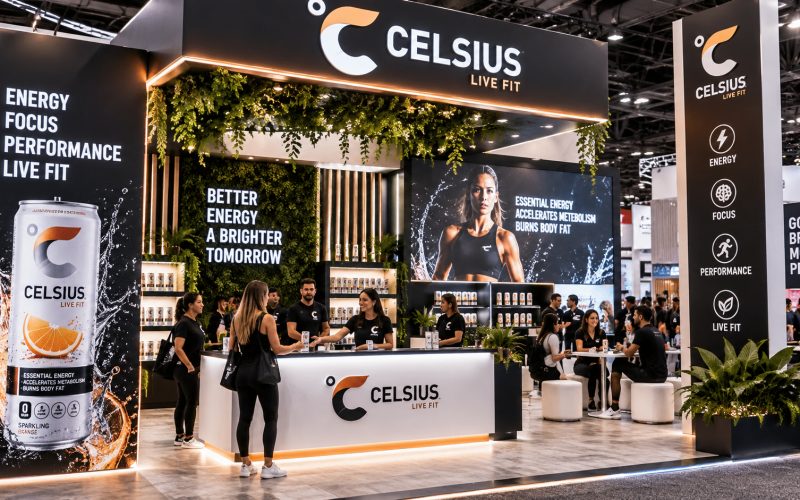
Custom Celsius brand activation featuring an interactive photo experience, oversized product display, sampling bar, and experiential event fabrication.

8 Custom Brand Activation Examples That Draw Crowds

See custom brand activation examples that turn product stories into hands-on event experiences, plus the production choices that make each concept work.