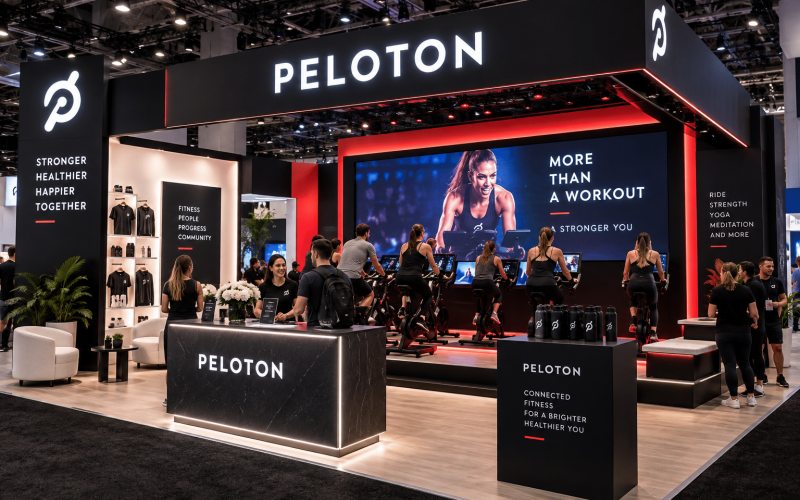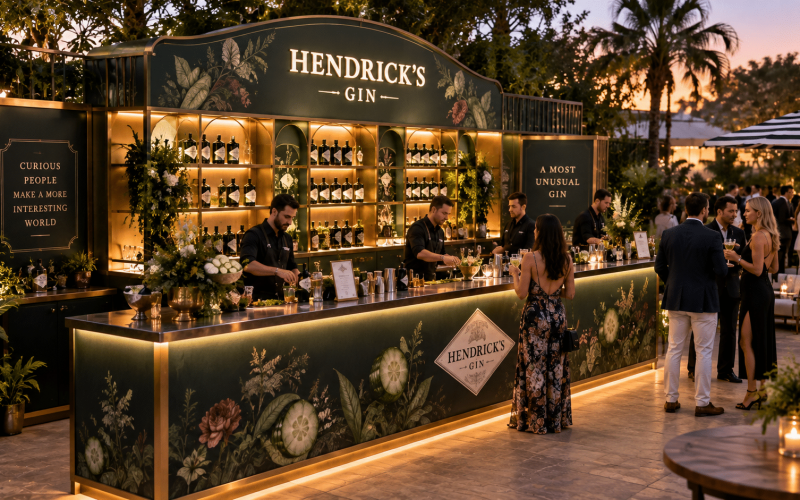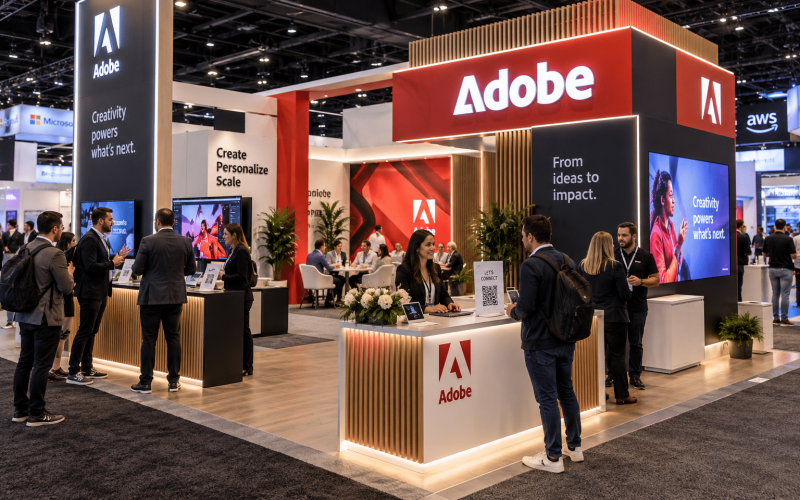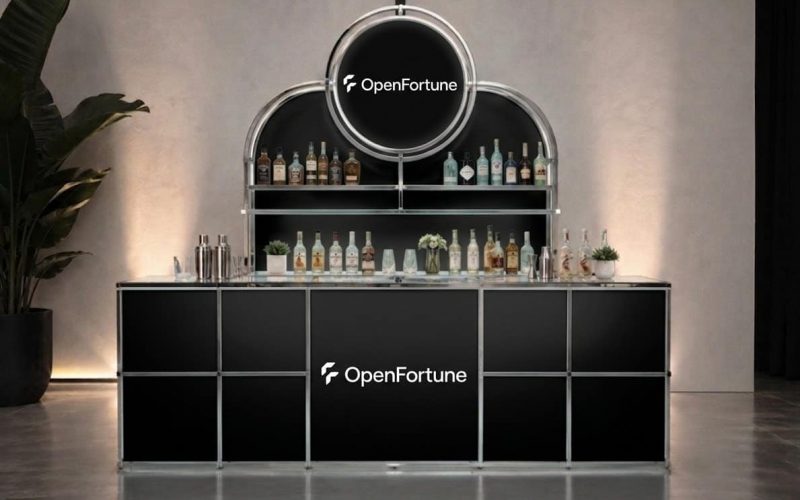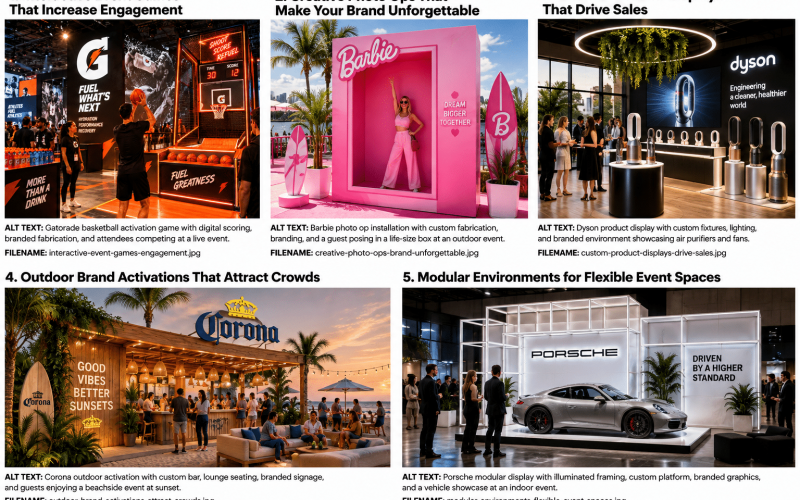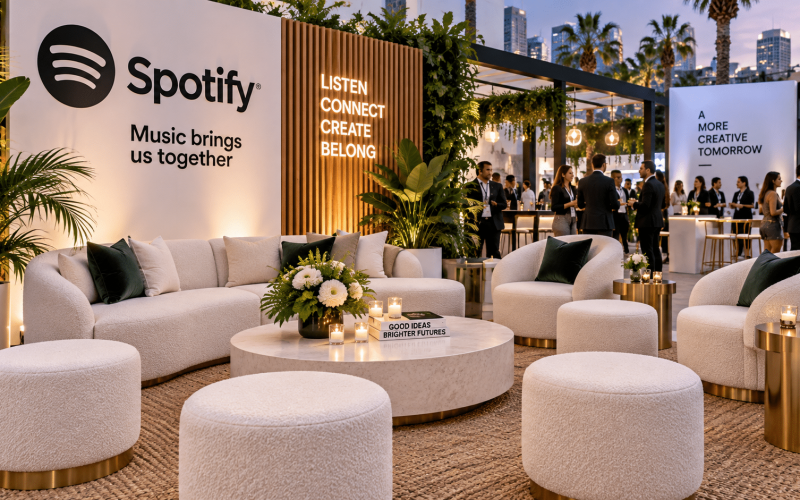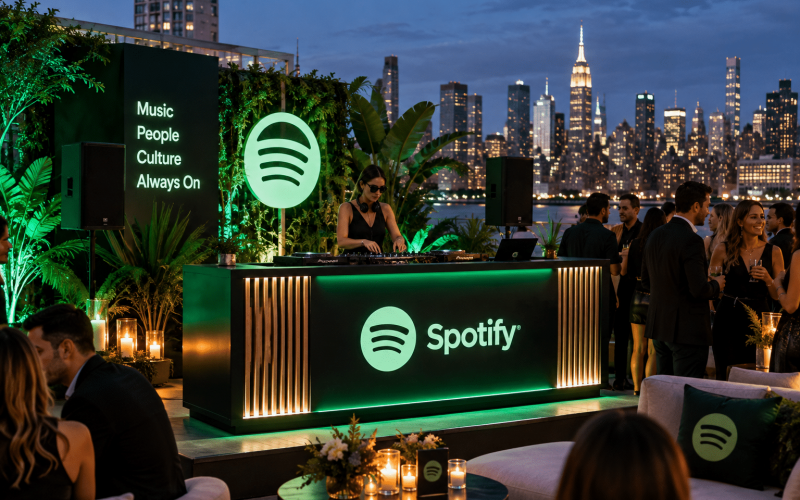
A rental lounge can fill a footprint, but it will not automatically carry a campaign. For brand marketers and event producers, the real question is: are event rentals customizable enough to make the environment feel intentional, branded, and worth engaging with? The answer is yes, with clear limits based on the rental item, venue rules, timeline, budget, and how much of the experience needs to be unique.
The strongest event environments rarely depend on customization alone. They combine well-selected rental pieces with branded surfaces, custom fabrication, lighting, graphics, and interactive elements that give guests a reason to stop. The goal is not to customize every chair or table. It is to make the full space communicate one cohesive brand idea.
Are Event Rentals Customizable? Usually, but Within Limits
Most event rentals can be customized at different levels. A basic level may involve choosing furniture finishes, colors, configurations, and accessories that align with the campaign. A more visible level can include branded pillows, vinyl graphics, decals, tabletop wraps, custom signage, and fitted display components.
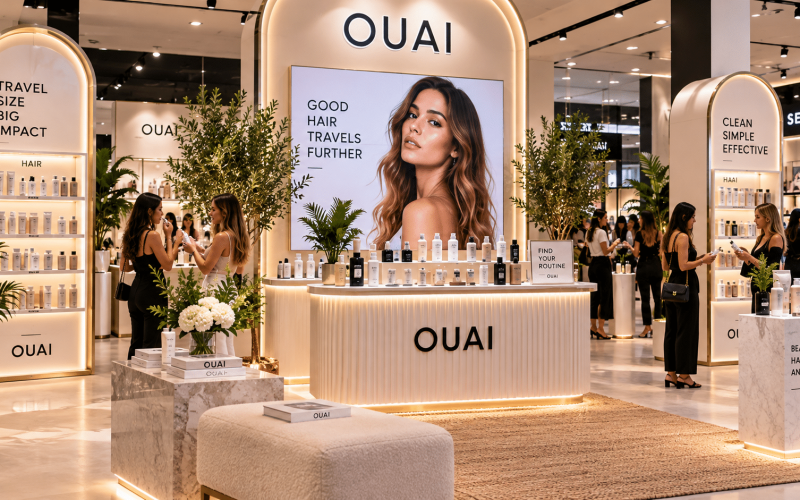
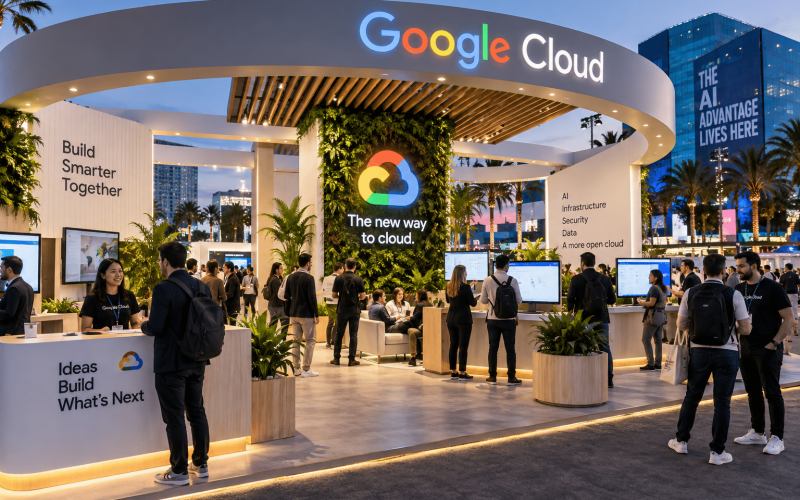
Some rental products can also become the foundation for a more substantial build. A standard bar, reception desk, shelving unit, game table, or lounge grouping may be integrated into a custom branded environment with fabricated facades, dimensional logos, lighting, or product displays. This approach gives a team the speed and cost efficiency of rental inventory while adding the visual ownership of a custom activation.
However, not every rental item should be altered. High-value pieces, upholstered furniture, specialty finishes, and structural components may have restrictions. Permanent changes can create replacement costs or make the item unsuitable for future use. A capable event partner will identify what can be branded directly, what needs a removable treatment, and what should be fabricated separately.
The Three Levels of Rental Customization
Customization is best planned in tiers rather than treated as a single yes-or-no decision. The right tier depends on how prominently the asset appears in the guest journey and how long the campaign will run.
1. Styling and configuration
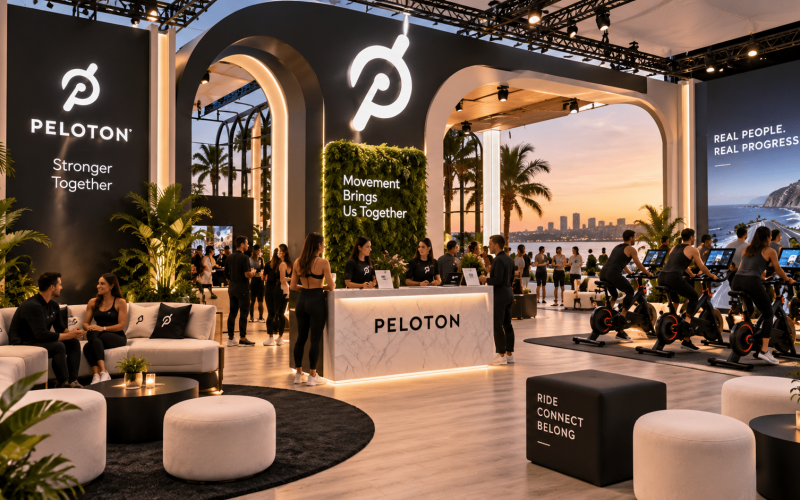
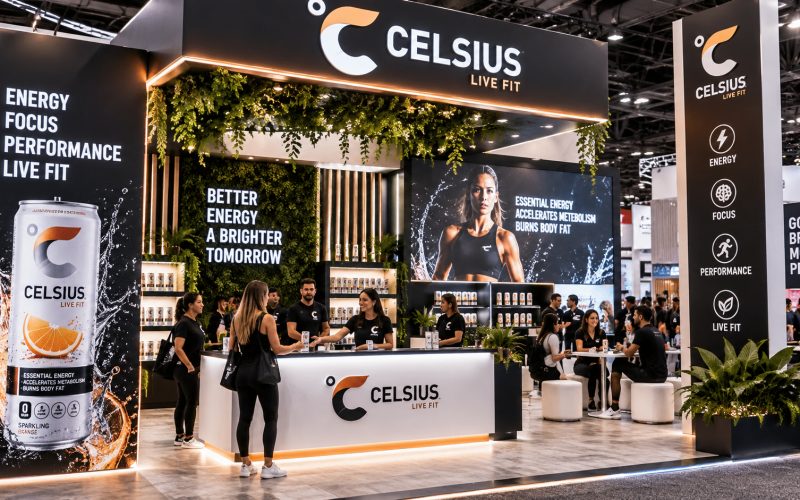
This is the fastest way to make rentals work harder for the event. Furniture selection, upholstery color, tabletop material, layout, and lighting can support a brand palette without modifying the underlying piece. For a trade show booth, that may mean selecting clean-lined white furniture to support product color and graphics. For a premium hospitality lounge, it may mean using darker finishes, layered textures, and tailored seating arrangements that match the desired guest experience.
Styling is useful when the environment needs polish but the brand message will live primarily in larger graphics, product displays, or digital content. It is also the lowest-risk option when the event schedule is tight.
2. Removable branding
Removable graphics and branded accessories are a practical middle ground. Vinyl decals, printed panels, wraps, branded cushions, tabletop graphics, menu holders, and custom signage can transform a rental item without permanently changing it.
This level works especially well for registration counters, bars, shelving, charging stations, display pedestals, and game-related event elements. These touchpoints attract attention and create natural photo opportunities, so they often deliver more value than branding less visible furniture throughout the space.
Removable treatments still require production discipline. A graphic that wrinkles around corners, blocks functional access, or conflicts with hardware will look improvised. Measurements, material selection, installation plans, and strike requirements should be addressed before anything goes to print.
3. Custom fabricated overlays and builds
When a campaign needs a distinct physical identity, custom fabrication is usually the answer. Rather than altering the rental item itself, a fabrication partner can build branded skins, facades, toppers, frames, display towers, feature walls, or interactive housings around it.
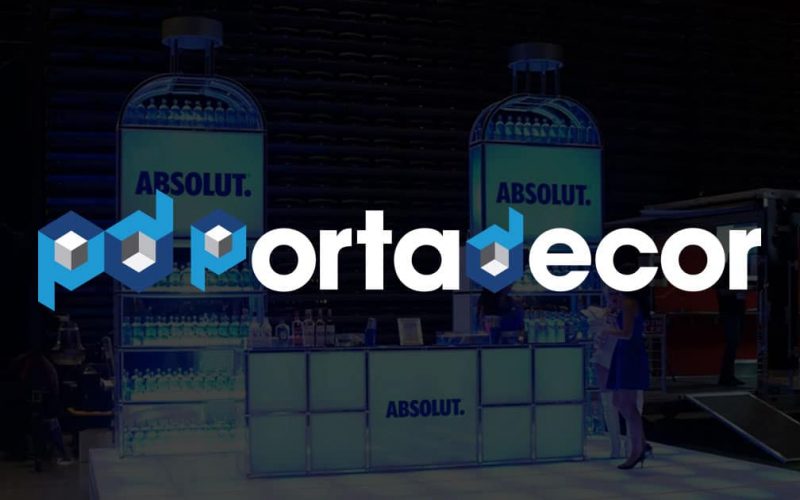
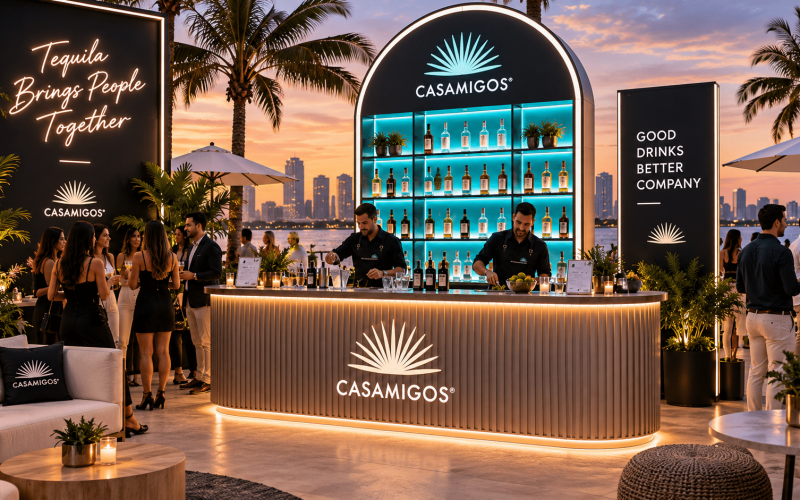
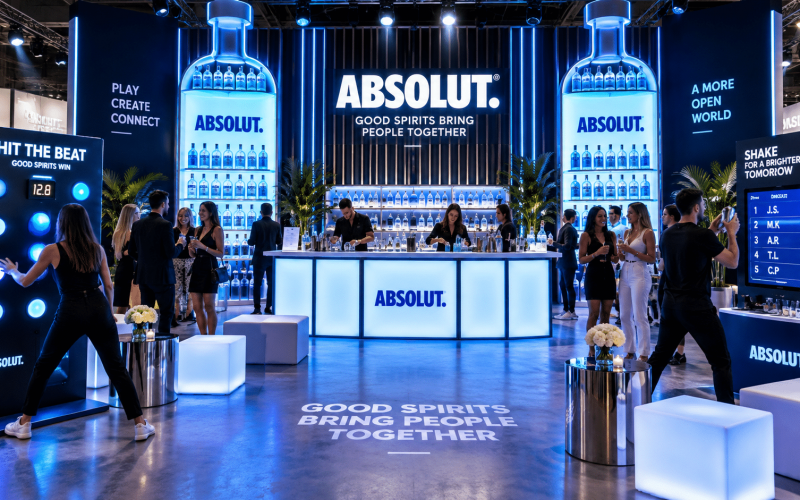
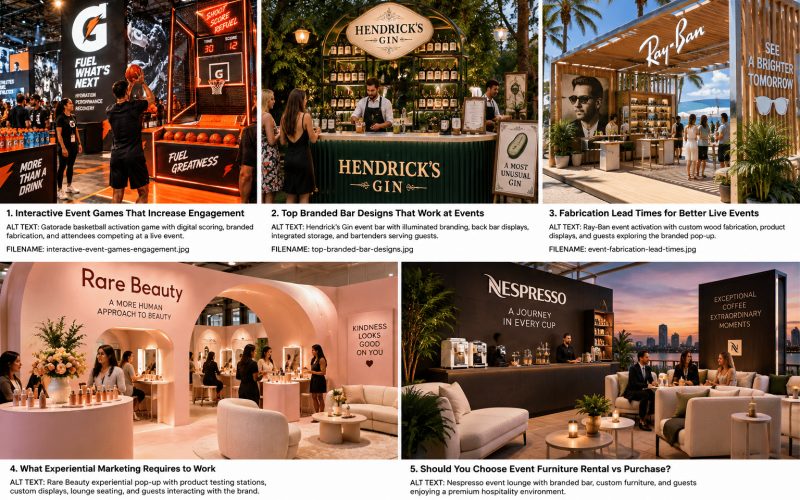
For example, a standard rental bar can become a branded product sampling station with a dimensional logo, illuminated front panel, integrated storage, and a custom counter display. A lounge area can gain a feature wall that creates a contained VIP setting. A rented game table can be paired with a branded scoreboard, prize display, and custom play surface.
This model is particularly effective for multi-market activations. The rental components can be sourced locally where appropriate, while the custom assets travel, ship ahead, or are produced as a reusable kit. It gives brands more control over consistency without requiring every piece of the environment to be built from scratch for each stop.
What Determines How Far You Can Customize?
The main constraint is the type of rental asset. Hard-surface products such as bars, counters, display fixtures, and wall systems are generally easier to adapt than soft seating. A decal or branded panel can be applied cleanly to a flat, durable surface. Upholstered furniture may be better served by branded pillows, throws, adjacent signage, or custom-built accents.
Venue requirements matter just as much. Convention centers, hotels, outdoor sites, and retail pop-ups may limit adhesives, hanging methods, electrical connections, flame-rated materials, or floor loading. A customization plan that looks excellent in a rendering can become expensive if it ignores venue regulations or access conditions.
Timeline also changes the available options. Rental styling can often be resolved quickly. Printed graphics need time for design approval, production, and installation planning. Custom fabrication requires enough lead time for engineering, material sourcing, finishing, quality control, and logistics. If the event is approaching fast, prioritize the guest-facing assets that will create the most impact rather than spreading the budget across minor details.
Finally, consider the lifecycle of the campaign. A one-night product launch may justify custom hero moments and rental support. A touring activation may benefit from durable modular assets designed to pack, ship, and reassemble repeatedly. A trade show program might use a hybrid approach, with a reusable booth framework and rented lounge furniture adapted to each city.
Where Customization Has the Greatest Event Value
Not every surface needs a logo. In fact, excessive branding can make an event environment feel cluttered and reduce the impact of the message. Focus customization on moments where guests interact, make decisions, or create content.
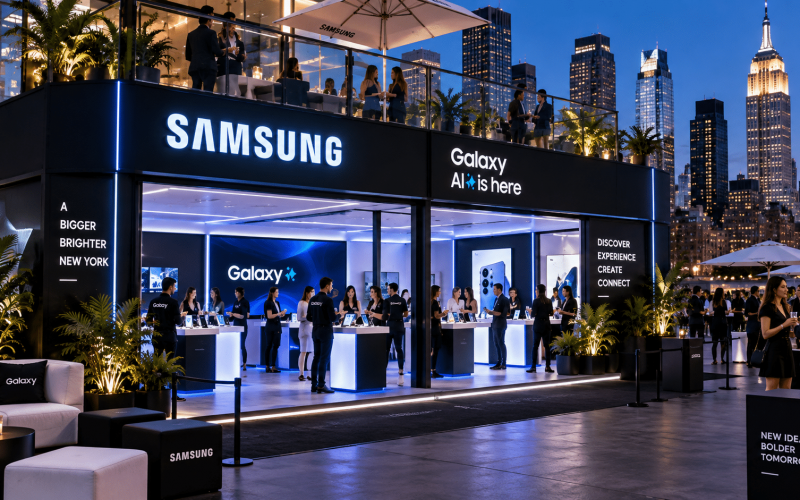
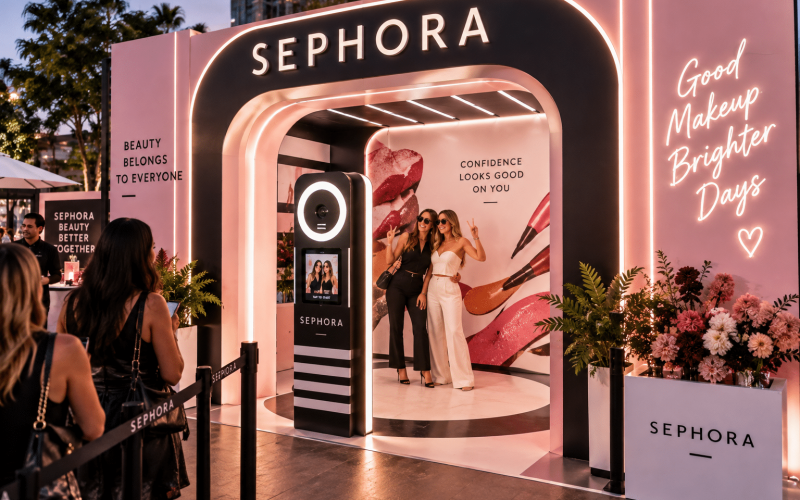
The arrival zone is one of those moments. A branded entry, welcome desk, or photo-ready feature establishes expectations before attendees enter the main space. Product demonstration areas are another high-value opportunity because customization can clarify the product story, direct traffic, and support staff workflow at the same time.
Hospitality spaces deserve selective attention as well. A well-designed lounge can extend dwell time and create a more premium perception, but it should remain comfortable and functional. Guests notice unstable tabletops, insufficient charging, awkward circulation, and furniture that looks good in a rendering but does not support real conversations.
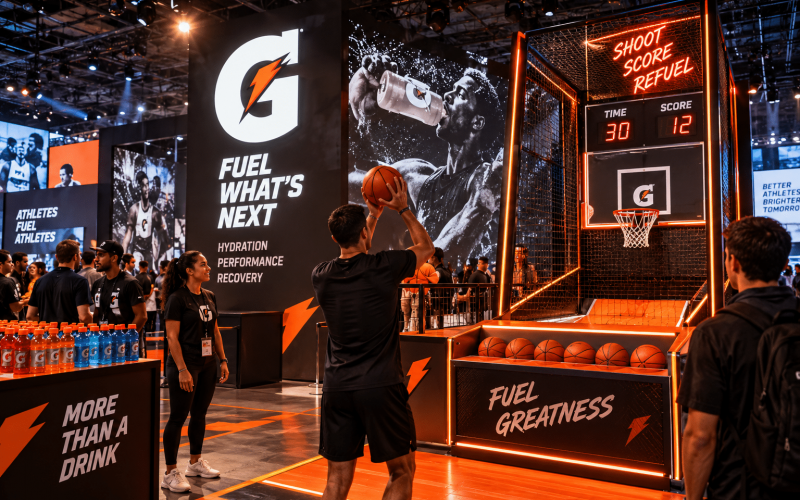
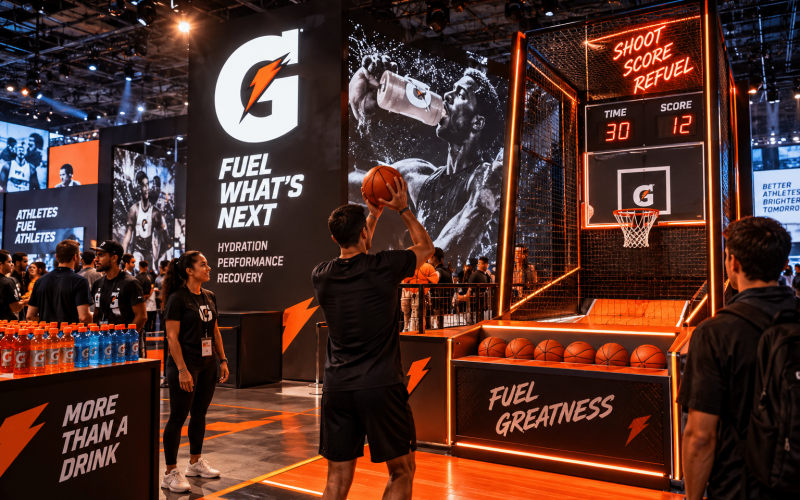
Interactive activations often offer the clearest case for custom work. A branded game, prize mechanism, digital kiosk housing, or challenge station turns participation into a visible part of the campaign. The rental elements may provide the operational backbone, while fabricated components provide the visual identity and branded story.
Plan Rentals and Fabrication as One Scope
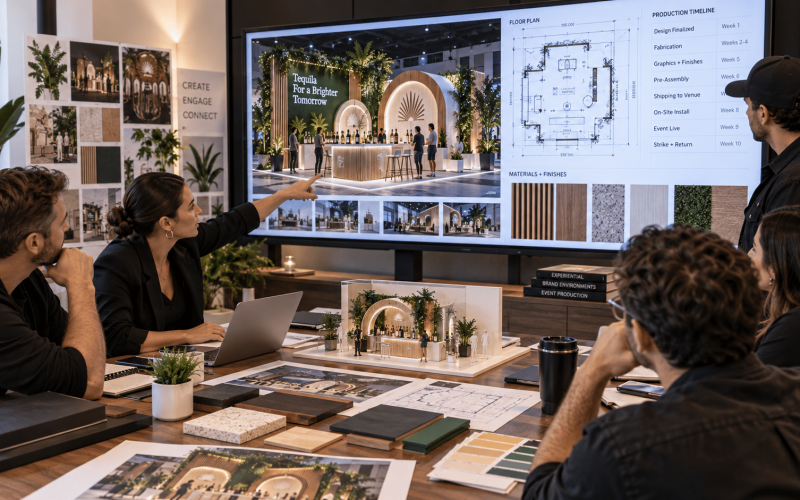
The most effective projects do not treat rentals as an afterthought or fabrication as decoration. Both need to be planned together from the first layout. That means reviewing the floor plan, guest flow, product handling, staffing needs, power, storage, accessibility, and strike before approving the final creative direction.
A strong production partner can identify where rental inventory is the sensible choice and where custom fabrication will improve the experience. That conversation protects the budget. It also reduces common on-site problems, such as graphics that do not fit, counters that are too shallow for service, blocked storage access, or feature pieces that cannot fit through the venue entrance.
For New York City, New Jersey, Boston, and Connecticut events, local rental support can be especially useful when load-in windows are tight and venue access is complex. For nationwide activations, a modular fabrication strategy can help maintain brand consistency while adapting the rental package to each market.
Build for the Guest, Not Just the Render
A custom rental environment succeeds when the branded details support the experience instead of competing with it. Choose rental pieces for comfort, capacity, and operational fit. Then use graphics, custom products, fabrication, and interactive elements where they will be seen, used, and remembered.
Portadecor approaches this work as an experiential production problem, not simply a furniture selection exercise. The right mix of rentable components and custom-built assets can give a campaign the presence of a fully bespoke environment while keeping the build practical for the event schedule. Start by identifying the one or two moments guests should remember, then customize those moments with enough precision to make the brand feel physically real.