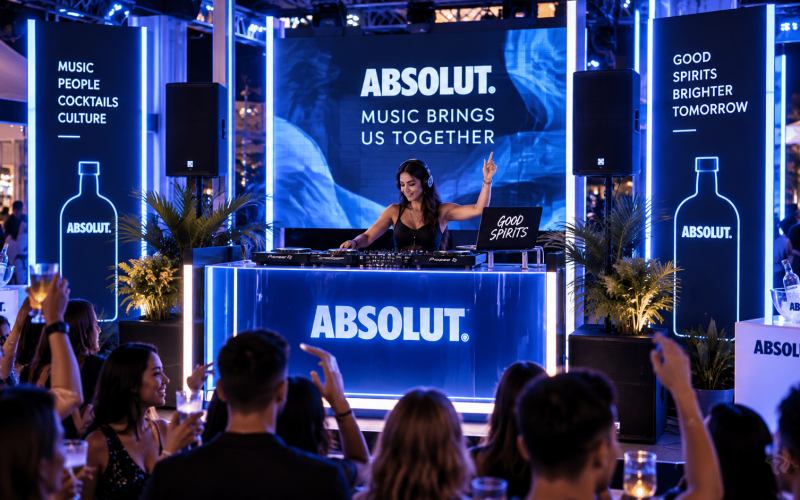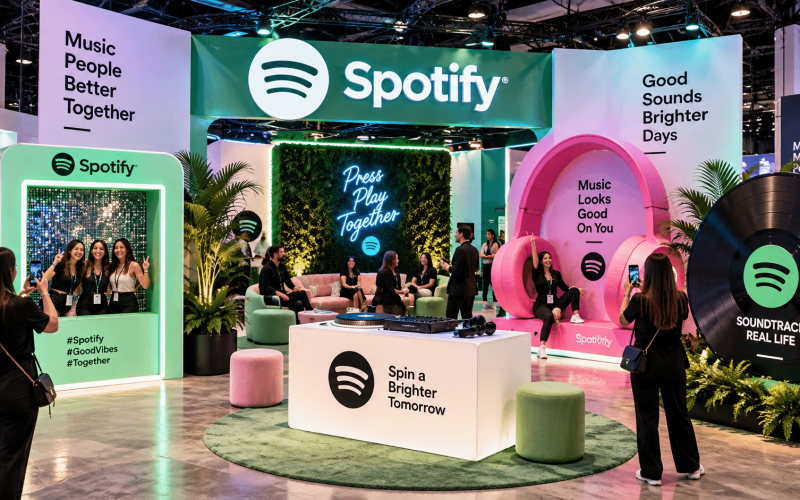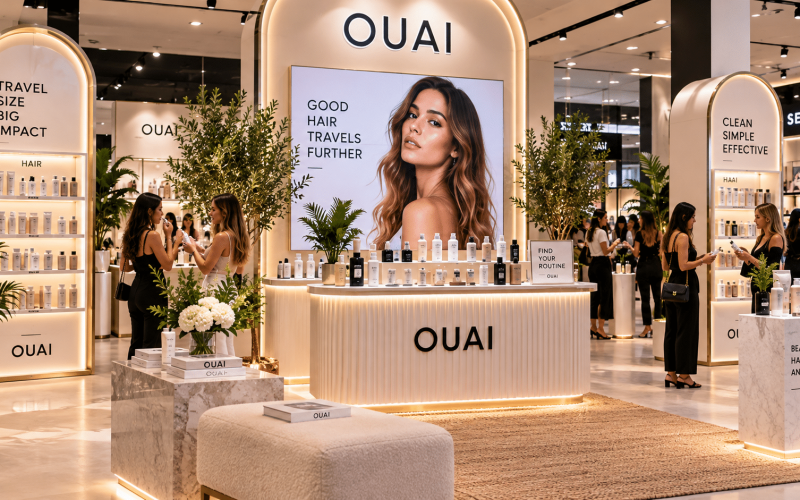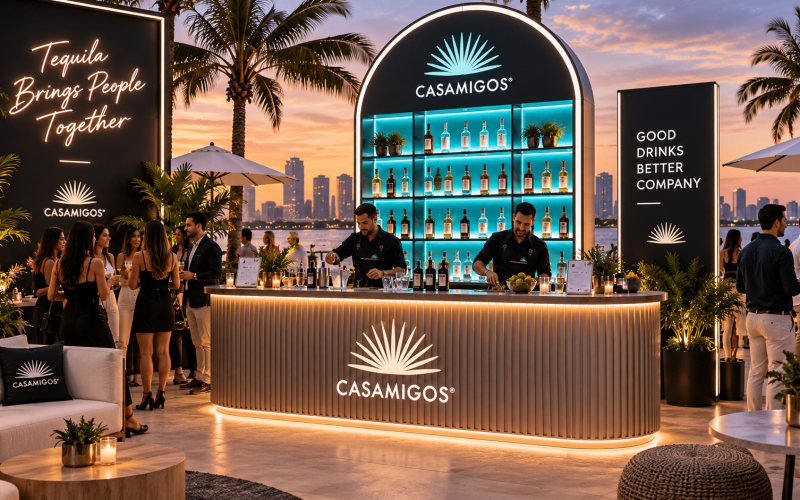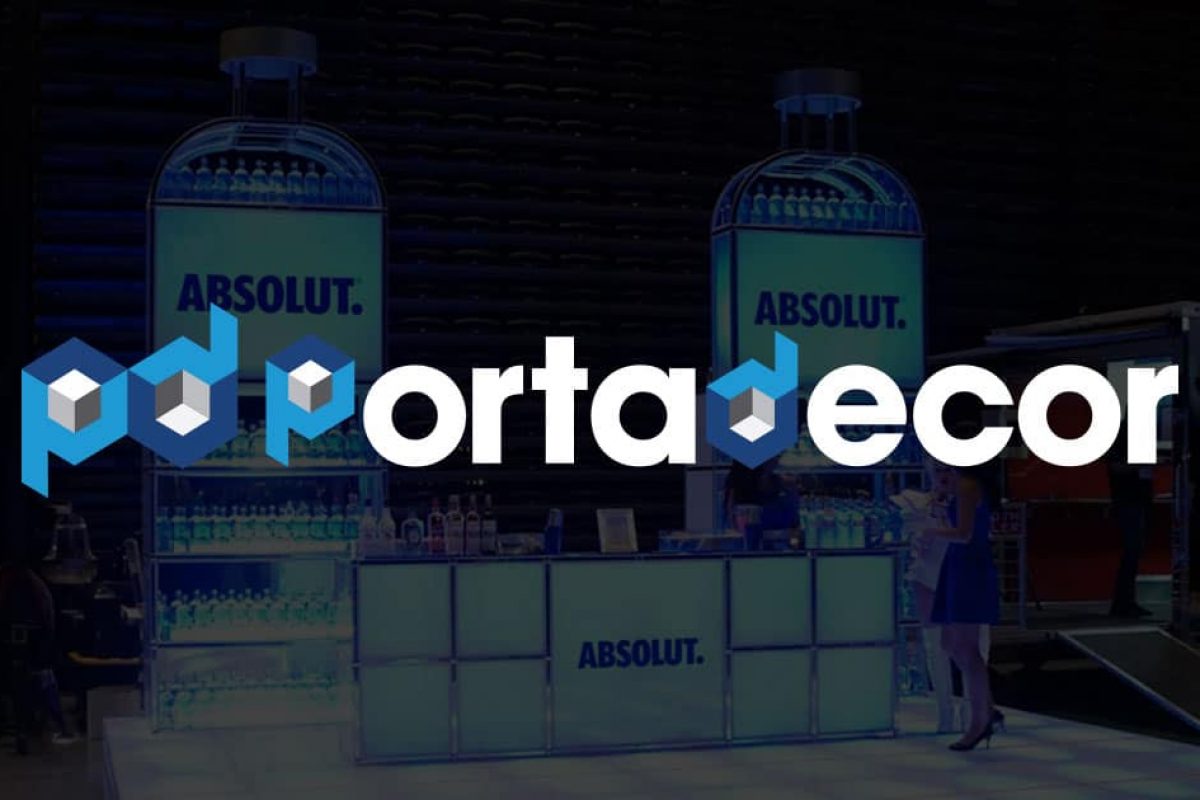
A sample handed over in a crowded aisle has only a few seconds to work. The product must look appealing, staff must have room to operate, and the station has to make the brand recognizable before a guest reaches for a cup, pouch, or demo unit. This branded sampling station guide focuses on the decisions that turn a simple giveaway into a controlled, high-value brand interaction.
Sampling stations are often treated as a minor event detail. In practice, they sit at the intersection of product handling, staffing, visual merchandising, guest flow, and measurement. A station that is attractive but difficult to restock slows the team down. One that is operationally efficient but visually generic can disappear into the event environment. The best builds solve both problems from the start.
Start With the Sampling Objective
Before selecting a counter, cart, kiosk, or custom footprint, define what the sampling station needs to accomplish. Product trial is the obvious goal, but not every trial should be designed the same way. A new beverage may need volume and speed. A premium food item may benefit from a slower, guided tasting. A beauty or wellness product may require one-to-one explanation and a more controlled interaction.
The objective shapes the physical design. If the priority is high throughput, the serving surface needs clear pickup and handoff zones, accessible storage, and enough working room for multiple ambassadors. If the priority is education, include a product display, a demonstration area, and space for staff to have a short conversation without blocking the queue.
Event teams should also establish what happens after the sample is distributed. Is the guest asked to scan a QR code, enter a giveaway, follow a social account, redeem an offer, or visit a retail partner? A station designed only for distribution can miss the next step. Build the call to action into the guest journey, not as a sign added at the last minute.
Design for the Event Environment
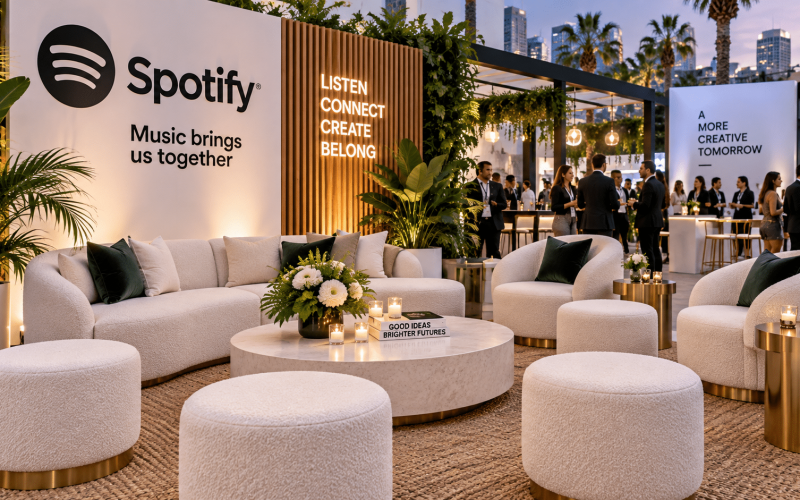
A branded sampling station should feel intentional within its setting. A trade show aisle, a street-team pop-up, a retail parking lot, and a festival each create different constraints around footprint, noise, utilities, weather, and traffic.
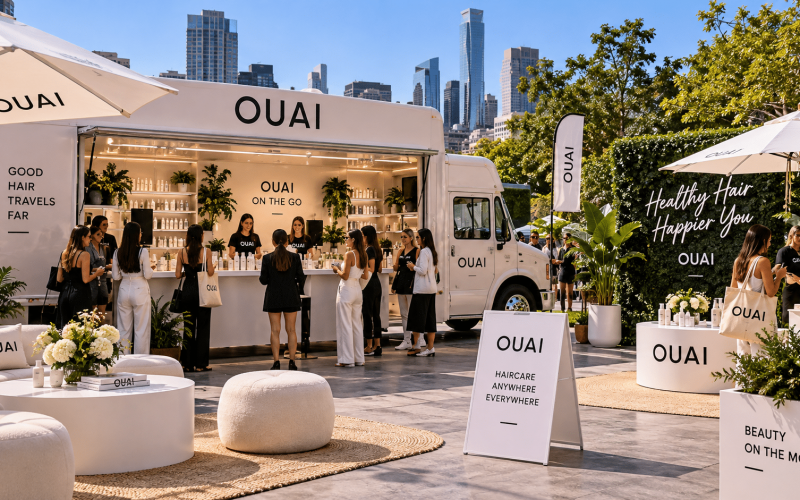
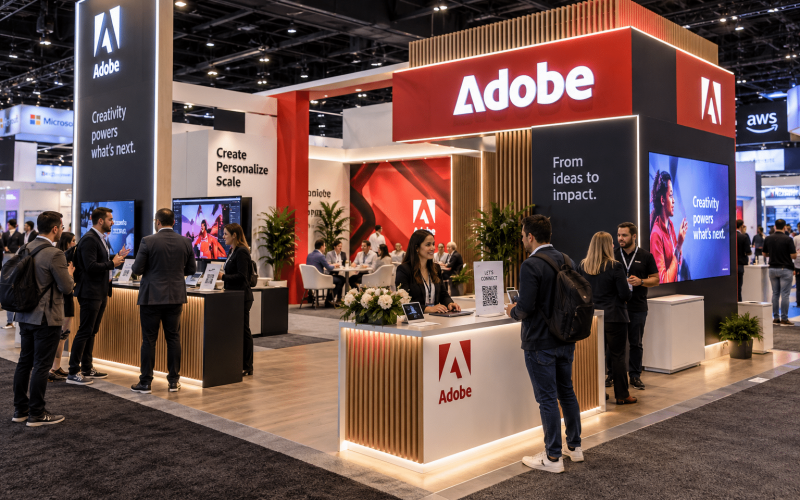
At a trade show, the station may need to work within a booth plan and comply with venue rules for food service, power, and sightlines. In a festival setting, durability and speed usually matter more. Outdoor activations may require weighted bases, weather-resistant graphics, enclosed storage, and surfaces that remain usable in heat or light rain.
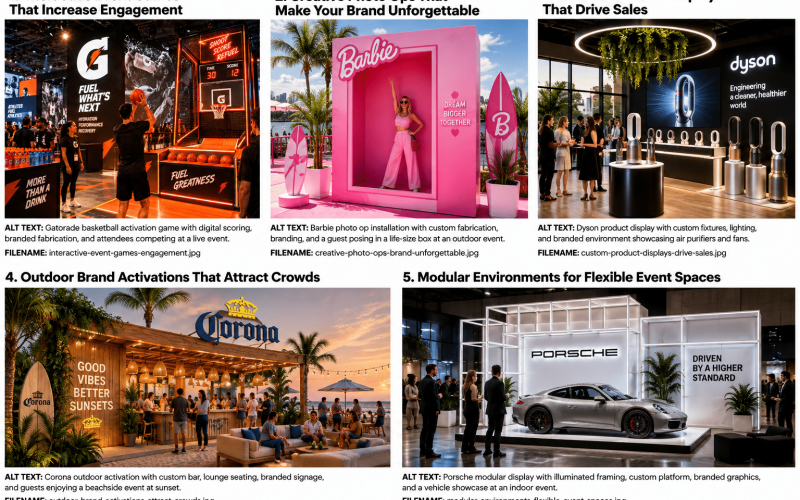
The visual system should support recognition from more than one distance. Large-format graphics and branded headers establish visibility across a room. Counter wraps, product displays, and menu panels help at close range. Use the same brand colors, typography, and product cues already present in the campaign so the station reads as part of the larger activation rather than a separate promotional table.
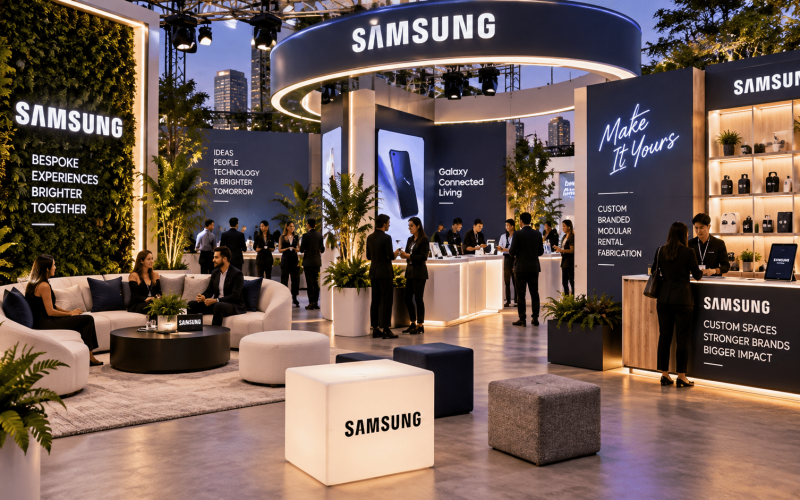
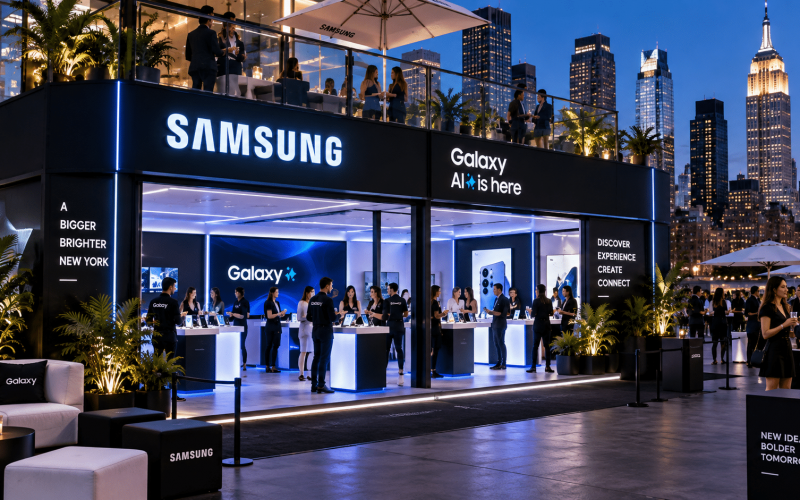
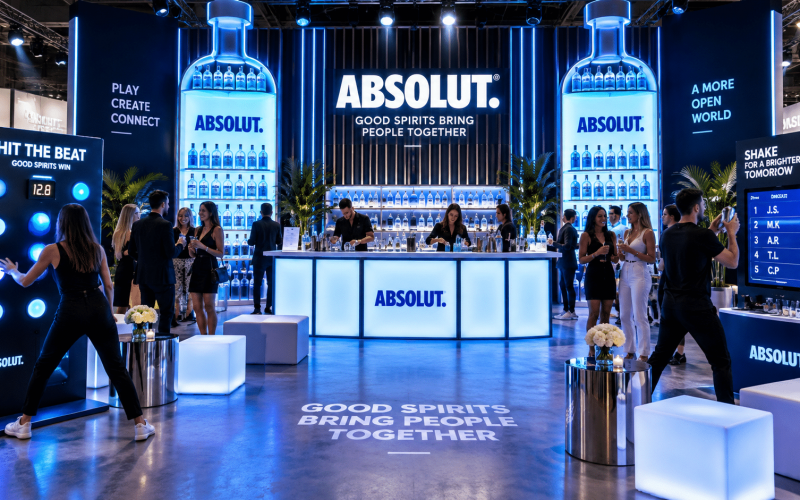
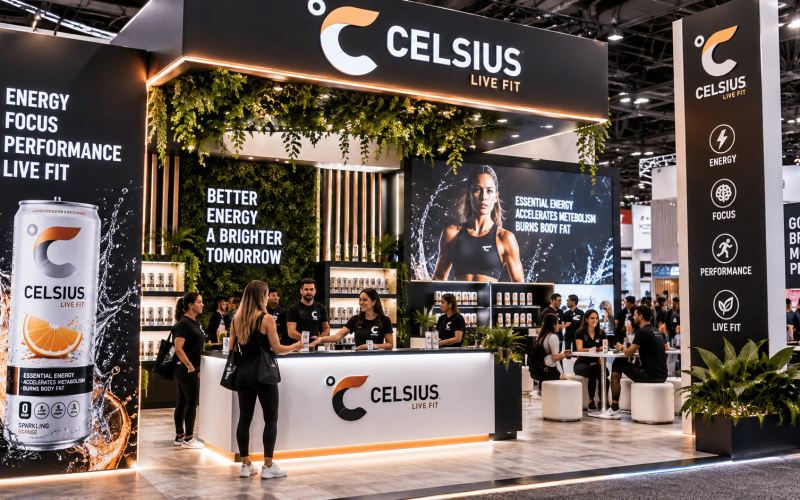
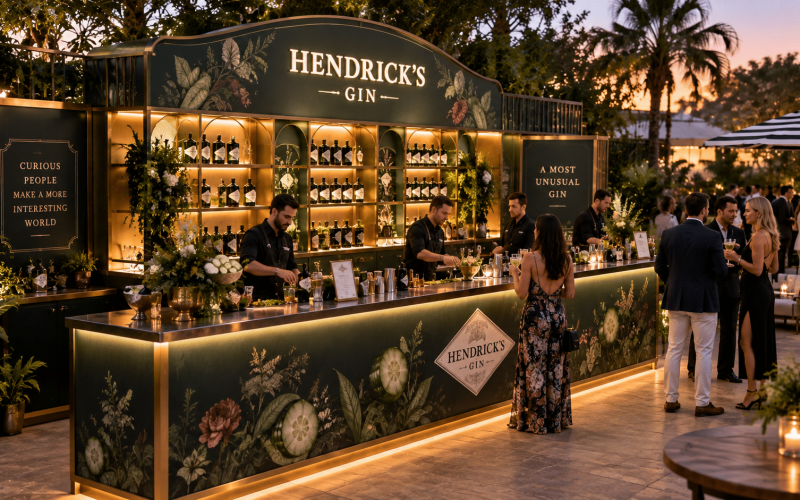
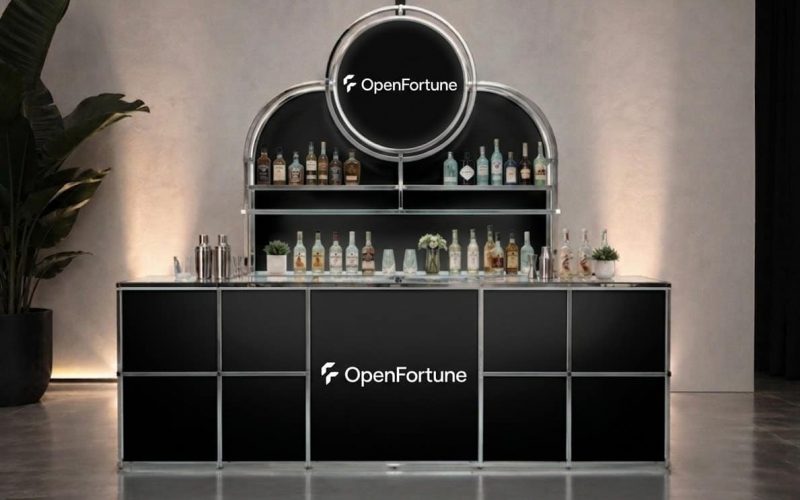
Custom fabrication is especially valuable when the product itself creates a design opportunity. A sparkling water brand may use an elevated bar-style counter. A snack brand might create a market-inspired sampling cart. A technology product may require integrated screens, secure storage, and demo mounts. The form should reinforce the campaign concept while remaining practical for the crew using it all day.
Choose the Right Format
A simple branded counter is often the right choice for compact footprints, indoor events, and straightforward product handoffs. It is efficient to transport, quick to brand, and easy to position within a larger booth or activation.
Carts work well when mobility adds value, such as street teams, retail center programs, and events where the sampling location may shift throughout the day. They can create a more approachable, retail-inspired presence, but they need durable wheels, stable brakes, and storage that does not compromise the exterior design.
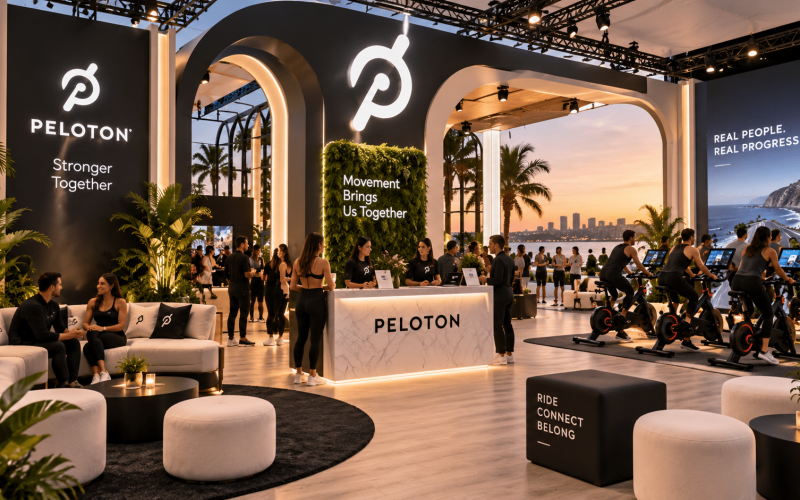
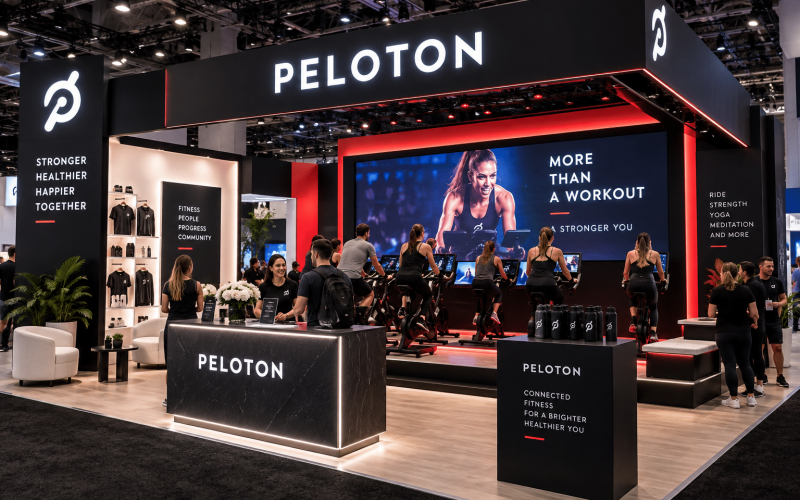
A custom kiosk or built environment makes sense when sampling is the central attraction. This format can include refrigeration, handwashing solutions where permitted, display shelving, overhead signage, integrated digital elements, and multiple service positions. It requires more planning, but it can turn product trial into a destination.
Build the Station Around Staff Workflow
Guest-facing design gets the attention, but staff workflow determines whether the station performs under pressure. Map the sequence from storage to preparation to handoff to cleanup. The team should not need to reach below a crowded counter for every sample, walk behind the station to find supplies, or cross paths with guests to restock.
Separate clean product storage from waste and used materials. Place napkins, utensils, cups, lids, and product inventory within easy reach. If samples require chilling, heating, cutting, mixing, or dispensing, confirm equipment dimensions and utility requirements before fabrication begins. A beautiful station can become unusable if a cooler door cannot open fully or a power connection is positioned on the wrong side.
For high-volume programs, plan for at least two distinct working zones: one for preparation and one for guest handoff. This reduces bottlenecks and gives ambassadors space to keep conversations moving. It also helps preserve a clean presentation as the event gets busy.
Health and safety requirements vary by venue and jurisdiction. Event producers should confirm food handling rules, permits, handwashing needs, waste procedures, and fire-safety restrictions early. These details affect material selection, equipment, and staffing. They are not administrative issues to solve after the station is built.
Make the Guest Flow Obvious
A good sampling experience should be understandable without instruction. Guests need to see what is being offered, where to stand, and what to do next. If they hesitate at the edge of the footprint, the station may lack a clear invitation.
Use the front and top of the station to communicate the offer in plain language. Product visibility matters. Whenever possible, show the actual packaging rather than relying only on graphics. For food and beverage programs, a concise flavor or ingredient message can remove friction. For products that need explanation, a short benefit statement gives ambassadors an easy opening line.
Avoid creating a line that blocks a booth entrance, neighboring exhibitor, or major aisle. The ideal queue runs parallel to the activation when space allows, with a clear entry point and room for guests to exit after receiving their sample. At larger activations, stanchions, floor graphics, or a secondary staff member can help organize traffic without making the interaction feel overly formal.
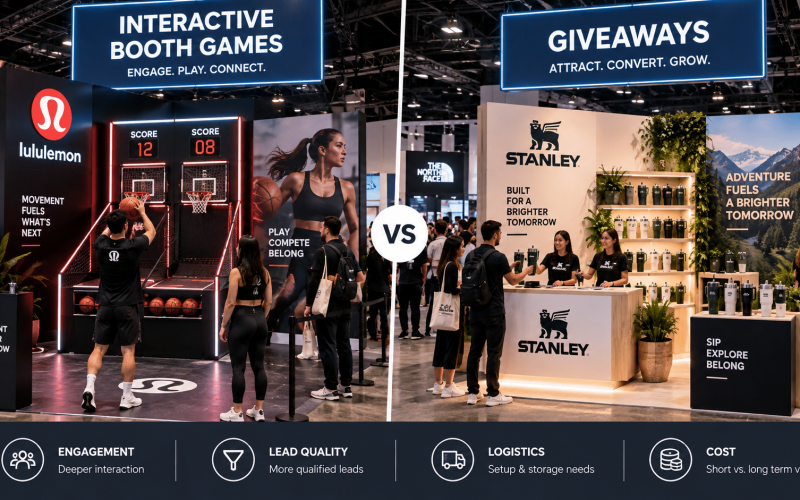
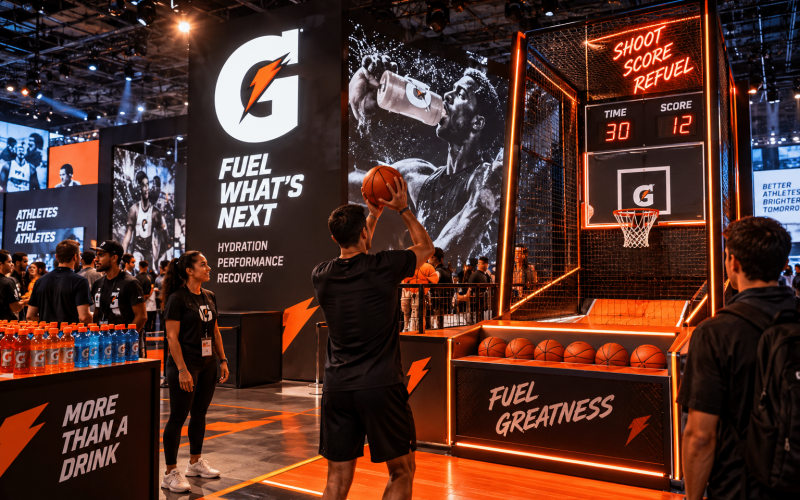
Sampling works best when the guest has a reason to pause. That could be a visually distinctive structure, a live preparation moment, a game mechanic, a limited-time flavor, or a useful incentive. The hook should be visible from a distance and easy to explain in one sentence.
Plan Measurement Before Fabrication
Counting samples distributed is useful, but it does not tell the full story. A strong measurement plan connects product trial to a business outcome. Depending on the campaign, that may mean lead capture, coupon redemption, retail intent, content creation, social follows, or qualified conversations.
The physical station should support the chosen measurement method. If staff will collect leads on tablets, provide secure mounting, charging access, and a protected place to set devices. If guests scan a code, place it where they naturally pause after receiving the sample. If the campaign includes a game or prize, allocate enough space that participation does not interfere with distribution.
Do not overload the interaction with too many asks. A guest who is offered a sample, a survey, a social follow, and a giveaway entry may do none of them. Choose the action that matters most and make it easy.
Reuse Without Losing Relevance
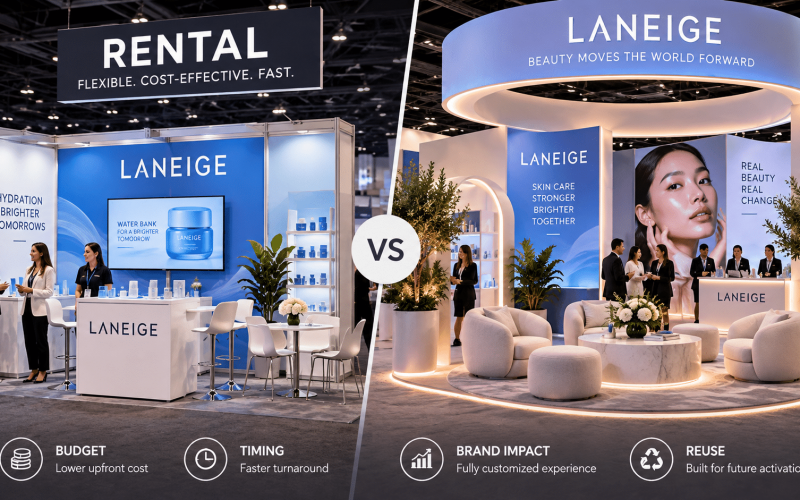
A custom station does not have to be built for one event only. Modular fabrication can allow interchangeable graphics, removable headers, adjustable shelves, and components that pack efficiently for transport. This approach is useful for brands running regional tours, multi-city sampling programs, or recurring trade show schedules.
There is a trade-off. A highly modular unit may not have the sculptural impact of a one-off centerpiece, while a fully custom environment may be harder to store, ship, and adapt. The right balance depends on campaign duration, budget, event mix, and how often the product or messaging will change.
For programs in New York, New Jersey, Boston, and Connecticut, rental components can also reduce the need to fabricate every supporting element from scratch. Pairing custom-branded assets with rental furniture, bars, shelving, or queue management pieces can create a polished environment while keeping production focused on the elements guests will remember.
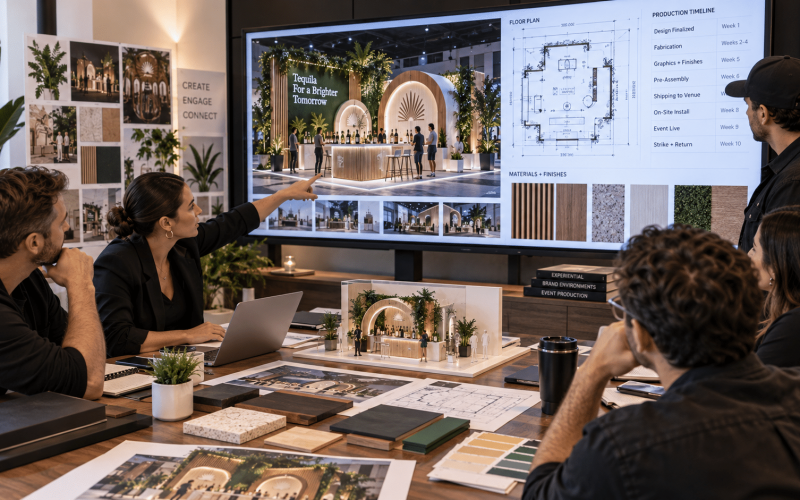
A sampling station earns its footprint when it makes the product easier to try, the brand easier to remember, and the event team easier to support. Bring the fabricator, event producer, and brand team into the planning process early enough to solve for all three. The result is not just a place to hand out samples, but a physical brand experience built to perform when the room gets busy.