A game can attract a crowd faster than almost any sign, screen, or sales pitch. But a crowded activation is not automatically a successful one. The real challenge in how to design event games is creating an experience that is easy to join, unmistakably on-brand, and built to perform through hours of public use.
For brand marketers, agencies, and event producers, the game is not the deliverable. It is a tool for starting conversations, collecting leads, demonstrating a product, or giving attendees a reason to stop at a trade show booth. The strongest concepts make that purpose visible without making the experience feel like work.
Start With the Behavior You Want
Before selecting a game mechanic, define what a successful participant should do. A quick-play game may be right when the goal is foot traffic and social visibility. A challenge that takes two to three minutes can work better when staff need time to qualify leads or explain a product. A team-based game can support community-building, while a skill game can reinforce a product claim such as speed, precision, durability, or performance.
This decision affects every production choice: footprint, staffing, prize strategy, scoring, queue management, and fabrication method. A brand activation designed to process 200 guests an hour should not use a mechanic that requires lengthy instructions or a reset after every player.
Write the objective in one sentence before creative development begins. For example: encourage guests to test a new beverage flavor, capture opt-in leads from qualified buyers, or draw attendees into a trade show booth during peak aisle traffic. If the game cannot support that objective, it is decoration rather than an activation asset.
Choose a Game Mechanic That Works in Public
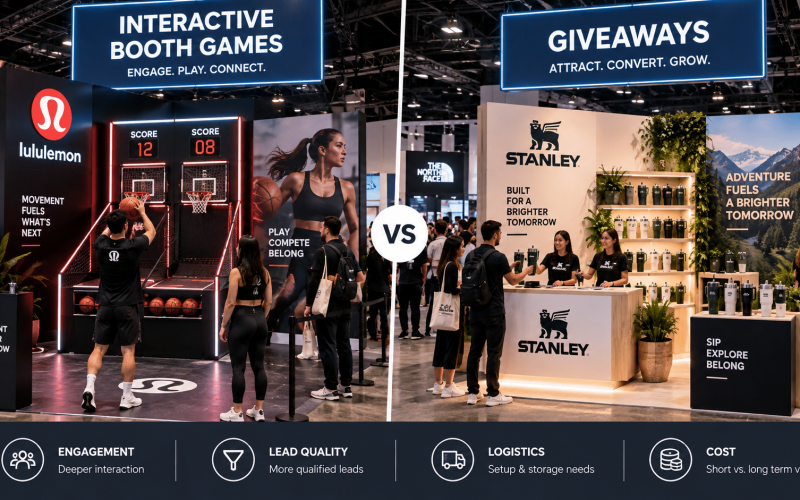
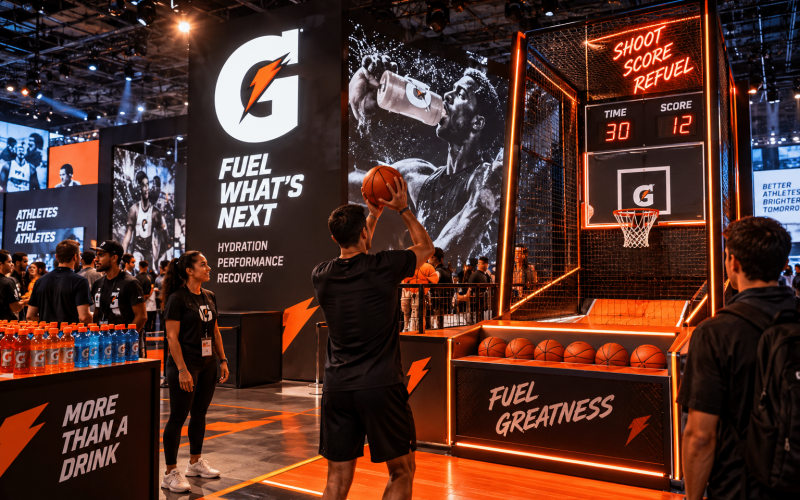
A familiar mechanic lowers the barrier to participation. Guests understand ring toss, plinko, spin wheels, claw machines, reaction games, mini golf, basketball shots, and prize vaults at a glance. The creative opportunity is not always inventing a new game. Often, it is adapting a proven mechanic so the visual treatment, physical interaction, and reward feel proprietary to the brand.
Original concepts can be effective, especially for product launches, but they need to be immediately legible. At a live event, people make a fast decision about whether to enter. If the rules take a paragraph to explain, the game will lose participants and slow the line.
Match play time to the event environment
A busy convention floor rewards games that can be understood in five seconds and completed in 30 to 60 seconds. A festival, campus tour, or consumer pop-up may allow longer gameplay because visitors have more time to explore. For a VIP event, the game can be more layered if the experience is part of a hosted program.
There is a trade-off between depth and throughput. More challenge can create a memorable payoff, but only when the audience has time and motivation to participate. For high-volume activations, a simple game with a polished physical build usually outperforms an ambitious concept that creates a long, frustrated queue.
Give the game a clear beginning and end
Participants should know where to stand, what to do, how success is measured, and where to exit. This sounds basic, but unclear flow is one of the most common operational failures in event games. Use the physical layout to guide behavior: an entry point, a visible play zone, a score or result moment, and a prize or lead-capture station.
The result should be visible to spectators whenever possible. A spinning wheel, rising score, light sequence, oversized ball drop, or leaderboard creates a reason for people nearby to watch. That spectator value helps the game generate its own traffic.
Design Event Games Around the Brand, Not Just the Logo
Branding should be integrated into the play experience rather than applied as a final vinyl layer. Think about what the guest touches, sees in photos, hears when they win, and remembers after leaving. The game can reflect the brand through color, shape, material, language, product features, and the type of challenge itself.
A sports brand might use a timed agility challenge. A beauty brand might build a color-match interaction. A technology company could use a speed, precision, or customization mechanic. The connection does not need to be literal, but it should be clear enough that participants understand why this game belongs to that brand.
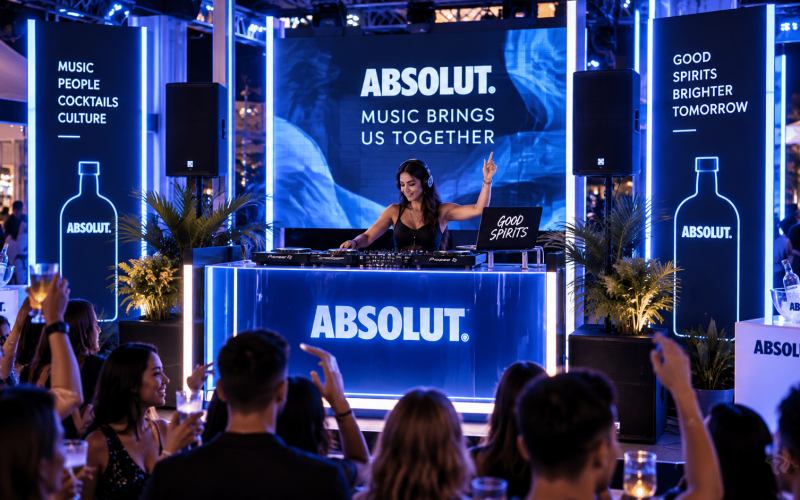
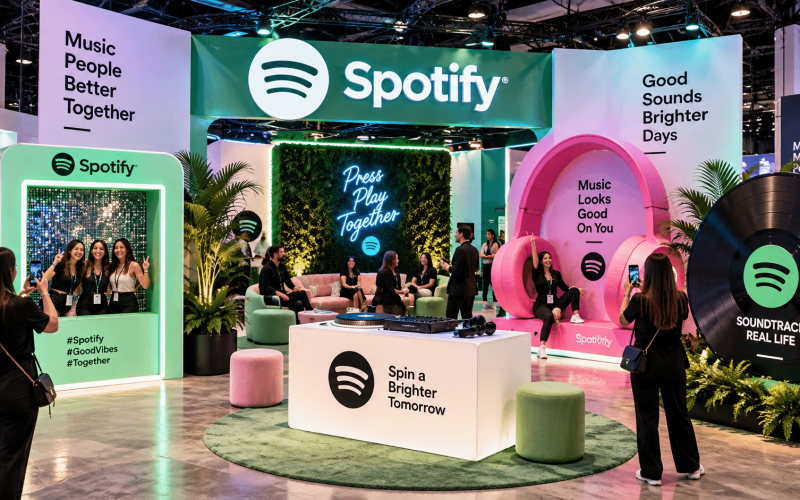
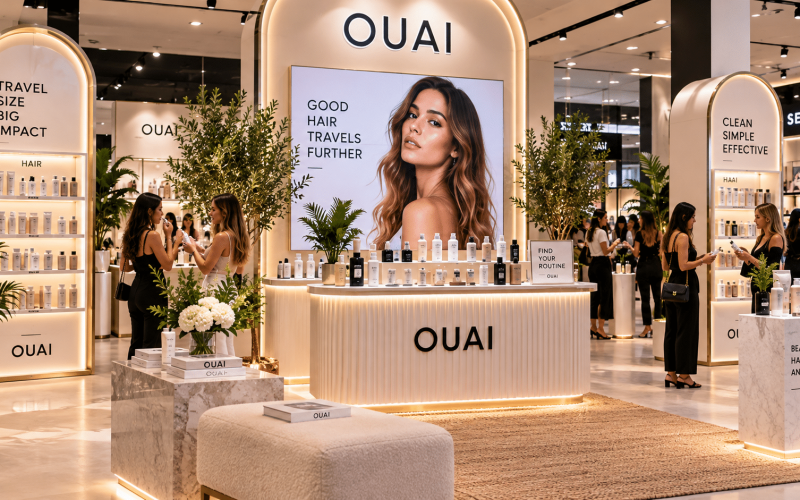
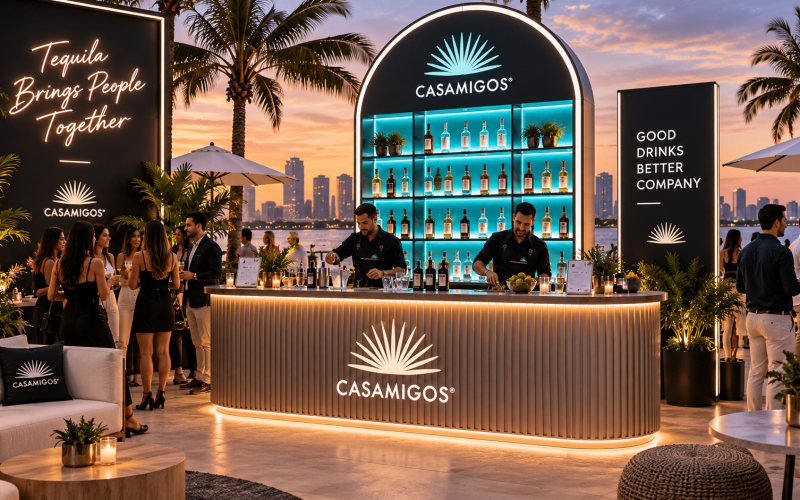
Prioritize the camera-facing moments. If an attendee takes a photo while playing or receiving a prize, the branded backdrop, game face, and physical props should read clearly in the frame. Oversized dimensional elements, custom lettering, branded scoreboards, and well-positioned product displays often create more value than adding graphics to every surface.
Avoid overbranding the play area to the point that the instructions disappear. The participant must be able to identify targets, controls, rules, and score indicators instantly. Good experiential design balances visual impact with operational clarity.
Build for Reset Speed, Durability, and Transport
Event games live hard lives. They are handled by hundreds or thousands of people, moved through loading docks, assembled under time pressure, and operated by staff with varying levels of training. A beautiful prototype is not enough. The build needs to function reliably in real event conditions.
During design and fabrication planning, account for durable finishes, protected edges, stable bases, accessible service panels, replaceable components, and secure storage for loose parts. If a game uses electronics, plan power requirements, cable management, backup operation, and a manual workaround if a screen or sensor fails.
Reset time deserves equal attention. A ball game that needs a staff member to retrieve and reposition 20 pieces after each turn may not suit a high-traffic environment. Gravity-fed returns, built-in collection trays, magnetic components, duplicate play pieces, and simple reset controls help keep the experience moving.
For tours and repeat programs, modular construction can reduce shipping and storage demands. A game built in transportable sections is often easier to deploy across venues than one large permanent structure. The right approach depends on the campaign schedule, venue access, available labor, and whether the asset will be used once or across multiple markets.
Plan the Full Guest Journey
The game itself is only one part of the activation. Consider what happens before and after play. Clear signage or an animated attract loop can prompt entry. A brand ambassador can explain the interaction and manage the queue. The result can create a natural point for sampling, product education, lead capture, or prize redemption.
Keep staff scripts short. If the team needs to deliver a complex explanation before each turn, the design needs simplification. Train staff on the rules, reset process, accessibility considerations, prize criteria, and what to do when equipment needs attention.
Prize design also influences behavior. Guaranteed small rewards can sustain participation at a high-volume event. Tiered prizes add excitement and can encourage repeat play, but they require clear rules and inventory management. If the goal is lead generation, do not place the form before the fun unless the audience is already highly motivated. Let the interaction earn the request for information.
Test the Concept Before Full Production
A quick tabletop mockup, taped floor plan, or simple prototype can reveal problems before fabrication begins. Test with people who were not involved in the creative process. Watch where they hesitate. Notice whether they understand the objective without being coached, whether they can complete the game within the target time, and whether the win condition feels fair.
Then test the operational details. Can one staff member reset the game? Can it fit through a standard venue door? Is the primary visual readable from the aisle? Does the queue interfere with adjacent exhibitors? These questions are less glamorous than the creative concept, but they determine whether the game performs on site.
A fabrication partner should be involved early enough to advise on materials, construction, transport, safety, and serviceability. Portadecor approaches custom games as event-ready physical products, not one-off display pieces, so creative ideas can be evaluated against how they will actually travel, assemble, and operate.
Measure More Than Plays
Game participation is useful, but it is rarely the only metric that matters. Track the measures connected to the original objective: plays per hour, average dwell time, qualified conversations, opt-ins, samples distributed, social content created, or product demonstrations completed. Compare traffic during active gameplay with periods when the game is paused or the prize offer changes.
Qualitative feedback matters too. Ask staff what guests understood immediately, where lines formed, and what caused delays. Those observations can improve the next market or inform a revised build for future activations.
A well-designed event game gives people a reason to stop, play, and remember the brand. The best version is not necessarily the biggest or most complex. It is the one that turns a clear marketing objective into a physical interaction that guests can understand, enjoy, and share without needing to be convinced.