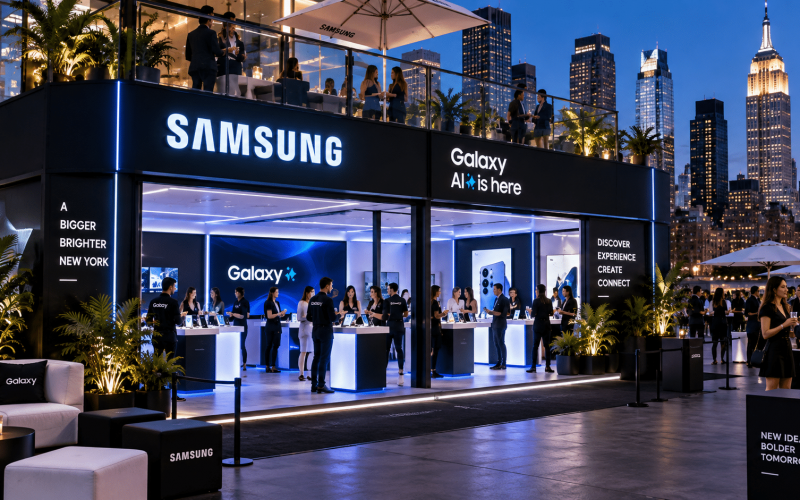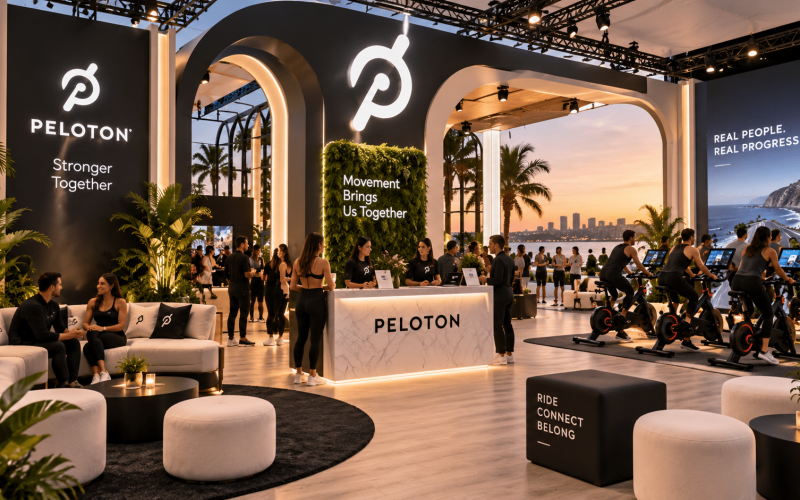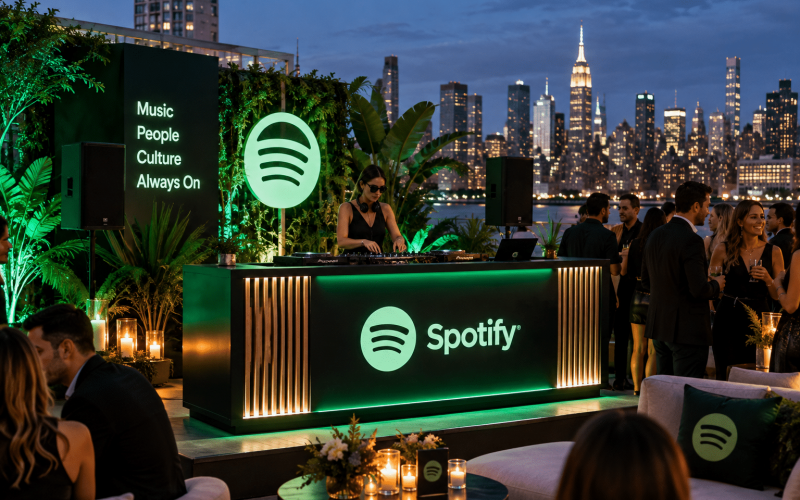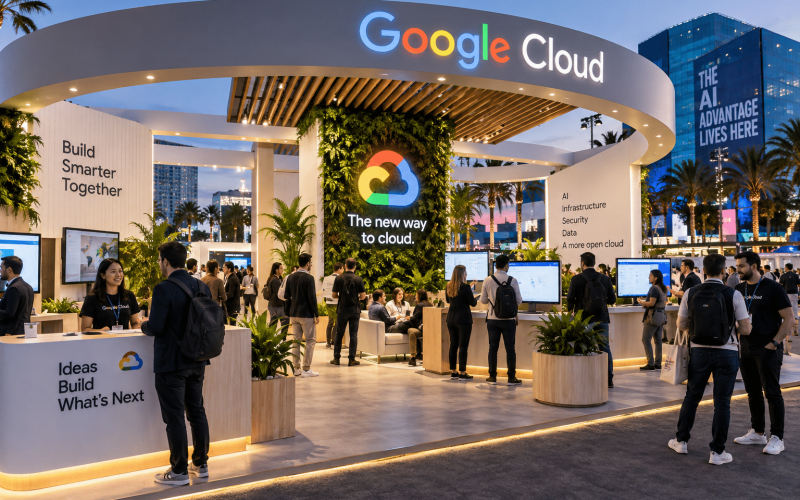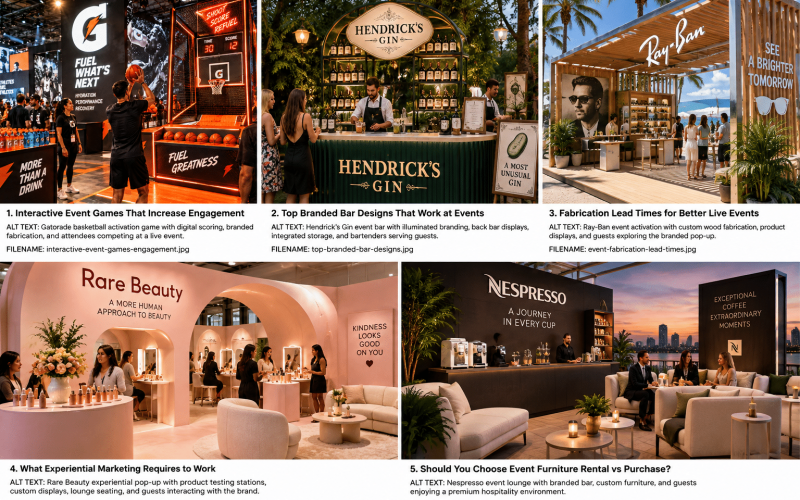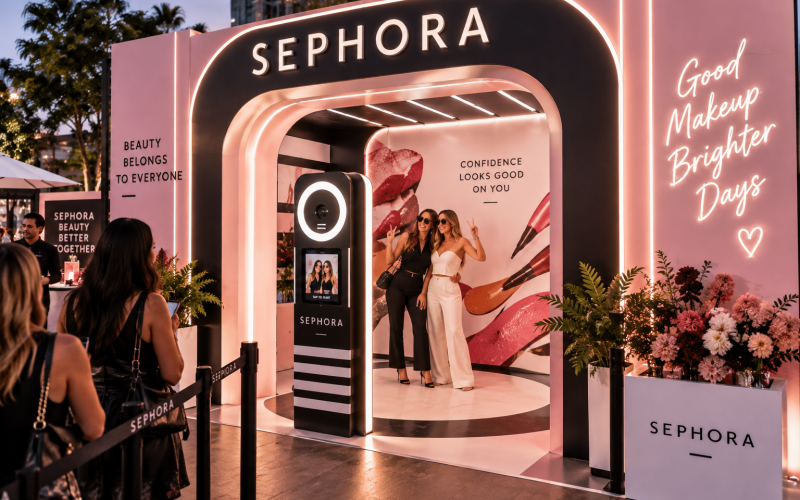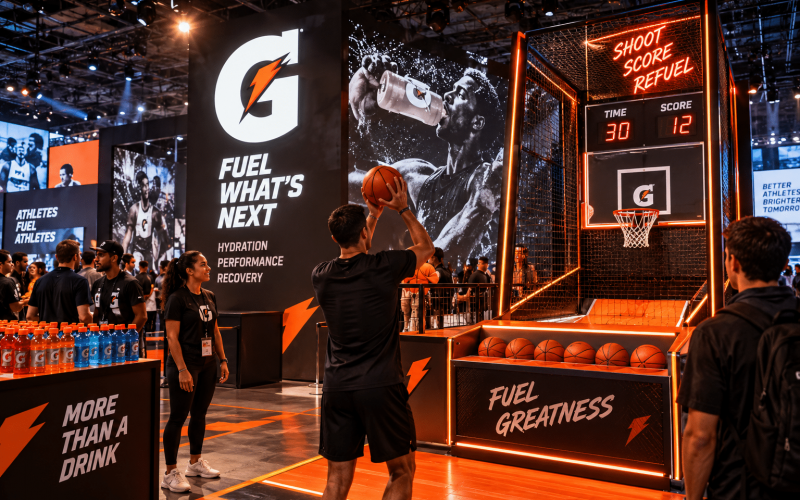
A sample cup on a folding table can move product, but it rarely builds a brand memory. The top experiential sampling stations give attendees a reason to stop, try, share, and stay long enough for the brand message to register. For marketers and event producers, the station is not simply a distribution point. It is a compact, branded environment where product education, hospitality, lead capture, and visual impact need to work at the same time.
The right format depends on the product, venue, audience volume, and campaign goal. A beverage launch at a music festival has different demands than a skincare trial at a trade show or a food sampling program inside a retail pop-up. The common requirement is execution: the sampling station must look intentional, operate efficiently, and hold up through a full event day.
What Makes a Sampling Station Experiential?
Experiential sampling adds a reason for participation beyond receiving a free product. That reason may be personalization, a game, a demonstration, a sensory moment, or a useful service. The product remains the focus, but the environment gives it context.
A well-built station should make the product easy to understand from several feet away. Clear branded architecture, dimensional signage, appropriate counter height, and visible product presentation help guests quickly identify what is being offered. Once they approach, the experience needs to move without friction. Staff need a practical work surface, concealed storage, power access when required, and a logical path for replenishment and waste removal.
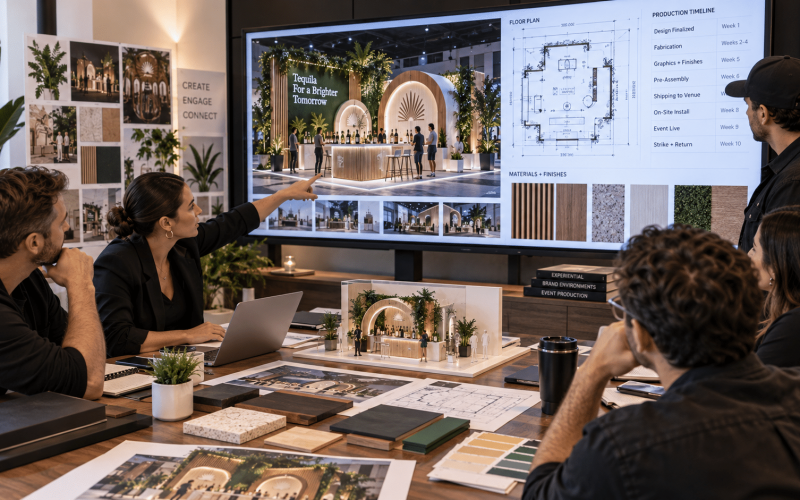
This is where custom fabrication matters. An impressive rendering can fail in the field if it does not account for service access, queue direction, sanitation, weight, transport, or the actual footprint allowed by the venue. The strongest concepts are designed around the operational reality from the beginning.
Top Experiential Sampling Stations to Consider
1. The Branded Tasting Bar
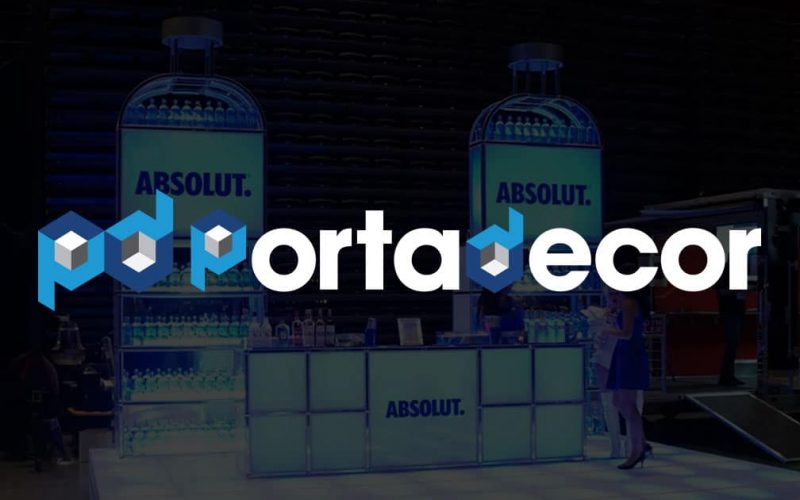
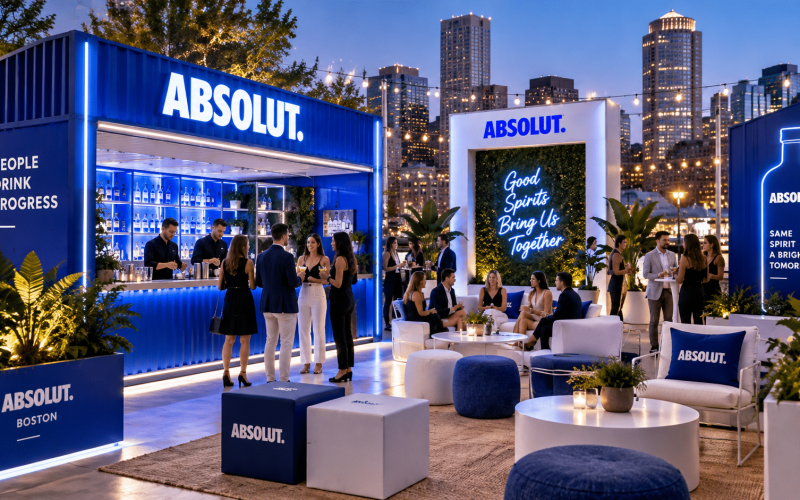
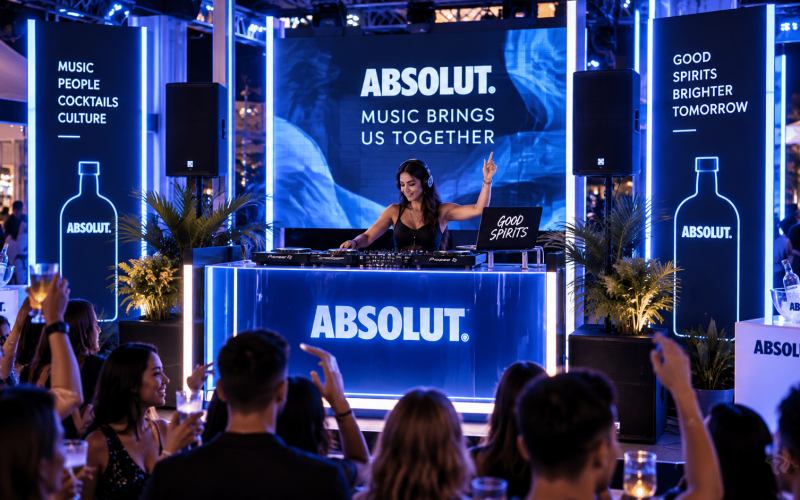
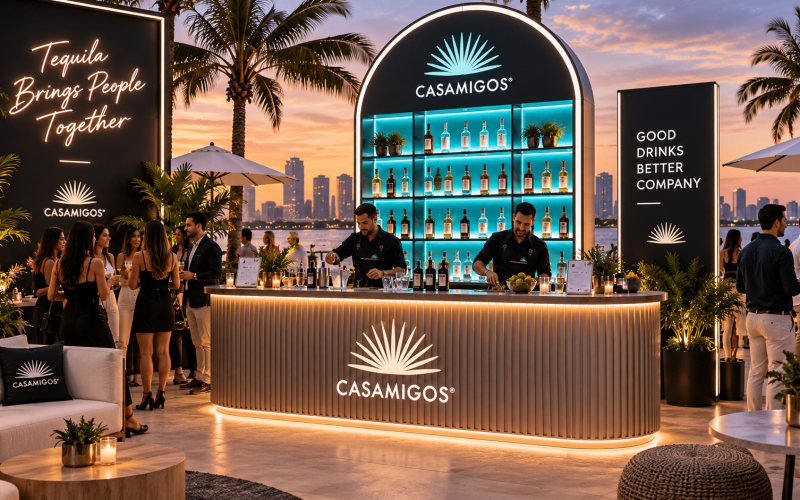
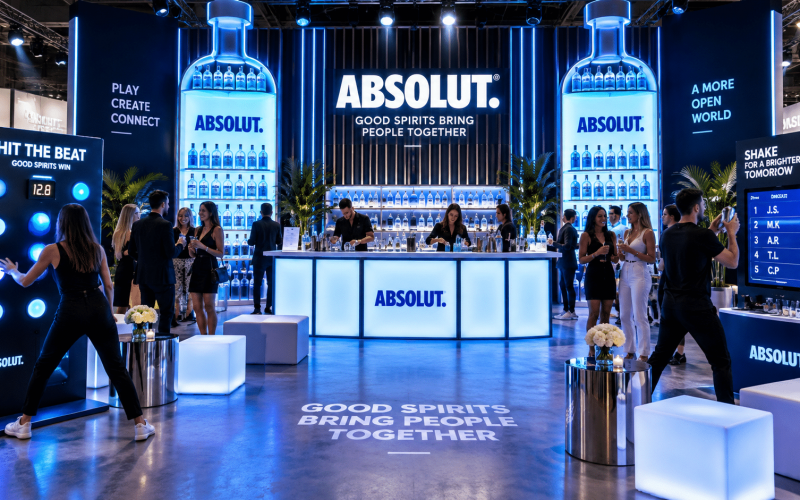
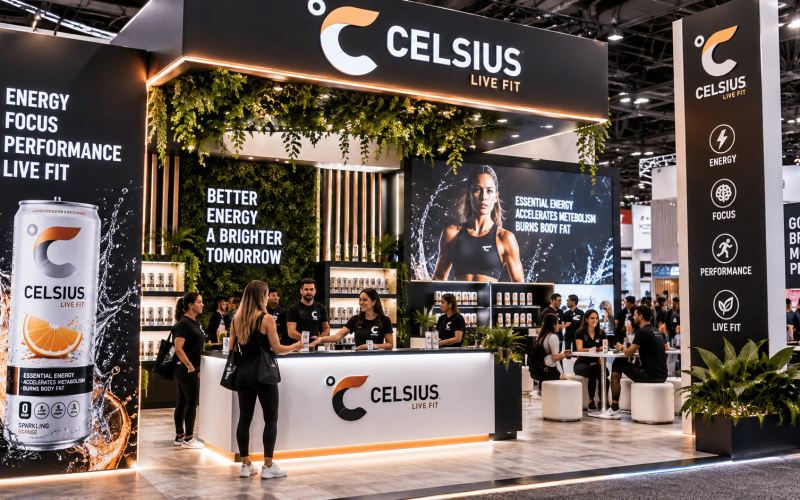
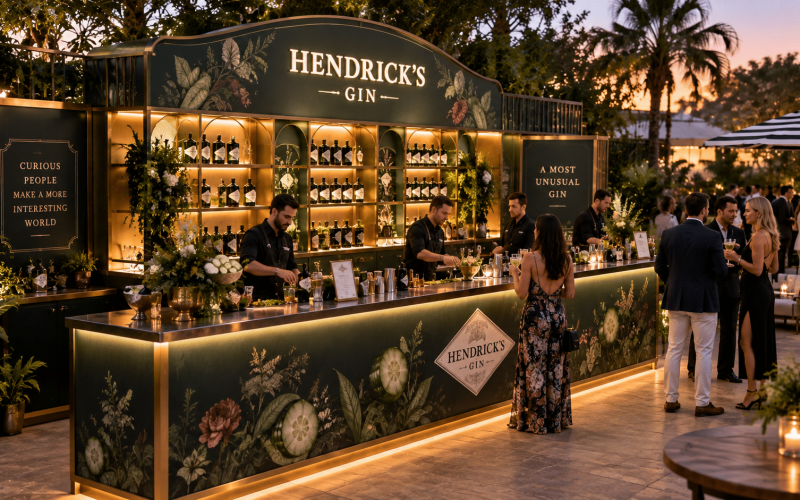
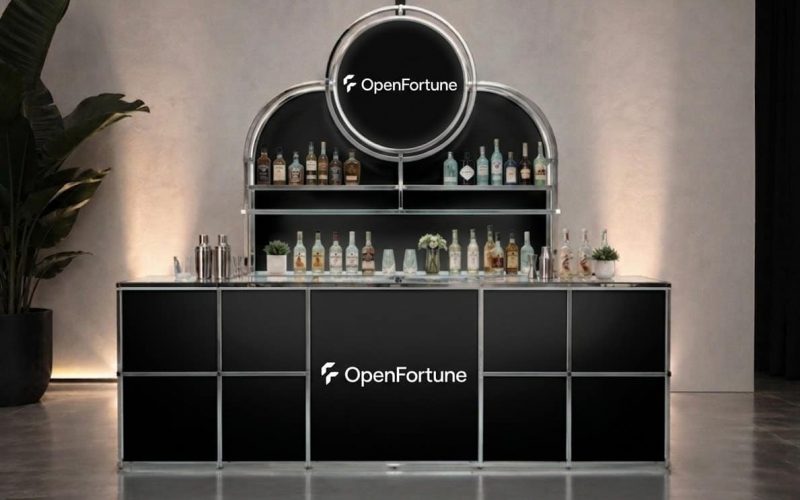
A branded tasting bar is one of the most adaptable options for food, beverage, wellness, and consumer packaged goods campaigns. It creates a familiar hospitality cue while allowing the brand to control how the sample is served. A raised back bar, branded front panel, integrated menu board, and organized display shelving can make a small footprint feel like a complete destination.
This format works especially well when the product benefits from a guided explanation. A brand ambassador can introduce ingredients, flavor notes, preparation methods, or product benefits while serving. For higher-volume activations, the bar should include enough counter space for multiple staff members and separate areas for service, preparation, and pickup.
The trade-off is that tasting bars can become congested if the menu or process is too complicated. Keep the trial simple, and reserve longer conversations for a secondary engagement area or a staff member positioned just beyond the pickup point.
2. The Product Personalization Counter
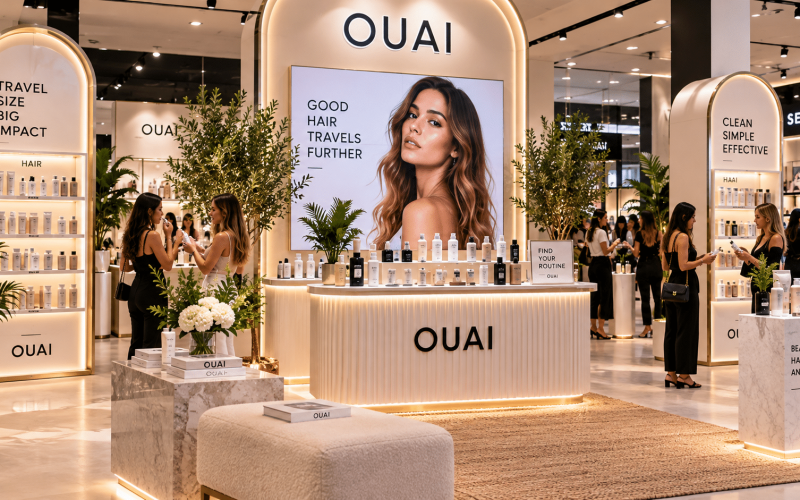
Personalization turns a sample into something attendees are more likely to photograph and remember. This can be as simple as choosing a flavor combination, adding a custom label, selecting a scent profile, or receiving a product recommendation based on a short interaction.
For beauty, beverage, apparel, and lifestyle brands, a personalization counter gives the product a direct connection to the individual. It also creates a natural opportunity to collect preference data when privacy standards and consent are handled appropriately.
The physical build should support a clean, deliberate process. Individual bins, drawers, display risers, and staff-side storage prevent the counter from looking like a worktable. If the guest is selecting components, the layout should make choices visible without allowing the station to become disorganized halfway through the event.
3. The Interactive Product Demo Pod
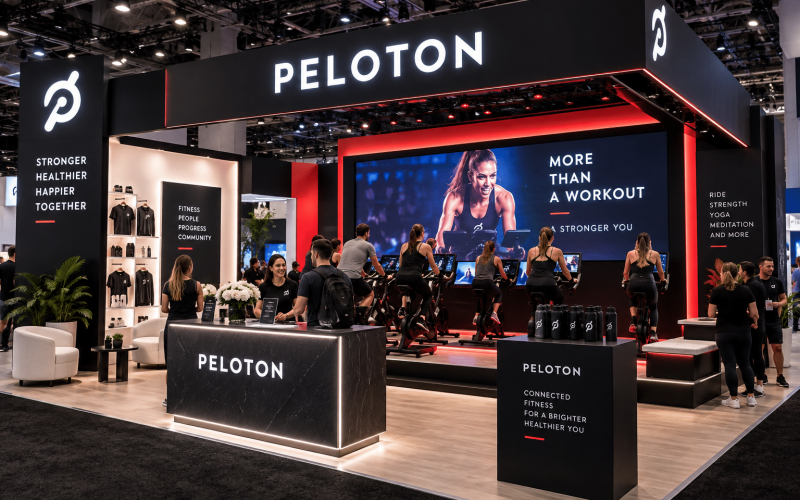
Some products need more than a quick taste or handoff. A demo pod is built around showing the product in use, whether that means blending a drink, testing a beauty device, comparing a cleaning product, or presenting a connected consumer technology feature.
The advantage is credibility. Attendees can see the product perform rather than relying solely on a claim printed on signage. For trade shows, this format can also give sales teams a practical setting for qualified conversations after the live demonstration.
Demo stations require more advance planning than simple sampling bars. Consider power requirements, water access, ventilation, cleaning procedures, safety clearances, and sightlines for a small audience. A counter that is attractive but too low, too deep, or poorly positioned can make a demonstration hard to see. Fabricated platforms, elevated product displays, and integrated screens can solve that issue when the product needs more visual presence.
4. The Sampling Game Station
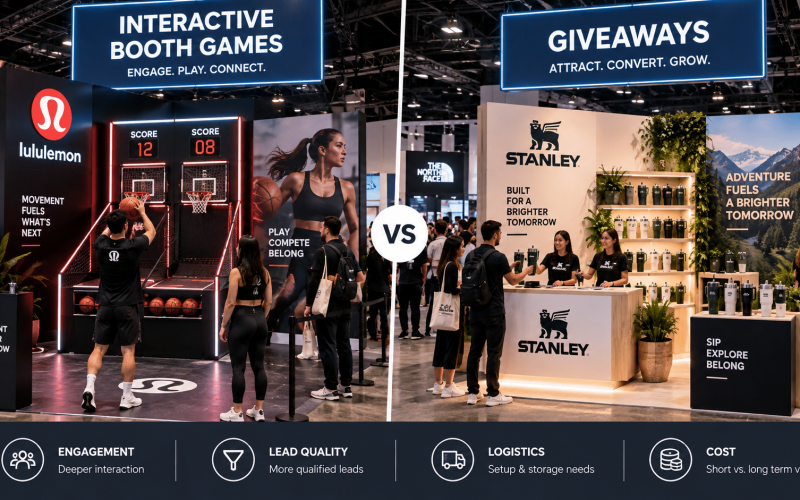
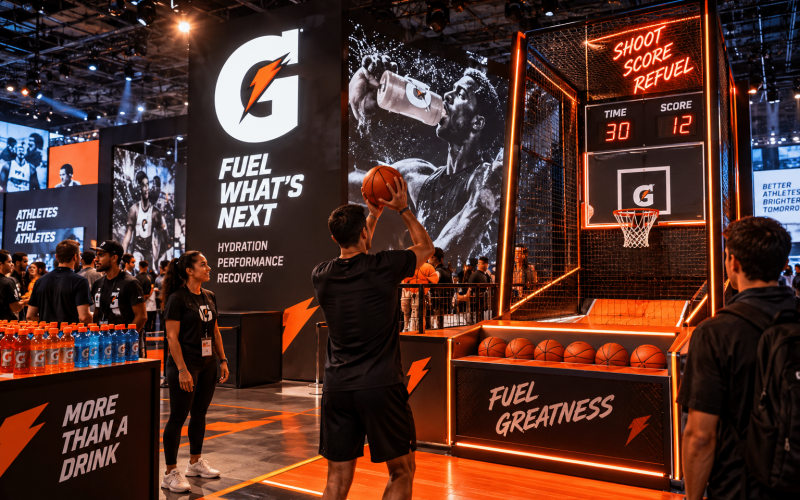
A game can provide the extra motivation that gets attendees into the experience, particularly in busy festival, campus, sports, and street-team environments. The product sample becomes the reward or the next step after play. Spin wheels, prize drops, reaction games, trivia, and branded skill challenges can all work when the mechanic supports the campaign rather than distracting from it.
The best game stations have a clear rhythm: attract, play, sample, share, and exit. Guests should understand the rules in seconds. If the game takes too long, the line may grow faster than staff can manage. If it is too easy to dismiss, it will not earn attention in a crowded event environment.
Custom game components, branded housings, and durable counters help the activation feel owned by the brand rather than assembled from generic event equipment. The product should be incorporated into the visual system, not placed as an afterthought beside the game.
5. The Immersive Sensory Station
Sensory stations are effective when texture, aroma, sound, temperature, or visual transformation is central to the product story. A fragrance launch may use scent discovery zones. A frozen dessert campaign may use a bright, climate-conscious serving environment. A coffee brand may build a tasting sequence around aroma and flavor profiles.
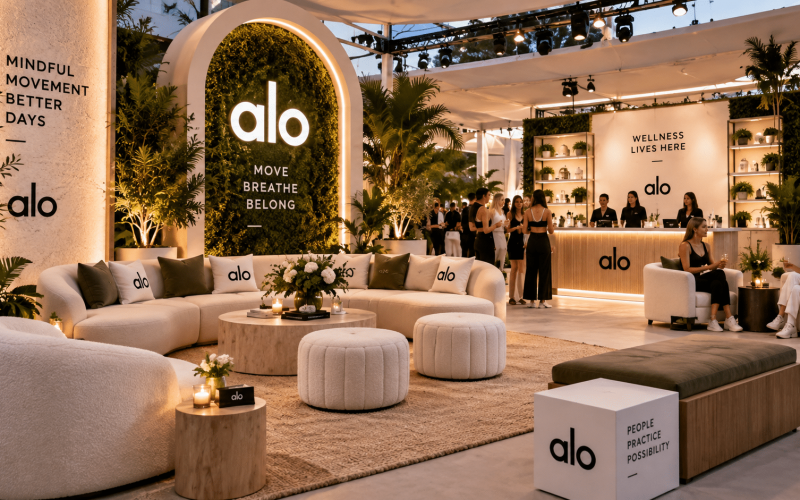
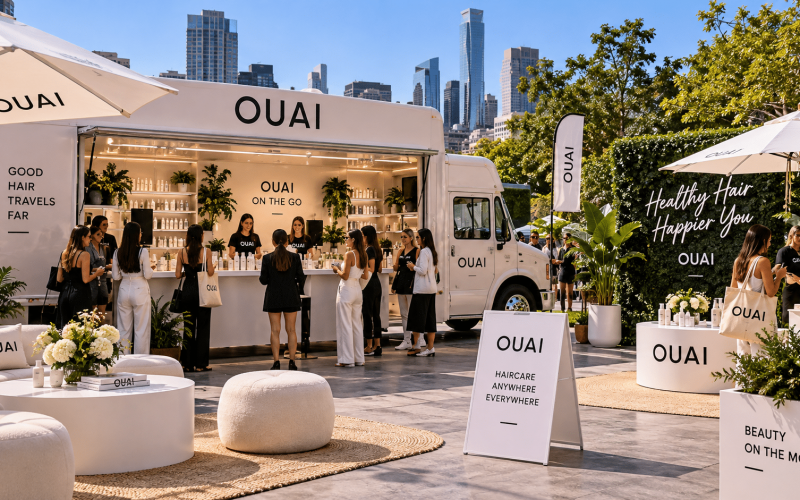
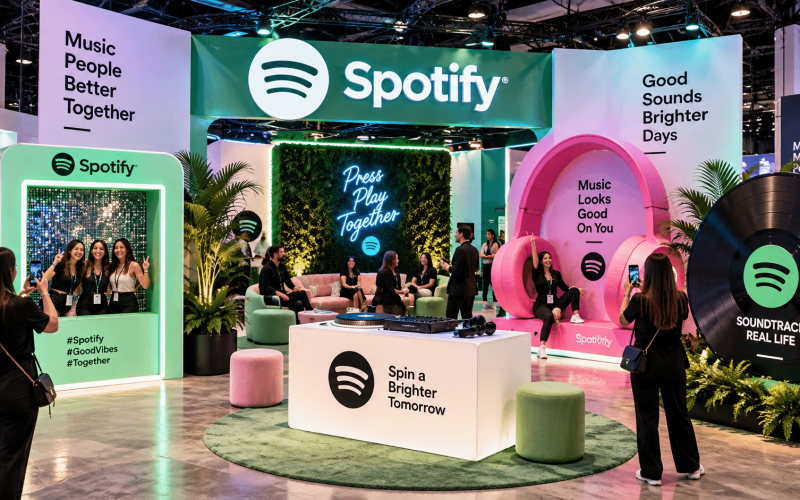
This approach is often highly shareable because it creates a stronger visual scene than a standard sampling table. However, immersion should not come at the cost of throughput. A full room build may be right for a flagship pop-up, while a smaller branded portal, archway, or enclosed sampling alcove may be the better choice for a touring activation.
Material choices matter here. Lighting, finish durability, cleanability, and the ability to pack and transport components safely should be addressed during fabrication. The station needs to look polished under event lighting while being practical for staff to reset repeatedly.
Designing Top Experiential Sampling Stations for Real Event Conditions
The concept should be approved only after the team has answered the practical questions. How many samples must be served per hour? How many ambassadors will work the footprint? Where do cases, ice, cups, napkins, and cleaning supplies go? Is the experience indoors, outdoors, or exposed to weather? Does the venue require fire-rated materials, specific electrical plans, or health department approvals?
Queue design is another frequent issue. A highly visible station can attract attention, but an unmanaged line can block neighboring exhibitors or create a poor attendee experience. Use stanchions, floor graphics, signage, or a defined entry point when volume is expected. In some cases, separating the engagement moment from the sample handoff is the fastest way to keep traffic moving.
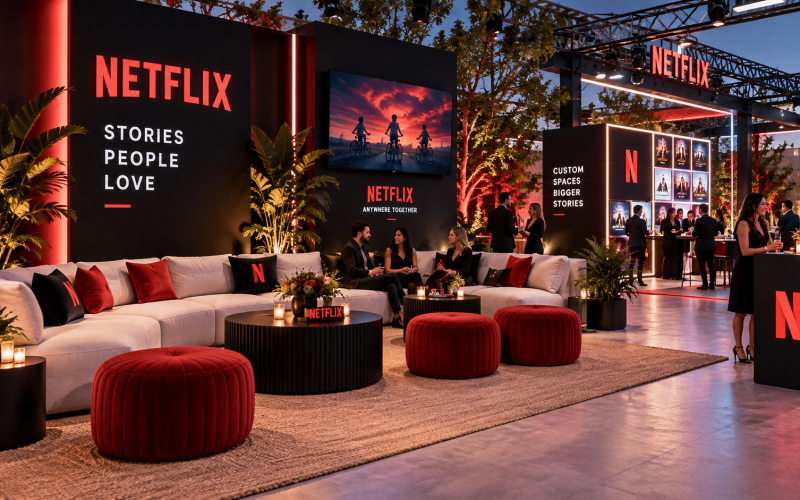
Brand consistency also needs to extend beyond the hero structure. Staff uniforms, menu cards, waste bins, product displays, giveaway storage, and digital screens should support the same visual system. These details are what make a fabricated station read as a complete brand activation rather than a collection of parts.
Custom Build, Rental Components, or Both?
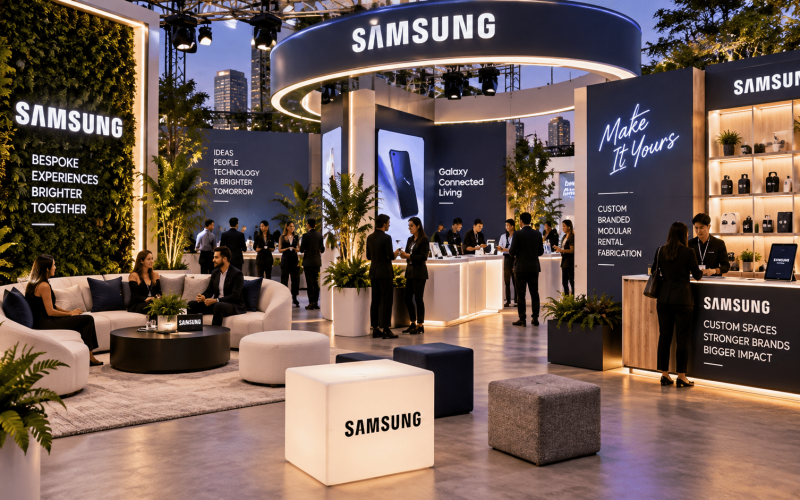
There is no single right production model. A fully custom build is appropriate when the station is a campaign centerpiece, requires a unique function, or will be deployed across multiple markets. It gives the brand more control over form, finish, and integration of specialized features.
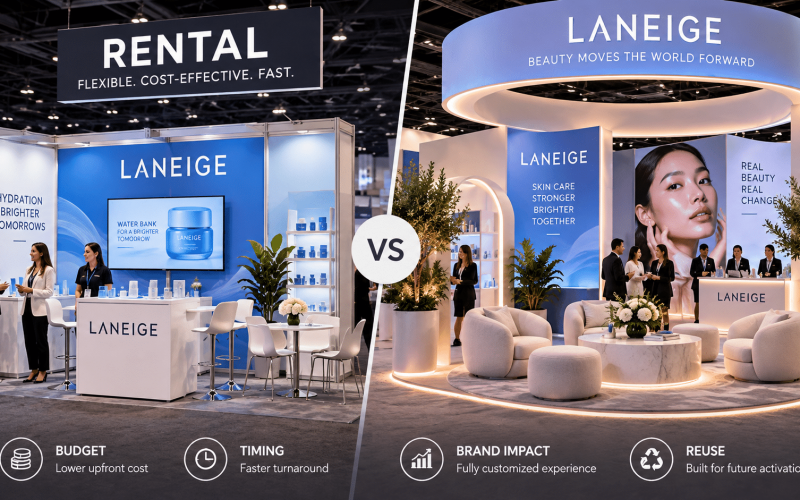
Rental components can be the efficient choice when speed, budget, or a local event footprint is the priority. Branded graphics, custom headers, counter wraps, display elements, and game features can transform adaptable rental furniture into a campaign-ready sampling environment. For events in New York, New Jersey, Boston, and Connecticut, local rental support can reduce the amount of equipment that needs to travel.
Many programs benefit from a hybrid approach. Build the signature branded elements that define the activation, then pair them with rental counters, seating, shelving, or support pieces as needed. This keeps the experience distinctive without fabricating every item from scratch.
Build the Sample Into the Experience
The best sampling programs do not treat the product as a giveaway at the edge of an event. They give it a setting that communicates why it is worth trying. Start with the attendee action you want to create, then build the station around the staffing, service flow, and visual impact needed to make that action happen reliably.
When the physical environment is designed with equal attention to brand expression and event operations, a simple sample can become the part of the activation people remember after they leave.