A DJ booth can either disappear into the background or become the visual center of an event. For brand teams planning dj booth rentals NYC, the difference usually comes down to more than the DJ setup itself. The booth has to support the program, carry the brand correctly, fit the venue, and arrive ready for a compressed production schedule.
At a launch, pop-up, retail takeover, rooftop event, or trade show after-hours program, music creates energy. The booth creates a focal point. It is where guests look when a set begins, where cameras point during key moments, and where a branded environment can feel finished rather than assembled from unrelated rental pieces.
What a DJ Booth Must Do at a Brand Event
A standard DJ table may be enough for a private party. An experiential event has different requirements. The booth needs to provide a professional work surface for the performer while also supporting brand visibility, guest flow, technical equipment, and the overall visual language of the activation.
That means the first question should not be, “What DJ booth is available?” It should be, “What role will the DJ area play in the environment?” A compact side-stage setup needs a different solution than a DJ position placed at the entrance of a product launch or at the center of a branded nightlife activation.
For most agency and marketing teams, the DJ booth is a production asset with three jobs: support the performance, conceal equipment and cable runs, and contribute to the brand experience. When one of those jobs is overlooked, the area can quickly look temporary, cluttered, or disconnected from the rest of the build.
DJ Booth Rentals NYC: Start With Event Function
Before selecting a booth style, define how the area will operate. A DJ performing continuous background music needs clear sightlines to the crowd and practical access to controllers, mixers, laptops, monitors, and power. A DJ leading a high-energy moment may need a larger platform, integrated lighting, and more visual presence.
The event format also changes the right footprint. A booth for a small Manhattan retail pop-up may need to work within a narrow floor plan and protect customer circulation. A booth for a large venue activation may need to serve as a stage-facing scenic element, with enough scale to hold its own against LED walls, oversized graphics, or custom bars.
The key is to plan the booth as part of the floor plan, not as an add-on delivered after major design decisions are already made. Confirm its position against entry paths, photo moments, guest queues, food and beverage service, emergency exits, and the sightlines that matter to event photography and social content.
Match the Booth to the Brand System
A DJ booth should feel like it belongs in the campaign. That does not always mean covering every surface with a logo. A polished branded booth can use the same color palette, material finish, graphic treatment, lighting temperature, or architectural language as the surrounding activation.
For a premium beauty or technology launch, clean lines and refined finishes may support the desired look. For a streetwear event, a more expressive structure, textured surface, bold graphic panel, or modular display treatment may be more appropriate. The right direction depends on the campaign, audience, venue, and content plan.
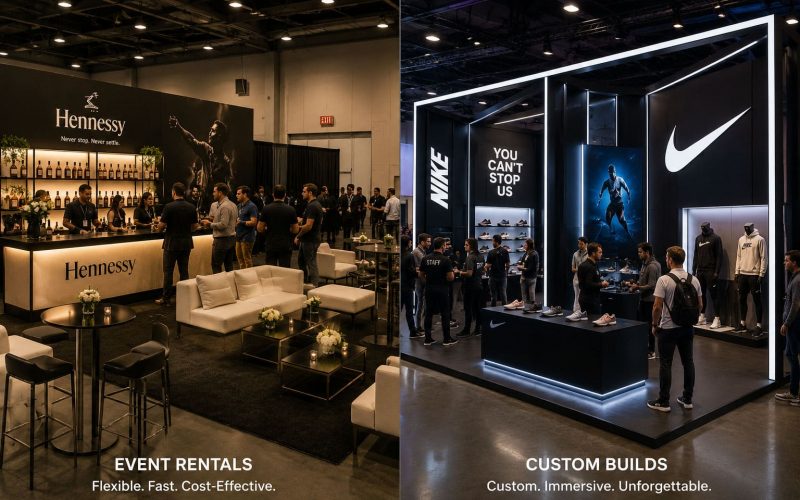
Rental is often the efficient choice when the event requires a proven structure on a short timeline. Custom fabrication is the better route when the DJ booth is a campaign hero, needs an unusual shape, includes integrated interaction, or must align precisely with a larger branded environment. Many programs benefit from a hybrid approach: use a rental-ready base and add custom face panels, dimensional branding, lighting details, or adjacent scenic elements.
Technical Details That Affect the Guest Experience
The best-looking booth still has to work for the DJ and production crew. Bringing technical requirements into the design phase prevents the familiar last-minute problems: visible cable bundles, blocked access panels, a controller that does not fit, or a booth height that is uncomfortable for the performer.
Confirm the equipment package early, including the number and size of decks, mixer, laptop, monitors, microphones, lighting control, and any backline support. Not every DJ travels with the same setup, and a booth designed around one equipment footprint may not work for another.
A production-ready DJ booth plan should account for:
- A stable, level surface with appropriate load capacity for all DJ equipment
- A usable work height and enough tabletop depth for the specified setup
- Rear or side access for setup, troubleshooting, and performer entry
- Concealed cable routing, power access, and clean connections to audio and lighting systems
- Ventilation and access considerations when equipment, displays, or lighting fixtures are integrated
These details are not cosmetic. They affect setup speed, safety, the DJ’s performance, and the quality of event photos. A well-planned booth keeps the technical infrastructure present but out of the guest’s view.
Power, Audio, and Lighting Need One Plan
The booth, sound system, and lighting package should be coordinated as one production scope. A booth may require power for DJ equipment, internal lighting, branded illuminated elements, video displays, or charging needs. The venue’s available power, circuit capacity, cable pathways, and distribution plan all need confirmation before load-in.
Audio considerations matter just as much. The DJ needs monitoring that allows accurate mixing without creating disruptive volume near check-in, product demos, speakers, or nearby exhibitors. At trade shows, venue rules may place tight limits on sound levels and speaker direction. At outdoor events, wind, weather protection, and generator planning may affect both placement and equipment selection.
Lighting can turn a functional booth into a strong visual asset, but it should support the camera plan rather than compete with it. Bright backlighting can obscure the DJ in photos. Highly reflective surfaces can create unwanted glare. A production partner can help balance visibility, atmosphere, and branded presentation before the event is on site.
NYC Logistics Can Shape the Rental Decision
New York event production rarely allows much room for improvisation. Freight elevator windows, loading dock rules, street access, union requirements, security procedures, building insurance documents, and limited storage can all affect what is practical to install.
For DJ booth rentals in NYC, confirm venue access and delivery restrictions before committing to a large or highly customized unit. A booth that looks right in a rendering may be difficult to move through a narrow service corridor, fit in a freight elevator, or stage during a short load-in. Modular components can be an advantage when access is restricted, provided the assembled result still feels intentional.
Timing also matters. A daytime media event may allow only a few early-morning setup hours. A nightlife program may require a late load-in after another event clears the space. Build the schedule around delivery, assembly, technical testing, branding installation, soundcheck, strike, and pickup – not just the guest-facing event hours.
Working with a fabrication-first event partner helps keep the rental, custom elements, and installation plan aligned. Portadecor supports teams that need event furniture and branded fabrication to work together as one physical experience, rather than as separate vendor scopes.
When a Rental Booth Is Not Enough
A rental booth is not automatically the right choice simply because it is faster. If the DJ position is a primary content backdrop, a campaign centerpiece, or an interactive destination, a basic rental unit with a logo panel may not deliver the needed impact.
Consider a more custom approach when the booth must integrate a product display, oversized dimensional marks, an LED feature, a custom texture, audience-facing interaction, or a distinct architectural silhouette. Custom work also makes sense for multi-city activations where the asset can be designed for repeat installation and consistent campaign presentation.
That said, custom does not always mean complicated. The most effective designs often focus on one clear visual idea and execute it cleanly. A well-built branded facade, paired with the right lighting and adjacent event furniture, can create a more convincing result than an overdesigned structure that is difficult to ship, install, or operate.
Build the Booth Into the Production Timeline
The strongest DJ setups are decided early enough to coordinate creative, fabrication, venue requirements, and technical production. Start with the event goals and floor plan, then confirm the DJ’s equipment needs, branding approach, venue access, and installation schedule. This sequence protects both the guest experience and the production budget.
A DJ booth should give the performer a dependable workspace while giving the audience a reason to look up, take photos, and stay engaged. When it is planned as part of the activation environment, it becomes more than a place to set equipment – it becomes a working piece of the brand experience.