A branded environment can look strong in a render and still fail on the show floor if the material choices are wrong. This event fabrication materials guide is built for marketers, agencies, and event producers who need custom products, trade show booths, and brand activations to hold up under real use, ship efficiently, and present the brand correctly.
Material selection is not a design afterthought. It affects weight, finish quality, durability, cost, lead time, and how easily an asset can be installed, repaired, reused, or stored. In experiential work, those decisions show up fast – in setup labor, freight bills, onsite touchups, and how the piece photographs under event lighting.
How to use this event fabrication materials guide
The right material depends on what the asset needs to do. A step-and-repeat wall, a product pedestal, an interactive game unit, and a rental-friendly bar facade may all support the same campaign, but they should not be built the same way.
Start with function first. Ask whether the piece is decorative or load-bearing, temporary or reusable, shipped once or sent to multiple markets, indoor only or exposed to weather. Then look at finish requirements. Some brands need a matte painted surface with tight color control. Others need dimensional laminates, printed graphics, or a metallic look that is easier to simulate than produce in solid metal.
The best fabrication plans also account for handling. If a display has to move through union labor docks, fit in freight elevators, or break down into road cases, material choice should support that reality from the start.
Core materials used in event fabrication
Wood and engineered wood
Plywood, MDF, and particle-based panels are common in custom fabrication because they are versatile, easy to machine, and reliable for painted scenic builds, cabinetry, counters, and display walls. Plywood generally performs better when structural strength matters or when the asset will be assembled and disassembled more than once. MDF is useful when you want a very smooth painted finish and clean routed details.
The trade-off is weight and moisture sensitivity. MDF can deliver a premium finish, but it is heavy and less forgiving in damp conditions. Plywood is usually a better choice for touring activations, trade show booths, and anything that needs stronger fastener hold.
Plastics and acrylics
Acrylic, PVC sheets, polycarbonate, styrene, and other plastics are used when clarity, color, thermoforming, lighter weight, or graphic integration matter. Acrylic is a common choice for illuminated elements, branded signage, display risers, and polished retail-style details. PVC and expanded PVC are often used for sign panels, decorative cladding, and lighter scenic surfaces.
Not all plastics behave the same way. Acrylic looks clean and premium, but it can scratch and crack if mishandled. Polycarbonate is tougher for impact-prone applications, though it may not give the same visual finish. For activation components that guests touch repeatedly, durability usually matters more than the lowest material cost.
Metals
Steel and aluminum are key when strength, rigidity, and repeat use are priorities. Aluminum is often preferred for lighter structural frames, modular builds, and assets that need easier transport. Steel makes sense when high load capacity or added stability is needed, especially in bases, frames, and anchoring systems.
Metal can also shape the visual language of an installation. Powder-coated steel can support a clean architectural look, while brushed aluminum may fit a tech-forward brand. The trade-off is fabrication complexity, finish lead times, and higher cost compared with simpler wood-based scenic methods.
Foams and lightweight scenic materials
Foam, foam board, and carved lightweight materials are useful for oversized logos, dimensional letters, sculptural props, and short-term scenic applications. They help teams create volume without excessive freight or rigging burden. For one-time launches or photo-driven moments, these materials can be highly efficient.
The limitation is durability. If guests will lean on it, sit on it, or move around it in a crowded activation, lightweight scenic materials usually need reinforcement or a harder outer skin. They are best used where visual impact matters more than repeated wear.
Laminates, vinyls, and surface finishes
A large share of event fabrication performance comes from the finish layer, not just the core substrate. High-pressure laminates, printed vinyl, textured films, powder coating, and painted finishes can transform simple builds into polished branded assets.
This is where many projects either look expensive or look rushed. A smart finish strategy aligns the desired appearance with the event schedule and use case. A fully custom automotive-grade paint finish may look excellent, but it may not be the right move for a two-city activation with tight strike dates and heavy handling. In many cases, a durable laminate or wrap provides better consistency across multiple assets.
Choosing materials by event application
Trade show booths
Trade show booths usually need a balance of presentation, modularity, and shipping efficiency. Structural frames often benefit from aluminum or steel, while branded surfaces may use plywood, laminated panels, acrylic accents, and graphic skins. If the booth will travel, weight reduction matters because freight costs can escalate quickly.
For booths reused across several shows, durability should outweigh minor savings in material cost. Replaceable graphic panels and repairable finish systems are often more valuable than a lower upfront build number.
Brand activations and pop-ups
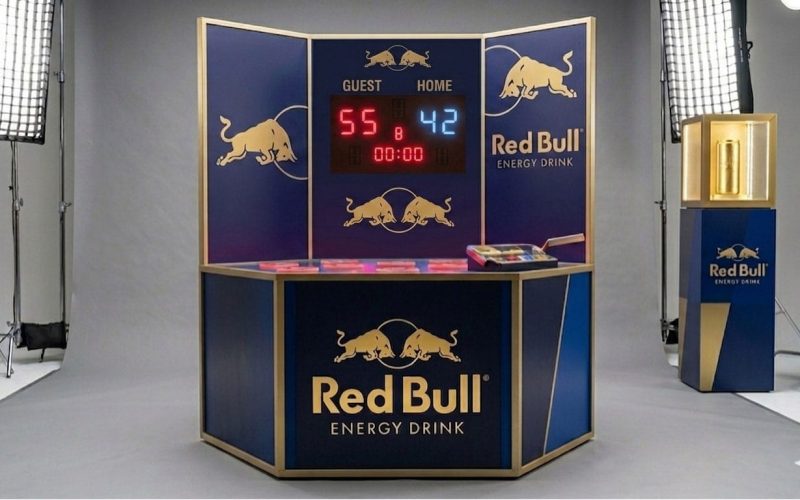
Brand activations often prioritize visual impact and interaction. That means material choices should support touchpoints, queuing, movement, and repeated engagement. Interactive game units, branded counters, sampling stations, and scenic backdrops need enough structure to survive public use without looking overbuilt.
This is where hybrid builds work well. A steel or plywood internal structure can support a lighter finished exterior using plastics, laminates, and graphics. That approach protects durability while giving the design team freedom on shape and appearance.
Event furniture and custom products
Furniture for events has to do more than look on-brand. It must handle live load, frequent cleaning, fast setup, and often a wider range of users than standard showroom pieces. Materials should be selected for stability, scratch resistance, and ease of maintenance.
In practice, that may mean powder-coated metal bases, laminate tops, reinforced wood bodies, or upholstered elements designed around commercial use rather than decorative styling alone. If the asset will enter a rental inventory, serviceability matters even more.
What buyers should evaluate before approving materials
The best material plan supports the full event lifecycle, not just fabrication. Before approving a build, buyers should push on a few practical issues.
First, ask how the asset will ship. Material decisions affect crate count, total weight, and damage risk. Second, ask how it will install. Large beautiful panels are less useful if they cannot get through venue access points. Third, ask how the finish will age over the run of the program. Fingerprints, chipping, scratches, and edge wear all show up differently depending on material and coating.
It also helps to ask where precision is actually needed. Not every activation element requires the same fabrication standard. Spending on premium materials for hero moments and more efficient substrates for secondary components often produces a better overall result than applying one expensive approach everywhere.
Cost, speed, and durability rarely align perfectly
Every event team wants fast turnaround, premium finishes, and long-term durability at the lowest cost. Fabrication does not work that way. Materials force trade-offs, and strong planning means making those trade-offs intentionally.
If speed is the priority, stocked sheet goods, standard metal sections, and readily available laminates can shorten production. If visual finish is the priority, lead times may expand because specialty coatings and custom details require more labor. If long-term reuse is the goal, structure and finish systems usually need to be upgraded to survive repeat handling.
This is where an experienced fabrication partner adds real value. Good recommendations do not start with the most expensive option. They start with the event objective, the deployment plan, and the level of finish the audience will actually notice.
A smarter way to approach material selection
The most effective builds are not defined by one material. They are defined by the right combination of materials for the job. A custom fabrication plan should match the brand standard, the venue conditions, and the operational demands of the event.
For agencies and brand teams managing trade show booths, touring activations, or one-off product launches, material decisions are business decisions. They shape freight, labor, lifespan, and audience perception all at once. That is why the earliest production conversations should cover substrates, finishes, structure, and reuse strategy before drawings are finalized.
If you treat materials as part of event performance rather than just construction, the finished environment usually works better from every angle – creative, operational, and commercial. The strongest event builds are the ones that look right, travel right, and keep working long after load-in.