8 Trade Show Traffic Drivers That Work

portadecor

Most booths do not have a traffic problem. They have a relevance problem.

That distinction matters when teams start planning trade show traffic drivers. More giveaways, louder graphics, or a last-minute game might create a spike in foot traffic, but spikes are not the same as qualified engagement. The booths that consistently pull the right audience usually do three things well: they signal value fast, reduce friction, and give attendees a reason to stop that fits the brand.

For marketers, event producers, and trade show managers, the goal is not simply to get a crowd. It is to design an environment that earns attention, holds it long enough for a real conversation, and supports lead capture without feeling forced. That requires a mix of creative thinking and physical execution.

What actually drives booth traffic

Trade show traffic drivers work when they align with attendee behavior on the show floor. People move quickly, scan visually, and make split-second decisions. They are asking simple questions: What is this? Is it for me? Is it worth stopping?

If your booth answers those questions within a few seconds, traffic improves. If it does not, even strong branding and a premium footprint can underperform. This is why fabrication, layout, messaging, and interactivity should be planned together rather than treated as separate decisions.

A well-built environment can increase visibility from the aisle, improve approach paths, and make a brand feel established before a staffer says a word. On the other hand, a booth packed with attractive elements but no clear focal point can confuse attendees and slow performance.

1. A visible focal point that reads from a distance

The first traffic driver is simple: people need to notice you before they can choose you. That sounds obvious, but many booths rely too heavily on details that only work up close. Floor graphics, printed collateral, and tabletop messaging all have value, but they do not carry the job of long-range attraction.

A strong focal point usually comes from height, dimensional construction, lighting, bold form, or motion. Custom fabrication matters here because it gives brands more control over silhouette and sightline impact. A booth with a distinctive overhead structure, sculptural display, or branded product feature tends to perform better than a booth that depends on flat panels alone.

The trade-off is budget and complexity. Not every exhibit needs a large custom centerpiece. But every exhibit does need one visual element that tells attendees, from a distance, where to look first.

2. Interactive trade show traffic drivers with a clear payoff

Interactivity remains one of the most reliable trade show traffic drivers, but only when it is easy to understand. If attendees have to decode the activity, ask for instructions, or wait too long for a turn, many will keep walking.

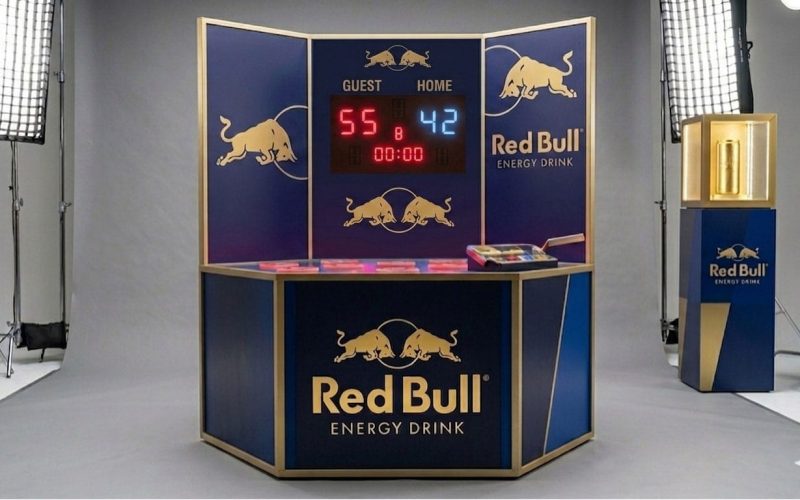
The best interactive elements offer immediate clarity and a visible reward. That could be a branded game, a product challenge, a timed experience, a digital quiz, or a hands-on demo station. The payoff might be entertainment, useful insight, social shareability, or a premium giveaway. What matters is that the attendee understands the benefit quickly.

This is where custom-built game elements and activation fixtures can outperform generic engagement tools. When the interaction feels native to the brand rather than rented in as an afterthought, it attracts more of the right people and supports stronger recall after the event.

Still, interactivity is not automatically a fit for every objective. If your sales cycle is highly technical and the audience expects expert conversations, a flashy game can pull in the wrong crowd. In those cases, a guided demo or consultative touchpoint may drive fewer visitors but better leads.

3. An open layout that lowers the barrier to entry

Traffic drops when a booth feels difficult to enter. Oversized counters at the front edge, tight furniture placement, and poorly positioned product displays can create a subtle but real barrier. Attendees may not consciously think the booth looks closed off, but they respond that way.

An open approach path gives people permission to step in without committing to a full conversation immediately. This is especially important in busy aisles where attendees want to browse before they engage. Custom event furniture and display fixtures should support that flow, not interrupt it.

The best layouts create zones. There is a front-of-booth area for quick attraction, a middle zone for exploration, and a deeper zone for longer conversations or demos. This lets your team meet different levels of attendee intent without clogging the entrance.

4. Messaging that says something specific

Many booths lose traffic because their message is too broad. Attendees do not stop for categories. They stop for outcomes.

Instead of leading with generic brand language, high-performing booths state a clear value proposition in plain terms. That might be a problem solved, a measurable result, a product advantage, or a category-specific application. If the attendee can identify themselves in the message, the booth becomes relevant faster.

This does not mean oversimplifying complex offerings. It means choosing the first message carefully. Trade show graphics should do the work of inviting the right audience into a conversation, not trying to explain everything at once.

5. Live moments that create social proof

A booth that looks active attracts more traffic than one that looks static. People are naturally drawn to motion, noise, and signs of group interest. This is why live demos, timed presentations, hosted game rounds, and scheduled product reveals can outperform passive displays.

The value is not only in the event itself. It is in the crowd signal it creates. When attendees see others gathered with a purpose, the booth earns instant social proof.

Timing matters here. Short, repeatable live moments often work better than one major presentation. A five-minute demonstration every 20 or 30 minutes can create multiple attraction windows throughout the day. That rhythm also helps staff organize outreach and reset engagement areas between surges.

6. Staff behavior that supports the environment

Even the best booth design can be undermined by poor floor behavior. Teams standing in a tight group, looking at phones, or waiting for attendees to initiate contact will reduce traffic. Booth staff are part of the attraction system.

The strongest teams understand role separation. Some staff should focus on aisle engagement and quick qualification, while others handle demos or deeper product conversations. That prevents bottlenecks and keeps the front of the booth welcoming.

It also helps when the environment supports staff performance. Counters should not become walls. Demo stations should not force awkward positioning. Storage should be built in so clutter stays out of sight. Fabrication decisions affect all of this more than many teams realize.

7. Giveaways that fit the interaction

Giveaways still work, but only if they reinforce the booth strategy. A bowl of random swag may generate quick scans from attendees who were never likely to convert. A better approach is to connect the item to an action, a theme, or a qualified interaction.

For example, a premium branded item tied to a demo completion or meeting can improve lead quality. A game-based prize structure can help attract participation without handing out inventory indiscriminately. Even a simple takeaway can be effective if it is well-designed, useful, and aligned with the brand experience.

The key is not the item itself. It is whether the giveaway supports the kind of traffic you want.

8. Build for memory, not just a moment

The strongest trade show traffic drivers do more than pull attendees into the booth. They help the brand stay memorable after the floor gets busy and the day blurs together.

That usually comes from consistency between the visual environment, the interaction, and the conversation. If the booth promises one thing and the experience delivers another, traffic may come but recall will be weak. When everything lines up, the stop feels more credible and more worth following up on.

This is why custom fabrication is often a strategic advantage rather than just a production choice. It gives teams the ability to shape branded environments around specific behaviors, campaign goals, and audience expectations instead of forcing those goals into standard components.

The real question behind trade show traffic drivers

When teams ask how to increase booth traffic, the better question is usually: what kind of traffic should this booth be built to attract?

The answer depends on the event, the sales cycle, the audience, and the role of the exhibit in the broader campaign. A product launch may benefit from spectacle and high-volume interaction. A B2B service brand may need a more selective approach that favors dwell time and lead quality. A regional event with rental components may call for efficiency and speed. A nationwide activation may justify more custom-built impact.

The point is to design traffic intentionally. Not every crowd is valuable, and not every quiet booth is failing. The best-performing exhibits use physical design, activation strategy, and operational planning to attract the right people for the right reasons.

That is the standard worth building toward: a booth that does not ask for attention, but earns it the moment attendees step into view.
Share this post with your friends

We Create One-of-a-Kind Custom Event Products That Showcase Your Brand in Bold, Memorable Ways!

Request more information about our custom products!

Fill out the form below and we will get back to you

Related Blog Articles

portadecor

Event Fabrication Materials Guide

Event fabrication materials guide for brands and agencies choosing substrates, finishes, and structures for activations, booths, and displays.
portadecor

8 Trade Show Traffic Drivers That Work

Trade show traffic drivers that increase booth visits, dwell time, and lead quality through fabrication, interactivity, layout, and timing.
portadecor

Custom Booths vs Rentals: Which Fits Best?

Custom booths vs rentals comes down to goals, budget, timeline, and reuse. Learn which option makes sense for trade shows and activations.
portadecor

Brand Activation Logistics Guide

A brand activation logistics guide for marketers and agencies planning custom builds, shipping, install, staffing, and on-site event execution.
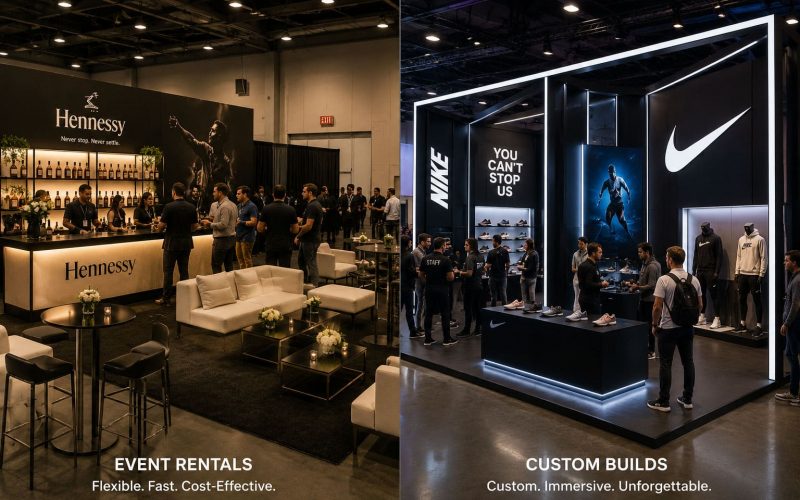
Comparison of event rentals and custom event builds for trade shows, brand activations, and experiential marketing environments.

Event Rentals Versus Custom Builds

Compare event rentals versus custom builds for activations, trade shows, and branded events. Choose the right fit for budget, timeline, and impact.
Interactive trade show game designed for experiential marketing, featuring custom fabrication, branded gameplay, attendee engagement, and lead generation.

How to Design Interactive Booth Games

Learn how to design interactive booth games that drive traffic, support brand goals, fit your space, and deliver measurable event engagement.
Premium event rental setup in Manhattan featuring custom lounge furniture, branded environments, trade show rentals, and experiential marketing installations.

Event Rentals Manhattan Brands Can Rely On

Event rentals Manhattan teams can count on for activations, trade shows, and branded events - with custom options, fast turnaround, and quality.
Brand activation case study featuring a custom experiential marketing environment, branded architecture, attendee engagement, and measurable event results.

Brand Activation Case Study: What Works

A brand activation case study shows how strategy, fabrication, and execution shape event results, from concept to attendee engagement.
Experiential fabrication versus exhibit houses comparison for trade show booths, branded environments, custom fabrication, and experiential marketing activations.

Experiential Fabrication vs Exhibit Houses

Experiential fabrication vs exhibit houses: learn the differences in design, production, flexibility, and event execution for branded environments.
Event fabrication project timeline showing custom booth production, fabrication scheduling, installation planning, and event logistics coordination.

Event Fabrication Turnaround Times Explained

Event fabrication turnaround times depend on scope, materials, approvals, and logistics. Learn what affects lead times and how to keep builds on track.
Experiential fabrication trends featuring modular event structures, interactive technology, sustainable materials, and modern trade show booth design.

Experiential Fabrication Trends That Matter

Experiential fabrication trends are shifting toward modular builds, tech integration, and faster production for activations and trade show booths.
Custom illuminated DJ booth with branded graphics, LED lighting, and experiential event fabrication for corporate events and brand activations.

Custom DJ Booths

Discover why custom DJ booths have become a popular event branding tool for corporate events, experiential marketing activations, festivals, and live entertainment environments.
Custom branded sampling cart for experiential marketing, product sampling, beverage promotions, and live event activations.

Custom Sampling Cart Fabrication That Performs

Custom sampling cart fabrication helps brands serve, demo, and engage at events with mobile builds designed for workflow, durability, and brand impact.
Experiential pop-up activation featuring custom fabrication, branded environments, interactive engagement, and immersive consumer experiences.

How to Plan Experiential Popups That Work

Learn how to plan experiential popups that drive engagement, fit your budget, and stay on-brand from concept through fabrication and setup.
Luxury product launch brand activation featuring a custom experiential marketing environment with interactive displays, branded elements, product sampling stations, and attendee engagement areas.

9 Brand Activation Examples for Product Launches

See 9 brand activation examples for product launches that drive engagement, support product storytelling, and improve event execution.
Modern event lounge rental setup featuring branded furniture, soft seating, custom décor, and activation space designed for corporate events and experiential marketing.

Event Lounge Rentals New Jersey Brands Use

Event lounge rentals New Jersey teams use for activations, trade shows, and corporate events - built for brand impact, comfort, and fast execution.
How to Choose a Trade Show Booth Builder

How to Choose a Trade Show Booth Builder

Need a trade show booth builder? Learn how to evaluate fabrication, timelines, logistics, and brand fit before you commit to a partner.
Experiential pop-up activation featuring custom branded architecture, interactive engagement areas, product displays, sampling stations, and consumer marketing experiences designed to drive traffic and brand awareness.

12 Experiential Pop Up Examples That Work

12 experiential pop up examples that show how brands drive traffic, engagement, and ROI through smart design, fabrication, and execution.
Custom trade show counters featuring branded fabrication, integrated storage, product displays, and attendee engagement areas designed for modern exhibit booths.

Best Custom Trade Show Counters for Booths

Find the best custom trade show counters for branded booths, demos, lead capture, and storage with fabrication tips for better event performance.
Choosing a Branded Event Display Manufacturer

Choosing a Branded Event Display Manufacturer

Learn how to choose a branded event display manufacturer for trade shows, activations, and tours with fabrication quality and event-ready execution.
Custom event furniture setup for a brand activation featuring branded bars, lounge seating, cocktail tables, and attendee engagement areas

How to Design Event Furniture That Performs

Learn how to design event furniture for brand activations, trade shows, and live events with the right balance of function, flow, durability.
Activation fabrication project planning meeting focused on event budgets, production costs, fabrication scope, and execution strategy

How to Budget Activation Fabrication

Learn how to budget activation fabrication with realistic cost planning, scope control, and production decisions that protect event results.
Experiential event fabrication guide featuring custom trade show booths, branded activations, modular event structures, and immersive marketing environments.

Experiential Event Fabrication Guide

An experiential event fabrication guide for brands and agencies planning activations, booths, and custom builds that perform on site.
Trade show engagement ideas featuring interactive booth experiences, branded activations, attendee participation, and experiential marketing design.

12 Best Trade Show Engagement Ideas

Explore 12 best trade show engagement ideas that drive booth traffic, qualify leads, and turn branded spaces into measurable event results.
Modern trade show booth trends for 2026 featuring modular fabrication, experiential marketing environments, interactive displays, and branded event design.

7 Trade Show Booth Trends 2026 Will Reward

Trade show booth trends 2026 point to smarter layouts, modular builds, and measurable engagement. Here's what brands should budget for now.
Modern trade show booth ideas featuring experiential marketing design, illuminated branding, modular fabrication, and interactive event environments.

15 Best Trade Show Booth Ideas That Work

Explore the best trade show booth ideas for stronger engagement, better traffic flow, and branded impact that supports real event results.
Interactive event game activation featuring branded engagement, custom fabrication, attendee participation, and experiential marketing design.

12 Best Interactive Event Games for Brands

Discover the best interactive event games for brand activations, trade shows, and pop-ups that increase engagement and support measurable results.
Custom experiential fabrication company producing trade show booths, branded environments, event displays, and immersive marketing activations for live events.

What a Custom Experiential Fabrication Company Does

See how a custom experiential fabrication company turns concepts into branded environments for activations, trade shows, and live events.
Custom experiential fabrication company building branded trade show booths, event displays, immersive activations, and experiential marketing environments.

Nationwide Brand Activation Fabrication

Nationwide brand activation fabrication turns campaign concepts into build-ready event assets with consistent quality, logistics, and execution.
Custom event furniture fabrication featuring branded lounge seating, illuminated counters, and experiential activation furniture designed for trade shows and brand events.

Custom Event Furniture Fabrication That Performs

Custom event furniture fabrication helps brands create durable, on-brand environments for activations, trade shows, and live events.