A backdrop is rarely just a backdrop. At a packed trade show, a product launch, or a street-level activation, it can be the element that tells attendees where to stop, where to take a photo, and what brand they are experiencing. The best branded event backdrops do that work while holding up under real event conditions: changing light, constant foot traffic, camera attention, tight load-ins, and repeated use.
For marketing teams and agencies, the goal is not simply to place a logo behind guests. The right backdrop supports a specific event behavior, whether that is drawing a crowd to a demo, framing user-generated content, separating a VIP moment from the show floor, or making a rental footprint feel completely owned by the brand.
Start With the Backdrop’s Job
The strongest fabrication decisions begin with function. A press-style step-and-repeat serves a different purpose than an immersive scenic wall, even if both carry the same logo treatment. Treating them as interchangeable is how brands end up with a photo wall that disappears in a wide shot or a scenic build that blocks circulation.
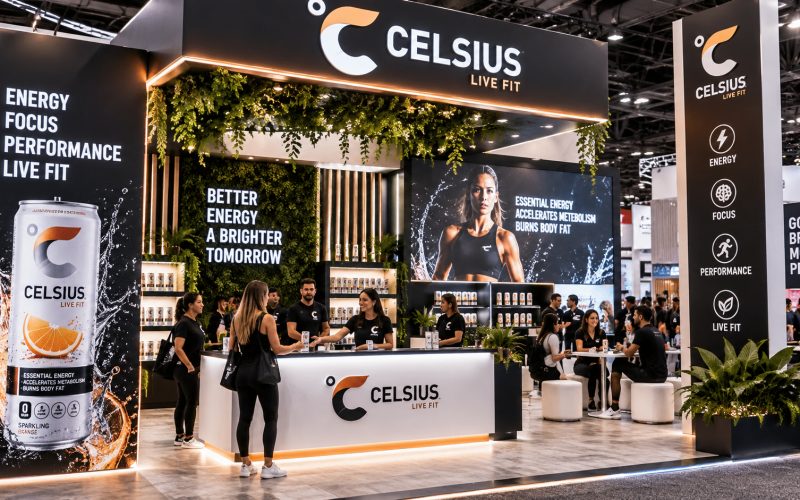
A photo moment needs a clear camera-facing composition. Logos should remain readable behind people of different heights, and the visual treatment should work from several feet away as well as in a vertical phone frame. A product display backdrop needs to direct attention to the product first, then reinforce the brand. A trade show booth backdrop may need to carry messaging, conceal storage, support integrated shelving, or create separation from neighboring exhibitors.
Before selecting materials or dimensions, establish what the backdrop must accomplish. Is the priority earned media, guest participation, product education, queue management, or environmental branding? One build can support several goals, but each added requirement affects structure, footprint, cost, and install time.
6 Types of Best Branded Event Backdrops
1. Tension Fabric Walls
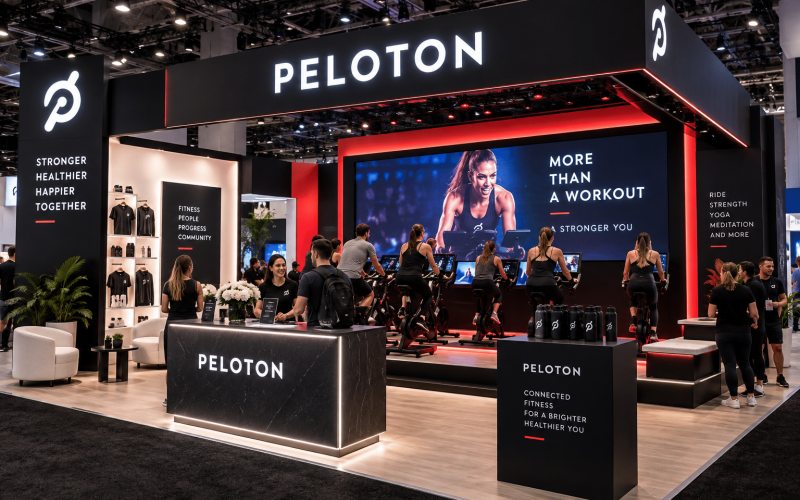
Tension fabric walls are a practical choice for trade shows, conferences, and repeatable brand programs. Printed fabric stretches over a lightweight frame to create a clean, nearly seamless surface that photographs well and packs efficiently.
They work best when the brand needs broad visual coverage without the weight and labor of a hard-built wall. They are especially effective for logos, campaign artwork, and simple graphic systems. The trade-off is that fabric alone has less dimensional impact than a fabricated scenic element. If the activation depends on texture, depth, shelving, or an architectural reveal, a tension wall may be the foundation rather than the finished solution.
2. Step-and-Repeat Photo Walls
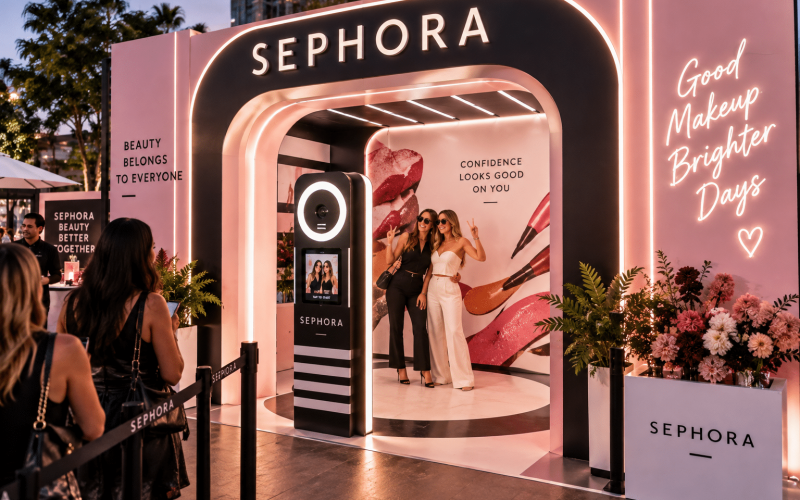
A step-and-repeat remains useful when media photos, sponsor recognition, or a high volume of guest portraits are central to the program. The familiar repeating logo pattern makes brand attribution clear in event coverage and attendee posts.
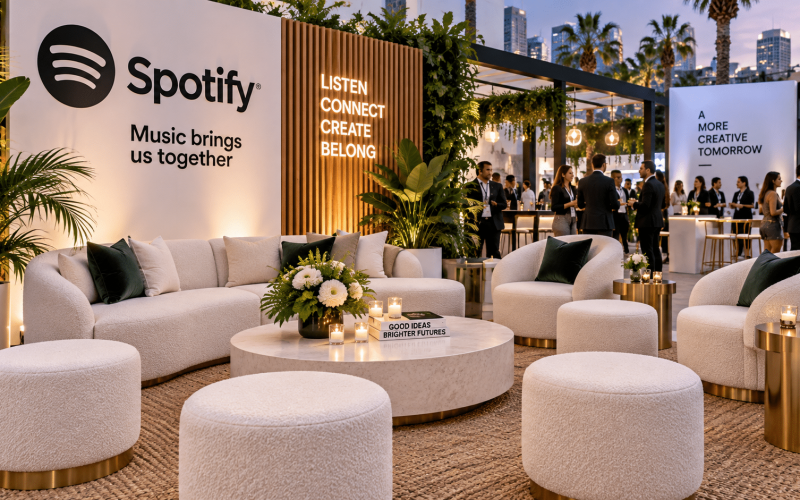
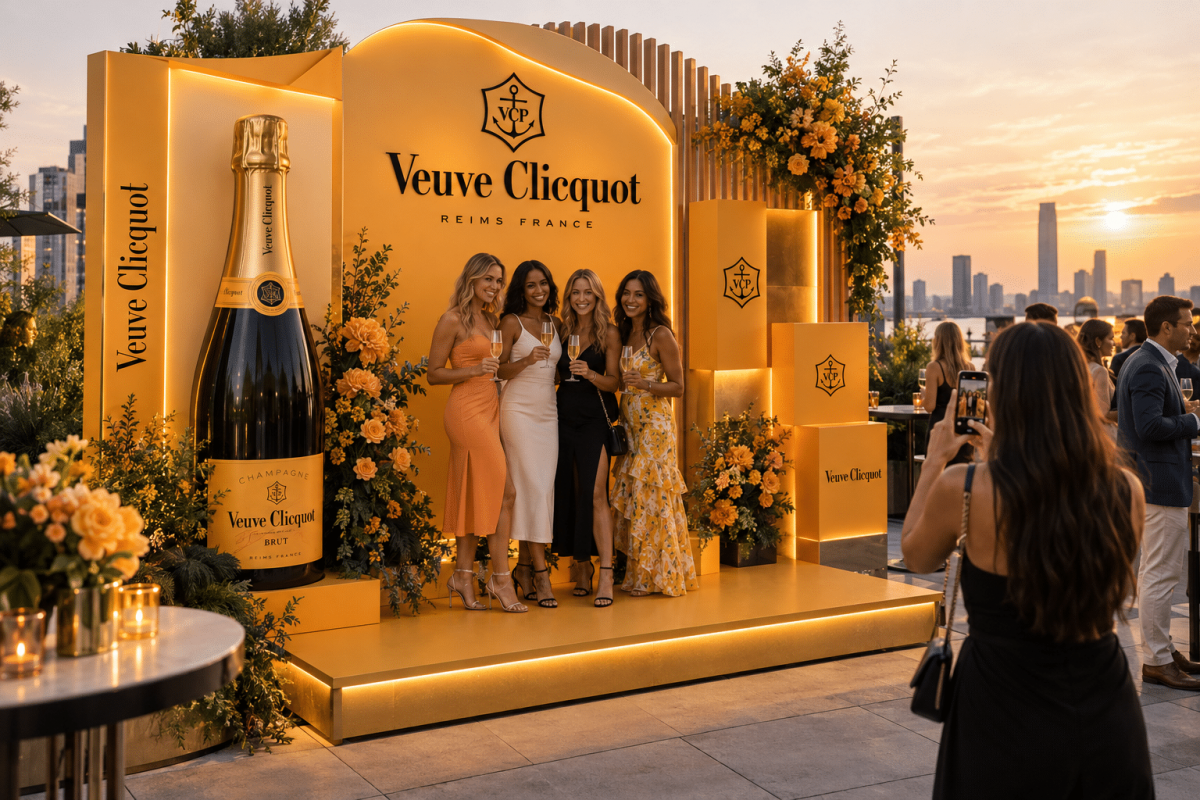
The execution matters more than the format. Logo scale, spacing, contrast, and camera distance should be planned around actual photography. A pattern that looks balanced on a design file can become cluttered once guests stand in front of it. For a premium launch or influencer event, a simple logo wall may also need fabricated trim, lighting, florals, or dimensional marks to feel intentional rather than generic.
3. Dimensional Logo Walls
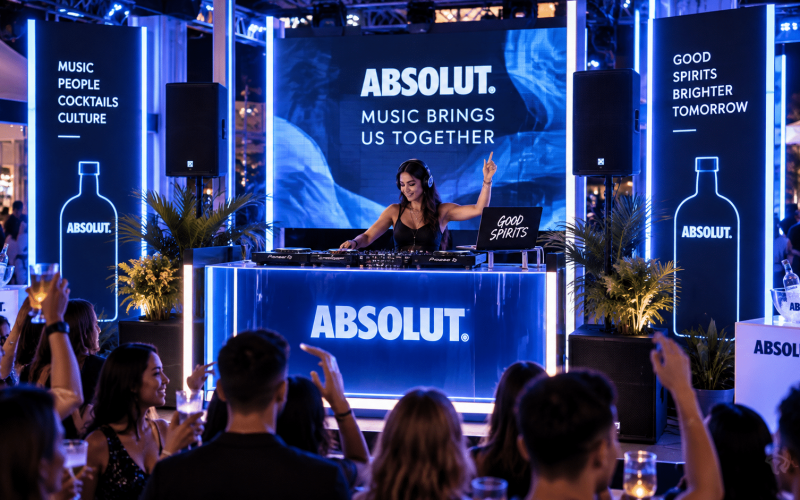
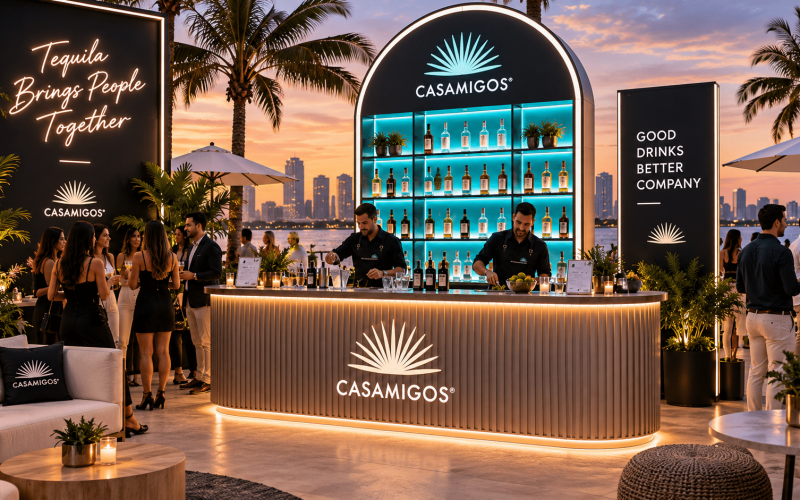
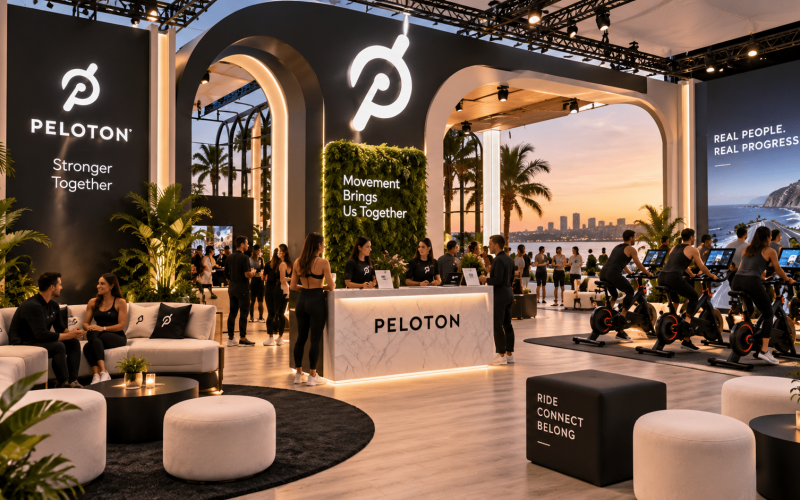
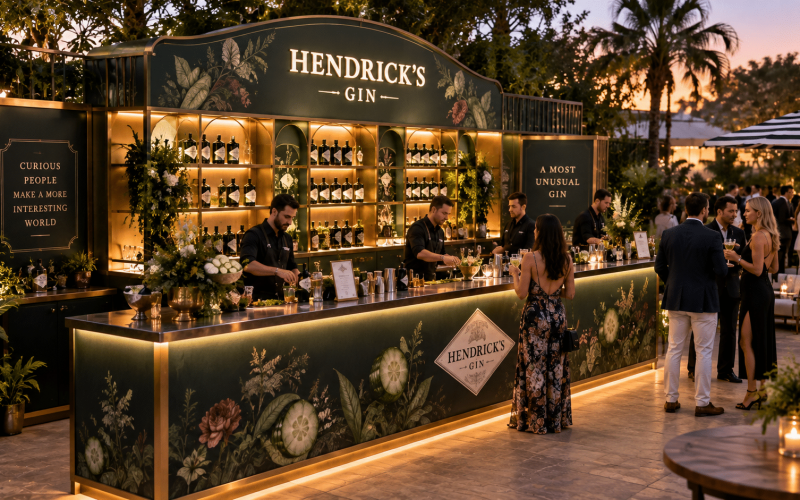
Dimensional logo walls create a stronger sense of physical presence. Routed letters, illuminated marks, layered panels, textured finishes, and raised graphics add shadow and depth that flat print cannot replicate.
This category works well for entrances, press moments, hospitality spaces, and brand activations where the setting must feel built for the campaign. It also provides a more flexible path for integrating a logo into an environment without repeating it across the entire surface. Materials should be selected with venue conditions in mind. A polished acrylic finish can read beautifully under controlled lighting but may show fingerprints or glare in a high-touch environment. Painted wood, laminate, vinyl, metal, and LED elements all offer different visual and operational advantages.
4. Modular Scenic Backdrops
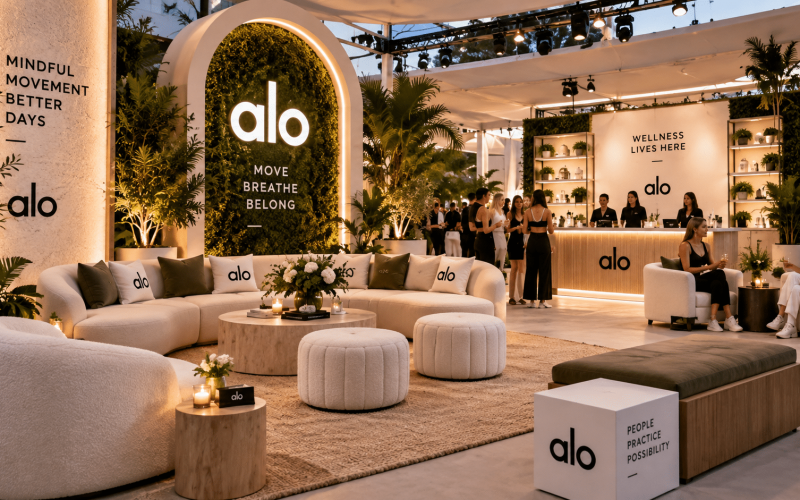
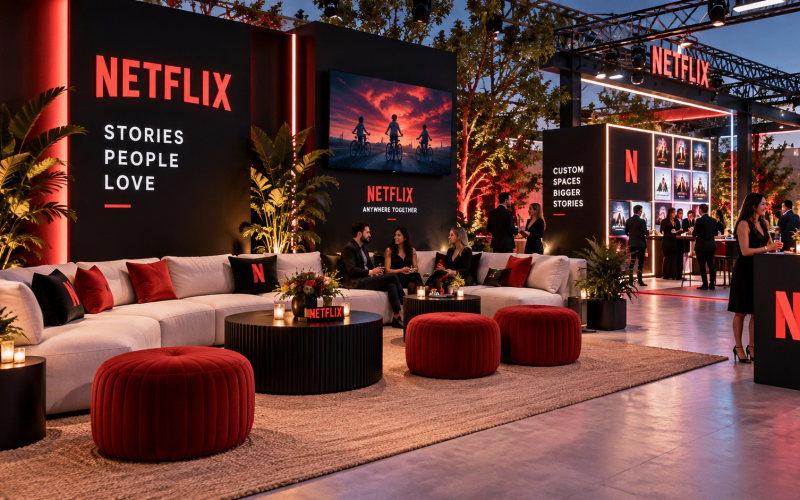
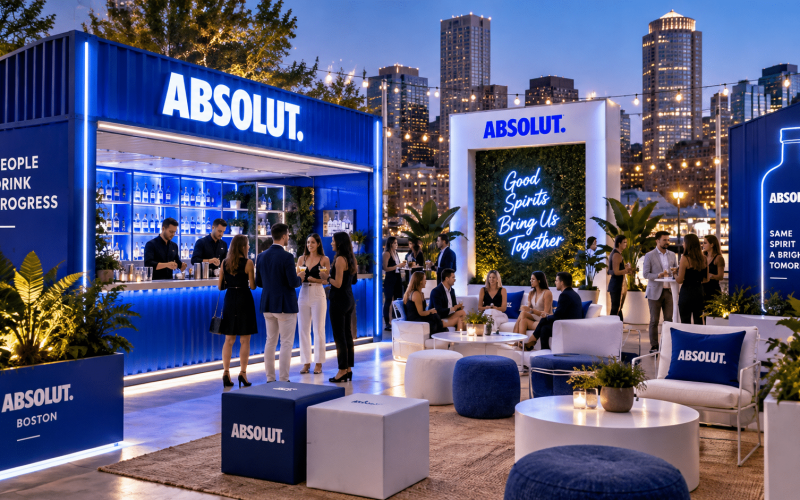
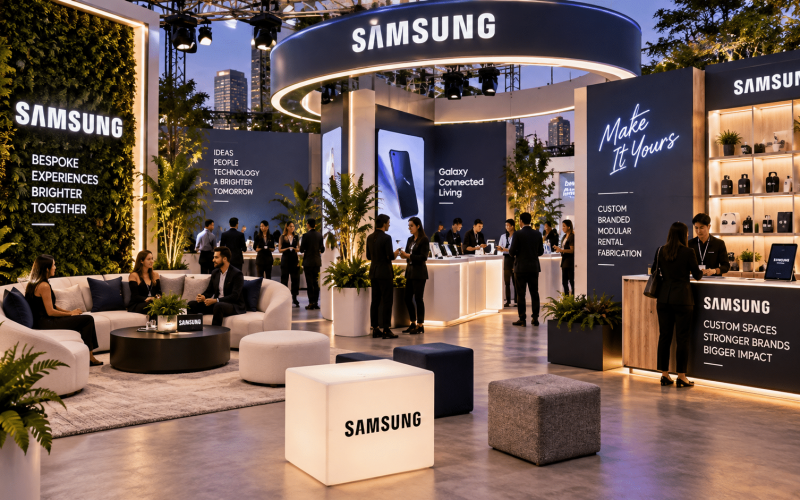
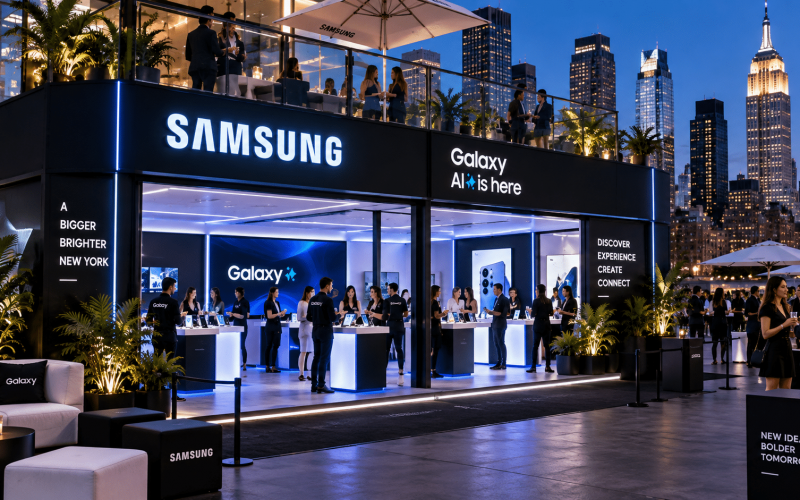
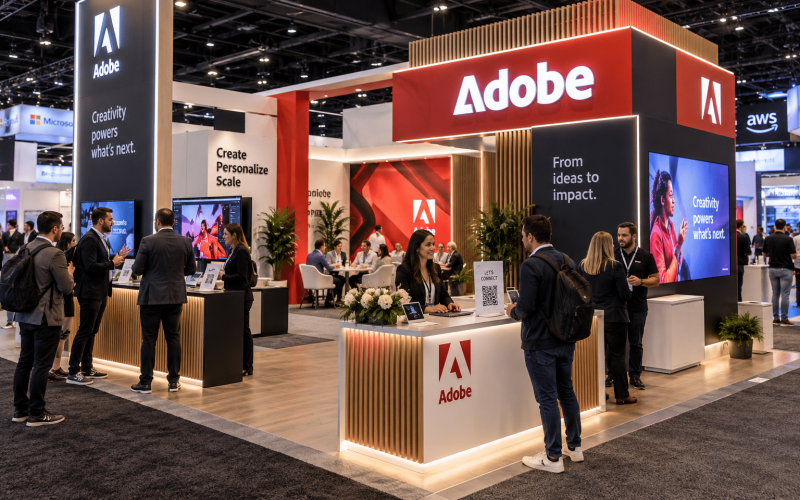
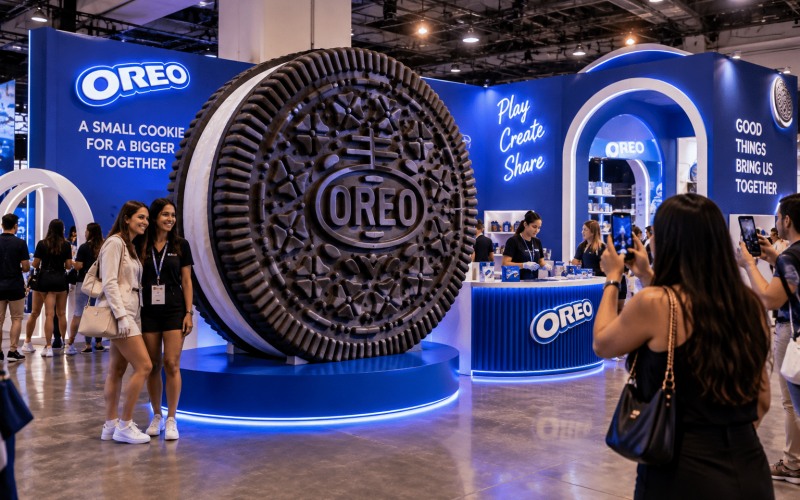
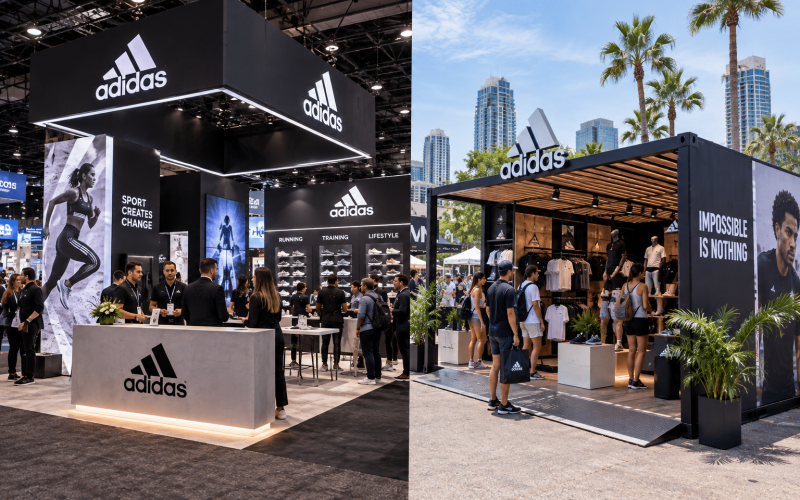
Modular scenic systems are designed for teams that need a larger visual statement and practical reuse. These can include branded wall panels, arches, portals, display bays, integrated counters, and interchangeable graphics that adapt to different event footprints.
A modular approach is often the right investment for touring activations, multi-city launches, and recurring trade show programs. It can reduce future fabrication needs while preserving brand consistency. However, modular does not mean one-size-fits-all. The system needs to be engineered around realistic venue access, labor requirements, storage, and transportation. A backdrop that reconfigures beautifully on paper is not useful if it cannot fit through a standard freight elevator.
5. Interactive and Content-Capture Walls
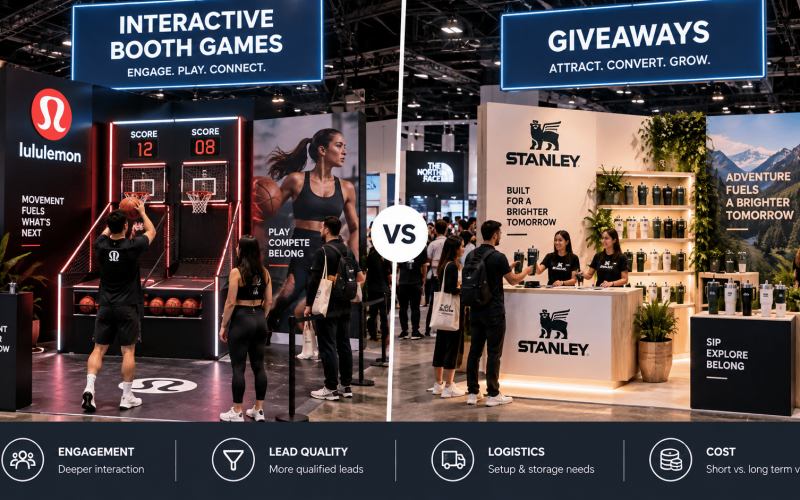
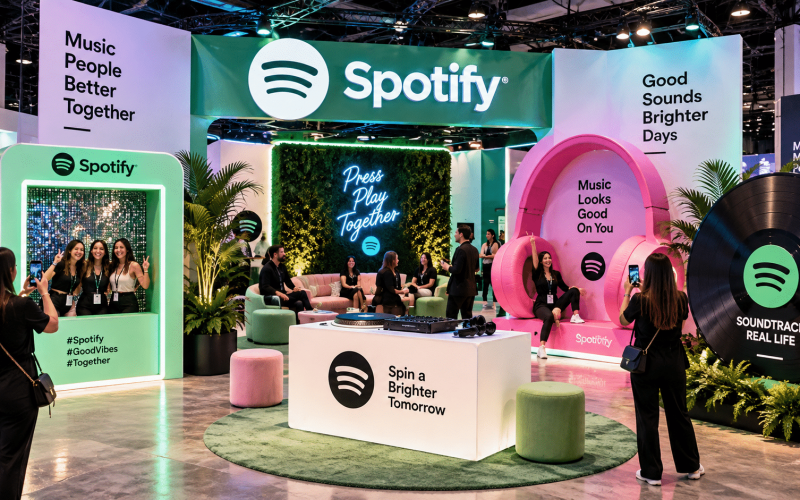
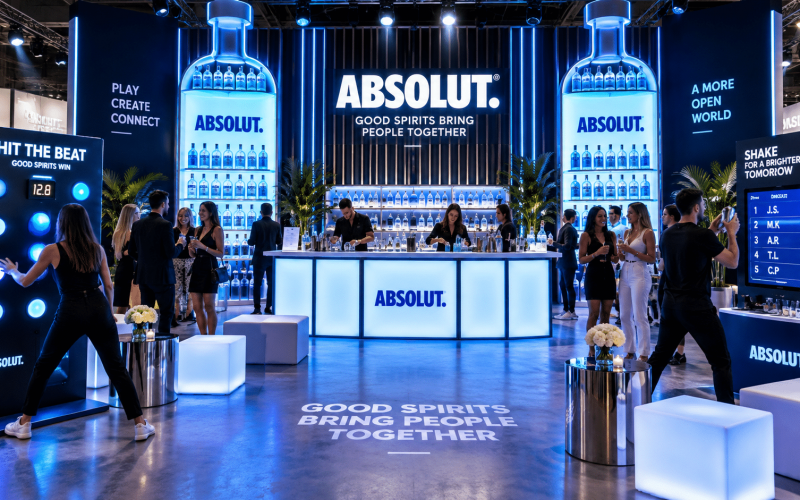
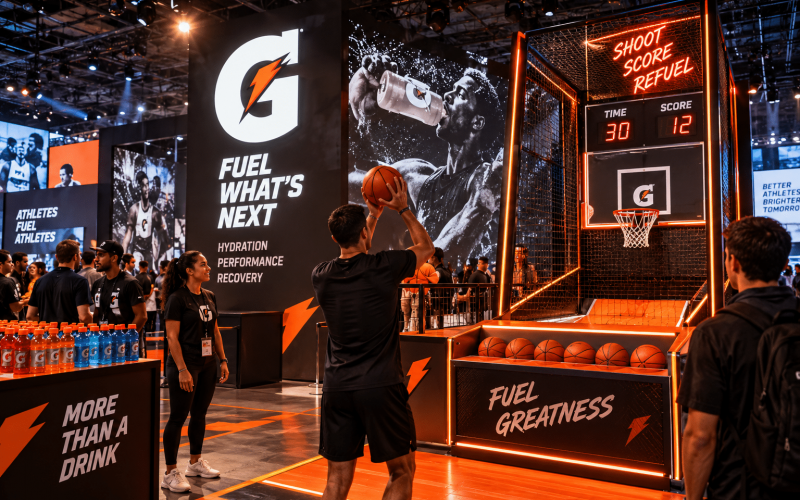
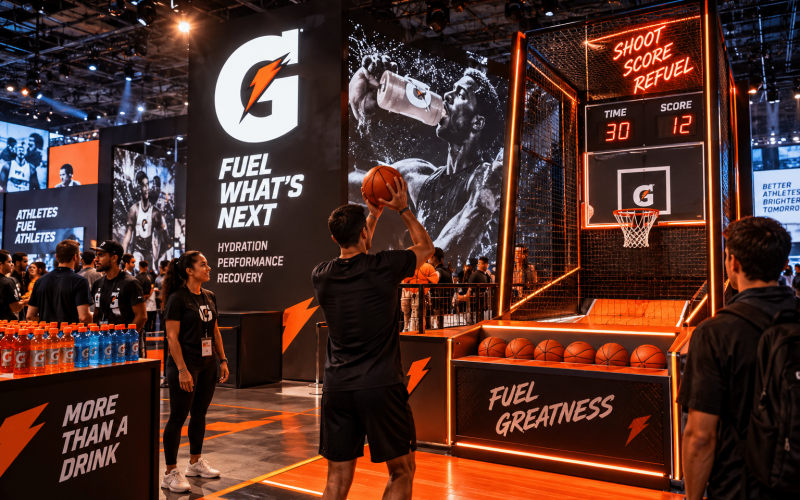
Some of the best branded event backdrops are not passive surfaces at all. They invite an action: a game mechanic, digital display, product customization station, branded message board, light-up reaction, or photo capture moment.
These builds can generate longer dwell time and more shareable content, provided the interaction is easy to understand from a distance. The backdrop should communicate the action quickly, then deliver a worthwhile payoff. Complexity can work against participation when guests are moving quickly through a busy event. Keep the first instruction visible, the queue organized, and the branded payoff clear in the final photo or video.
6. Rental Backdrops With Custom Brand Skins
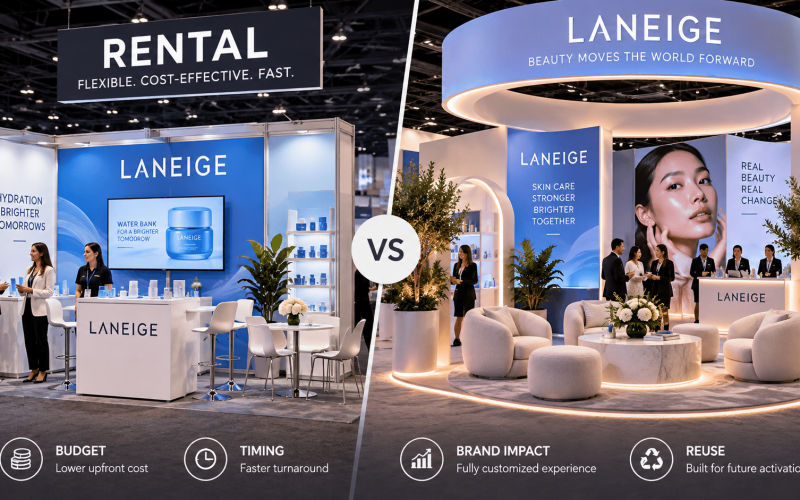
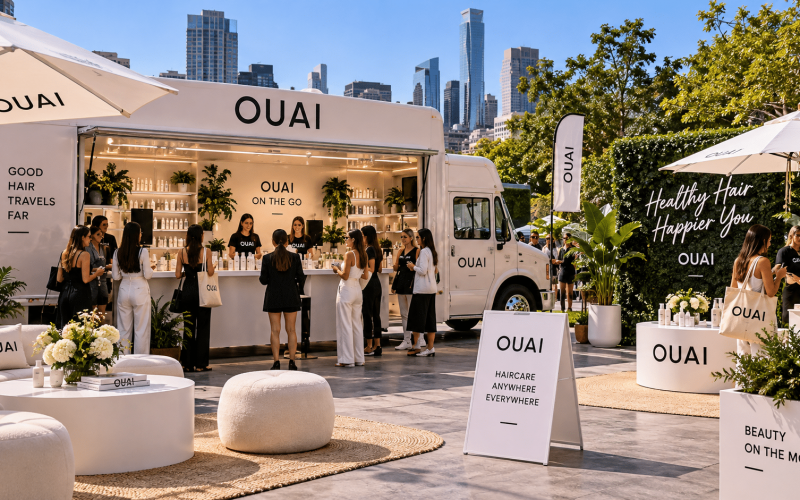
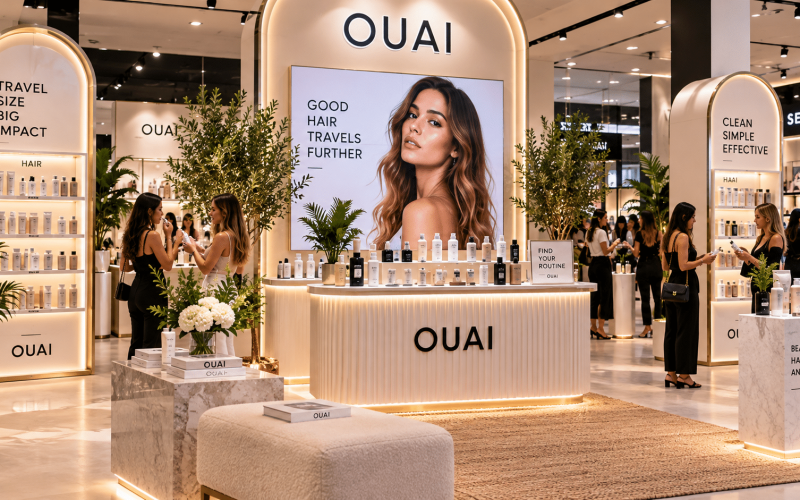
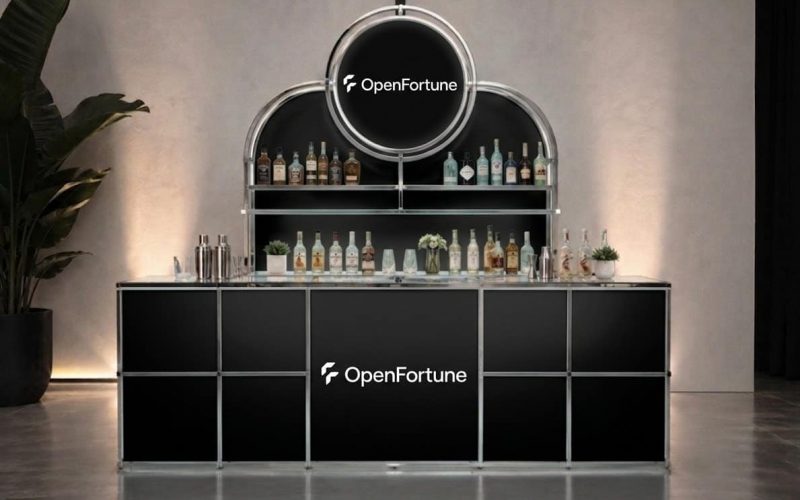
For regional events with compressed timelines, a rental foundation paired with custom graphics can be the most efficient option. Existing walls, shelving, furniture, light boxes, and structural elements can be transformed with printed panels, decals, dimensional logo treatments, and campaign-specific finishes.
This approach is especially valuable when budget needs to be directed toward programming, staffing, or product sampling rather than building every element from scratch. It does require early coordination. The creative team needs accurate dimensions and finish details so custom graphics fit the rental assets correctly. In New York, New Jersey, Boston, and Connecticut, this can be a smart route for short-term event environments that still need a polished, branded result.
Design for the Camera, the Room, and the Crew
A backdrop has three audiences: attendees, cameras, and the people installing it. Strong event production accounts for all three.
For attendees, the brand should be recognizable without reading like a billboard. A large mark, campaign color field, or distinctive texture can carry more impact than a wall covered in copy. For cameras, consider sightlines, glare, color accuracy, and whether the backdrop will be viewed horizontally, vertically, or from across a crowded room. Dark finishes can look elevated but may lose detail in low light. Highly reflective finishes may require careful lighting placement.
For the crew, fabrication details are not secondary. Wall sections need manageable sizes. Bases need appropriate ballast. Electrical components need accessible connections. Graphics need a clear labeling system. If a venue has strict load-in windows, every unnecessary assembly step becomes a risk.
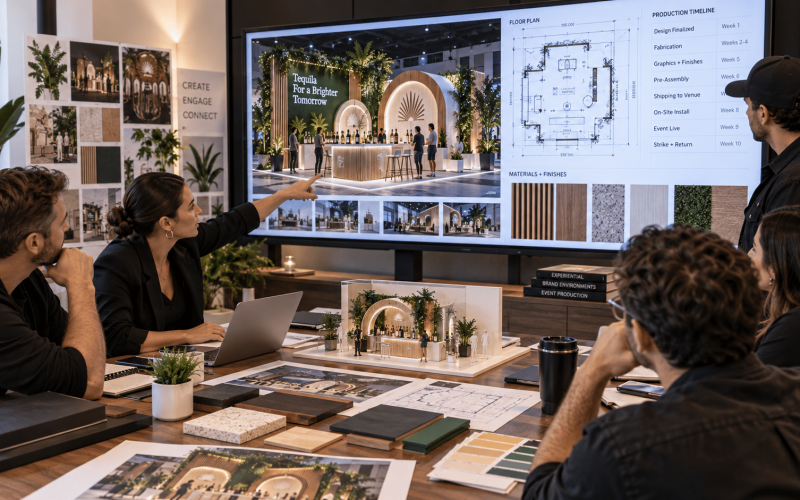
This is where fabrication-first planning protects the creative idea. Portadecor approaches backdrops as event assets, not just printed surfaces, accounting for structural needs, install realities, and the branded experience guests will actually see.
Avoid the Common Backdrop Mistakes
The most expensive backdrop problems are usually avoidable. One is undersizing the build. A backdrop may look substantial in a rendering but feel small once placed in a large ballroom, convention hall, or outdoor footprint. Another is ignoring what sits around it. Nearby booths, overhead signage, furniture, and crowd density can all compete with the visual.
Brands also lose impact by using too much messaging. A backdrop is not a brochure. Let it establish mood, identity, and a reason to engage. Put detailed product information where attendees can pause and read it.
Finally, do not treat shipping, storage, and reuse as afterthoughts. A custom scenic wall may be the right answer for a flagship moment, while a lightweight graphic system may be the better answer for a traveling program. The best choice depends on the campaign’s lifespan, event calendar, staffing plan, and desired level of immersion.
When planning your next event environment, start with the guest behavior you want to create. From there, a well-designed backdrop becomes more than a branded background. It becomes a working part of the activation that earns attention, frames content, and makes the physical experience feel unmistakably yours.