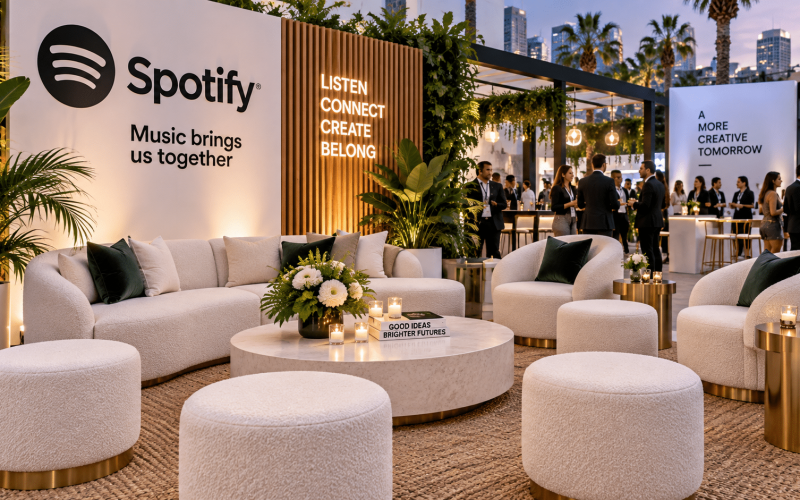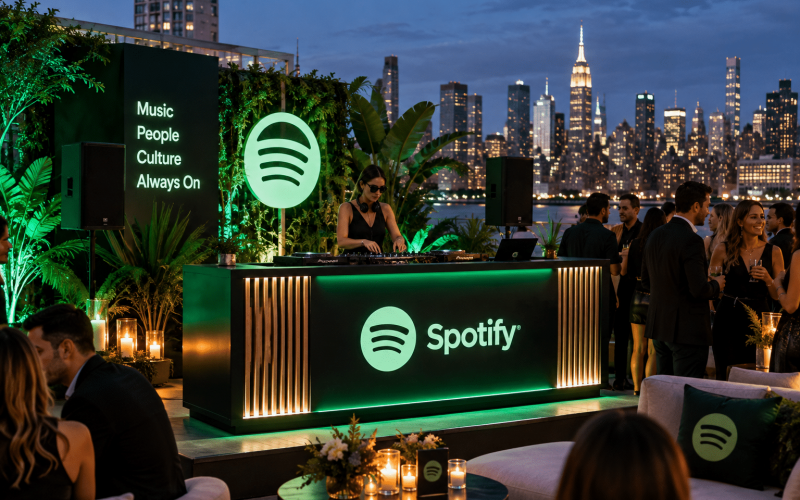
A branded lounge can either frame the experience or disappear into the background. That is the practical decision behind rental versus custom event furniture. For an experiential team, furniture is not simply a place for attendees to sit. It guides traffic, establishes the visual standard, supports product interaction, and creates the content moments that live well beyond the event floor.
The right choice depends on the campaign, the footprint, the schedule, and what the asset needs to accomplish after the doors close. Rentals can provide dependable speed and a polished base environment. Custom fabrication can make the environment unmistakably yours. The strongest event plans begin by deciding where each option creates the most value.
Start with the role furniture plays in the experience
Before reviewing line-item costs, define the job each furniture piece needs to do. Standard seating, tables, bars, and shelving may primarily support comfort and capacity. In that case, rental inventory can be the efficient choice. It allows teams to furnish a large space without committing production dollars to components that will not add much to the attendee experience.
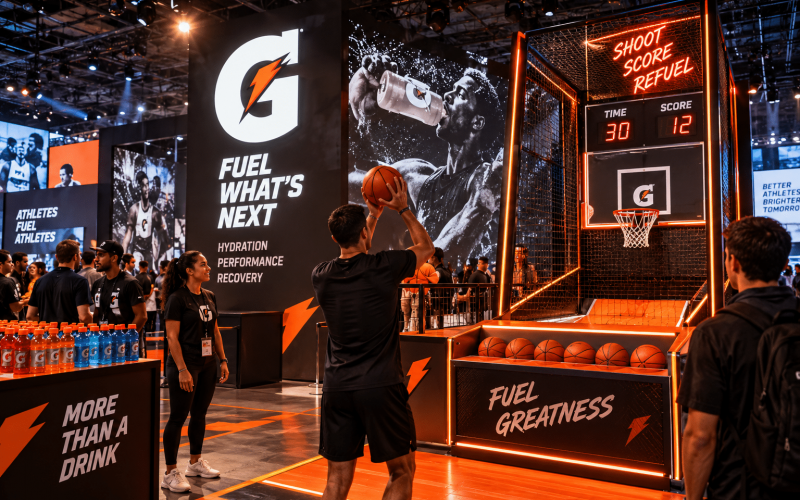
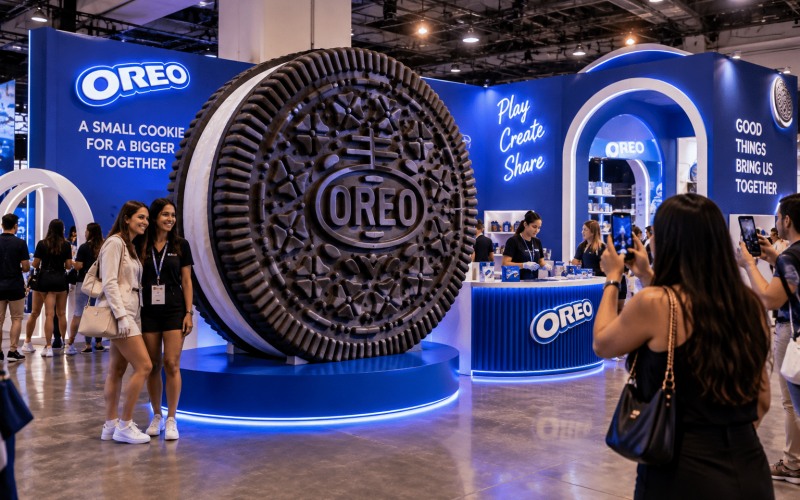
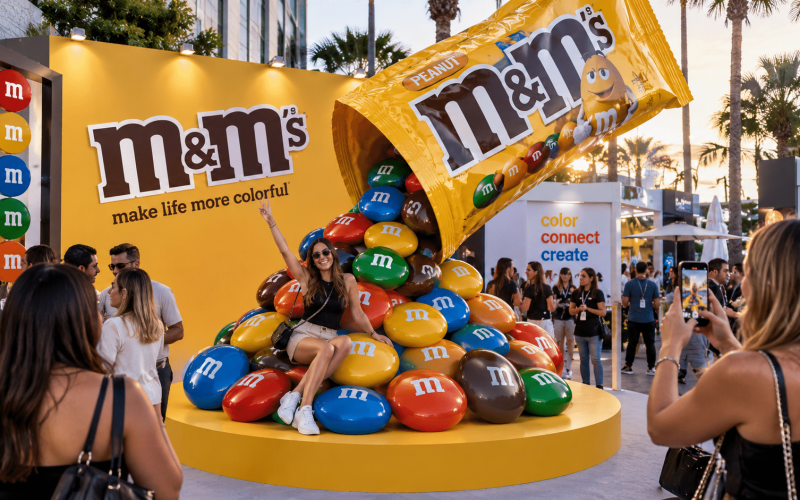
The decision changes when the furniture is part of the activation itself. A sculptural product display, a branded game table, a modular demo counter, or a lounge built around a campaign visual is not background decor. It is an engagement tool. Custom event furniture gives creative teams control over shape, scale, materials, color, integrated graphics, lighting, storage, and technology accommodations.
This distinction prevents a common production mistake: spending heavily to customize items that could remain standard while underinvesting in the one feature people will photograph, use, and remember. Put custom dollars where the brand needs to be felt, not merely seen.
When event furniture rentals make the most sense
Rentals are often the right operational decision for one-time events, short-term pop-ups, or large footprints with conventional furnishing needs. They are especially useful when the venue, guest count, or final floor plan is still moving. Rental inventory provides flexibility to adjust quantities and configurations closer to load-in than a fully fabricated program typically allows.
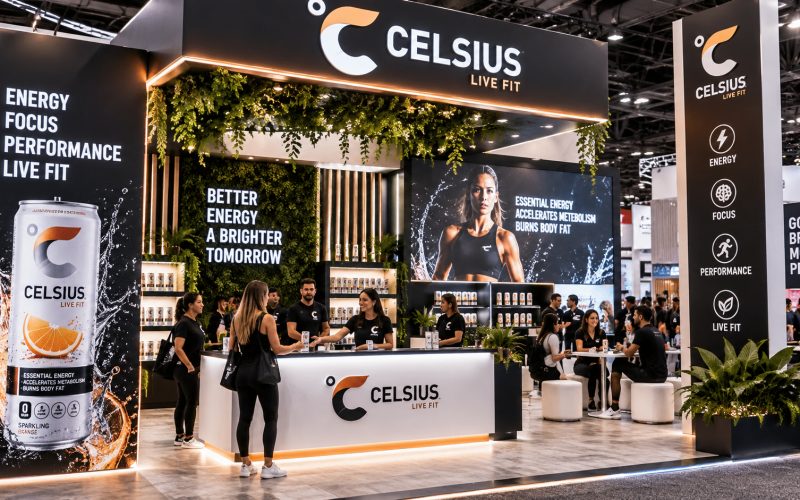
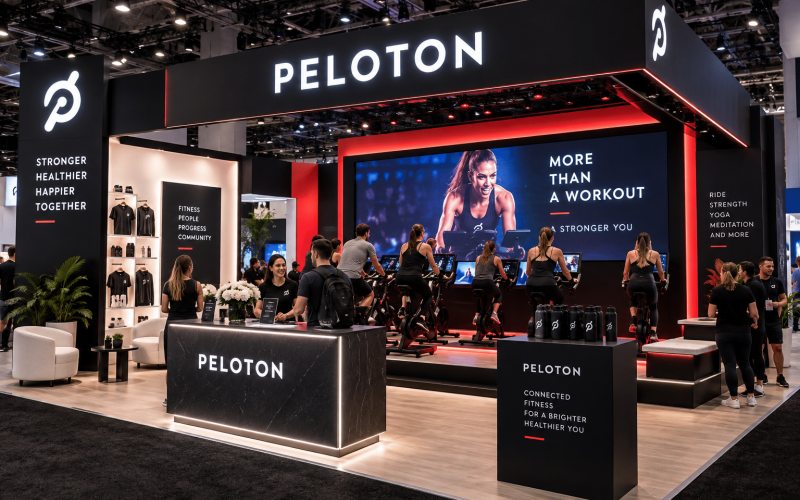
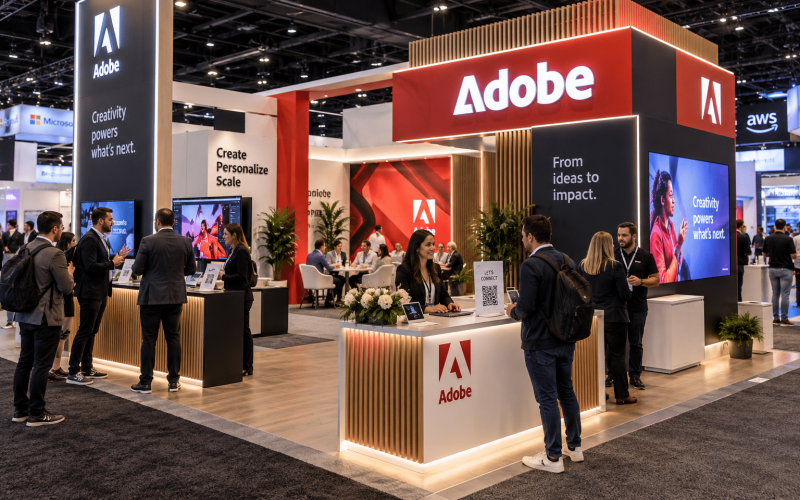
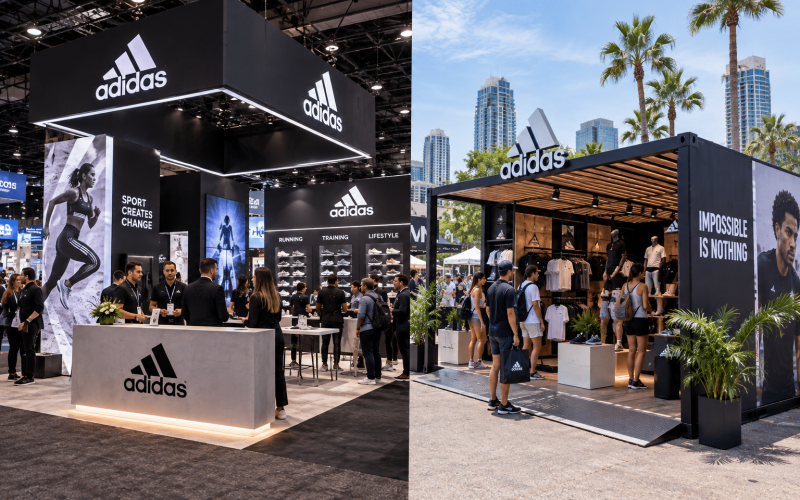
For trade show booths, rental furniture can also preserve budget for higher-impact components such as a custom product wall, interactive game, branded counter, or overhead structure. A clean rental lounge surrounding a purpose-built centerpiece can feel intentional and premium when the layout, finishes, and branding are properly coordinated.
Speed is another advantage. Event producers working on compressed schedules may need reliable, event-ready seating and tables without the lead time required for engineering, material sourcing, production, finishing, and quality control. In markets such as New York, New Jersey, Boston, and Connecticut, local rental support can simplify delivery, setup, and pickup for regional programs.
Rentals do have limits. Available pieces may not match the exact dimensions, color palette, or visual language of the campaign. Branding is often applied through pillows, decals, signs, wraps, and surrounding scenic elements rather than built directly into the furniture. That can work well, but it requires disciplined design so the environment does not look like generic inventory with a logo added at the last minute.
What custom event furniture changes
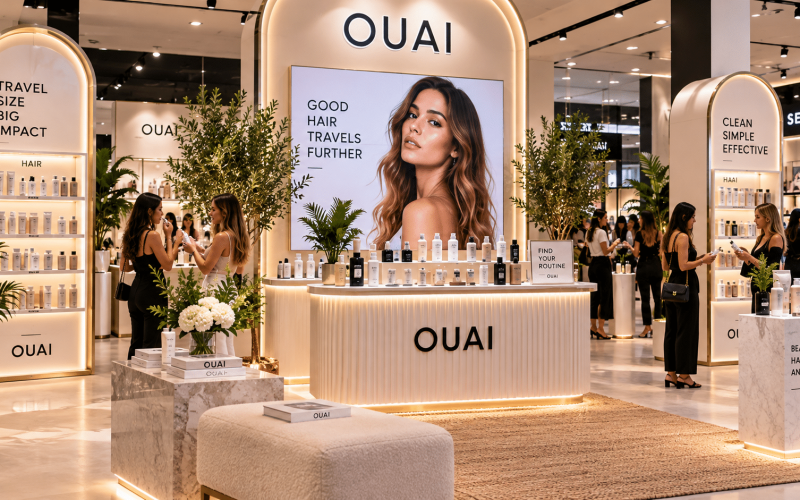
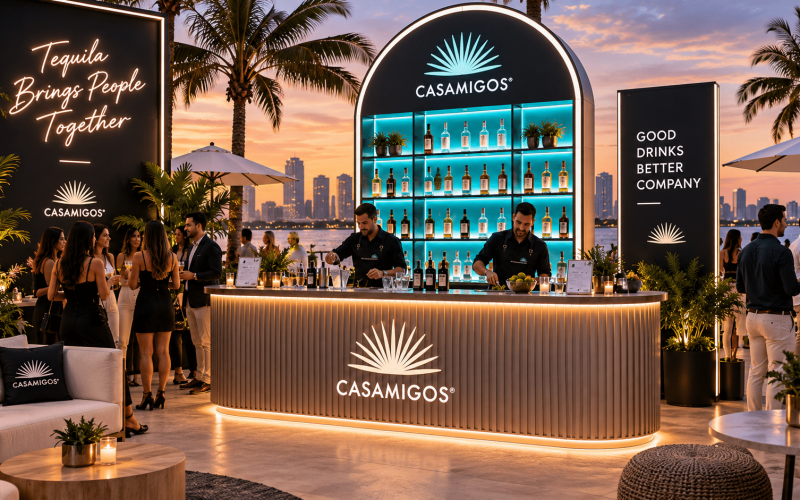
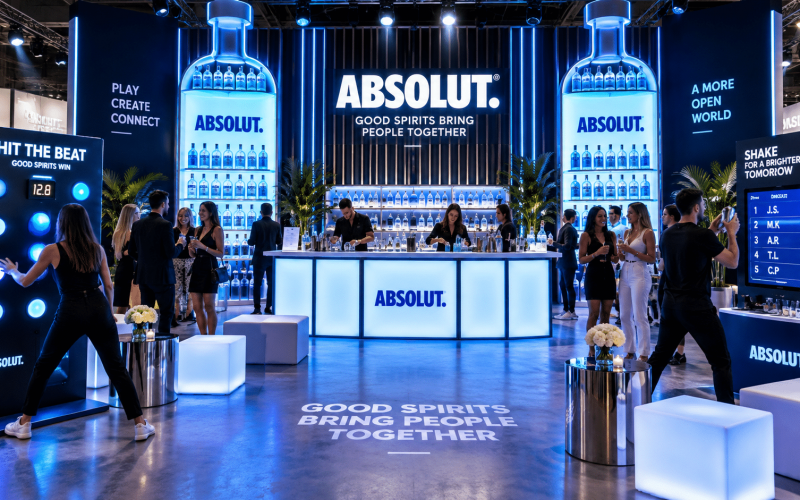
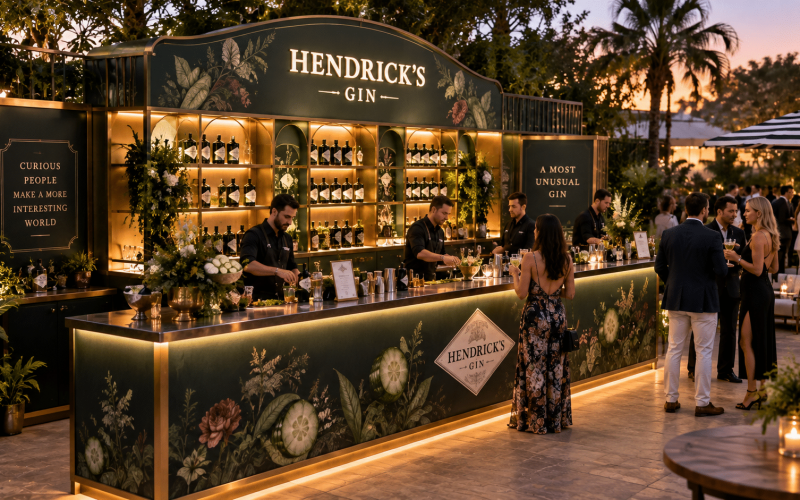
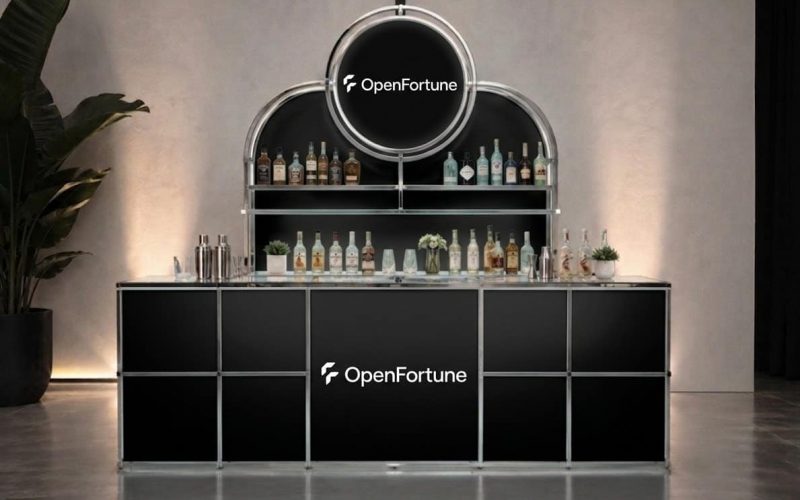
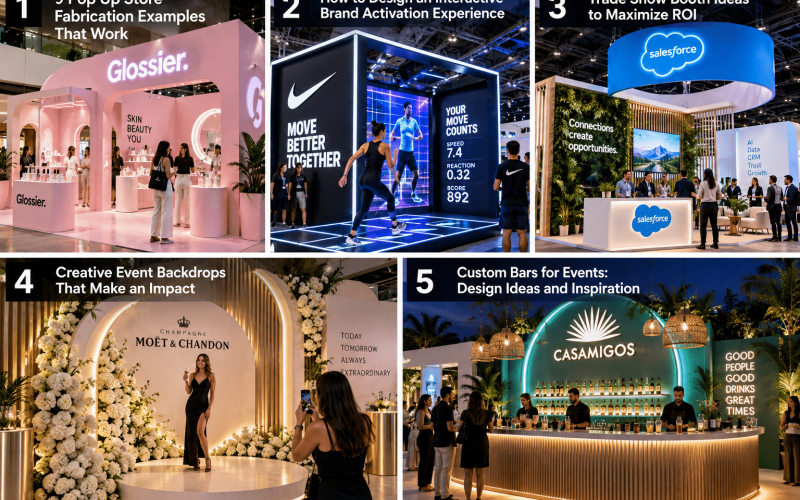
Custom fabrication is appropriate when physical differentiation matters. It gives a brand the ability to build an experience around its product, campaign story, or audience behavior rather than adapting the concept to available inventory. A beauty brand may need a vanity station designed for guided consultations. A beverage launch may require a bar that incorporates sampling, refrigeration, storage, and illuminated branding. A gaming activation may need durable play surfaces and built-in display technology.
Those requirements are difficult to solve with off-the-shelf furniture alone. Custom pieces can integrate functional details early in the build, including cable management, locking storage, power access, ADA-aware counter heights, replaceable graphics, transport considerations, and surfaces selected for heavy public use. The result is not just more branded. It is more usable by staff and more coherent for guests.
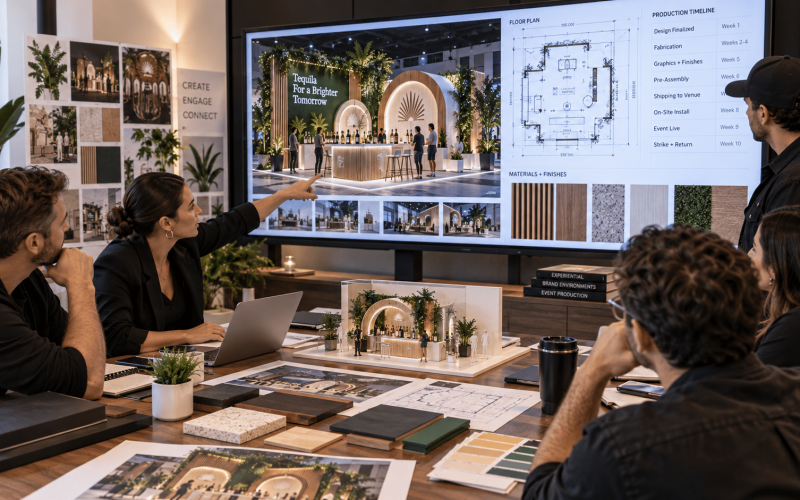
Custom furniture also improves visual consistency when an activation is photographed from every angle. Agencies and brand teams frequently develop strong renderings, then face compromises during execution because existing pieces do not fit the intended proportions or finishes. Building the critical assets reduces that gap between approved concept and installed environment.
The trade-off is commitment. Custom work requires clear approvals, a realistic production schedule, and decisions about ownership, storage, refurbishment, and future deployment. If a campaign will only run once and the furniture has no reusable role, the return may not justify a full custom build.
Compare the full cost, not only the event quote
Rental pricing can look lower because it concentrates costs around a single event date. Custom furniture requires an upfront investment in design, fabrication, finishing, packing, and logistics. For a single-day program, that difference can be significant.
But the comparison changes for a touring activation, annual conference program, retail pop-up series, or repeat trade show booth. A custom asset can be reused, refreshed with new graphics, and adapted across multiple markets. Over several deployments, ownership may create better value than repeated rental fees, especially when the piece is central to the brand experience.
The useful question is not, “Which option costs less?” It is, “What will this piece deliver across its full life?” Include transportation, warehousing, labor, installation, repair, cleaning, graphic updates, and the cost of renting replacement items when evaluating that answer. A fabrication partner should be able to design with those operational realities in mind, not simply build for the first reveal.
Production timing and risk should guide the decision
Event deadlines are unforgiving. Rental inventory is generally the lower-risk path when a program is close to show date, but availability is not guaranteed. Popular styles, quantities, and finishes can be reserved during busy seasons. Confirming the rental package early protects the plan.
Custom fabrication needs a defined production window and a disciplined approval process. Creative changes after fabrication begins can affect schedule and cost, particularly when they alter structure, materials, graphics, or integrated technology. That does not mean custom work is inflexible. It means the project team needs a clear handoff from concept to engineering to production.
For high-visibility launches, it is also worth considering how the asset will perform on-site. Furniture that looks compelling in a rendering must be stable, easy to install, durable under constant use, and practical for venue access. Fabrication-first event partners account for those details before the truck arrives.
The hybrid approach is often the strongest answer
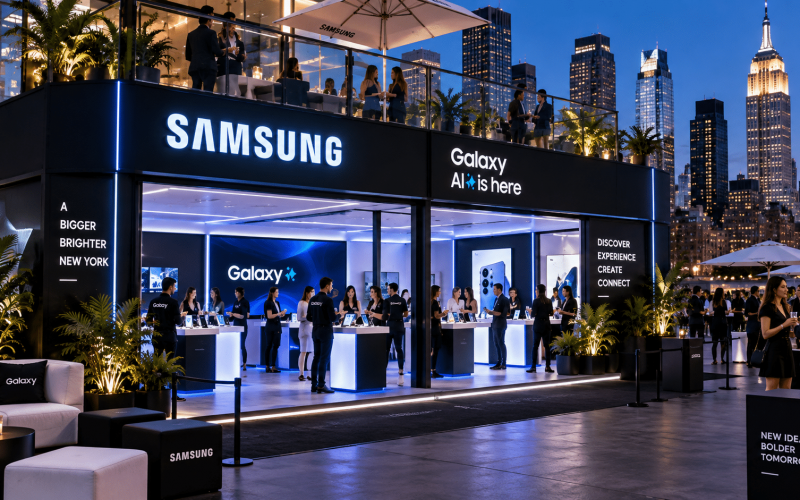
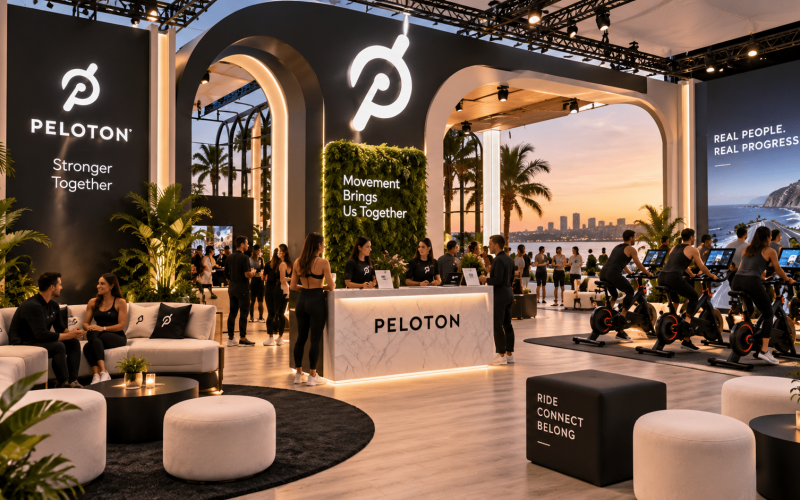
The choice does not need to be entirely rental or entirely custom. In many effective brand activations, standard rental pieces handle volume while custom-built elements create the signature moments. A rented sofa grouping may sit alongside a fabricated media wall. Rental café tables can support a custom sampling station. A trade show booth can use rental seating while a branded reception desk and demo bar define the footprint.
This approach keeps the custom scope focused on assets with clear strategic value. It also gives the event team flexibility if attendance changes or the venue footprint expands. Rather than attempting to brand every surface, the environment has a purposeful hierarchy: practical furnishings support the experience, and custom elements carry the brand.
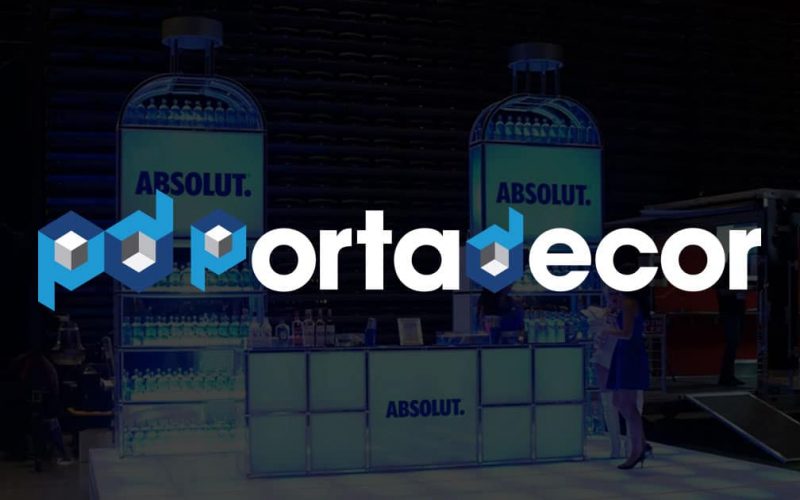
Portadecor approaches this balance through the lens of event execution. The goal is not to manufacture more than the activation needs. It is to fabricate the components that turn an approved creative idea into a functional, branded environment while using rentals where they make operational and financial sense.
A practical decision framework for event teams
Choose rentals when flexibility is the priority
Rentals are usually the better fit when the event is short-term, the furniture serves a conventional purpose, the design is likely to change late, or the budget is better directed to a smaller number of high-impact branded elements. They are also useful for filling out a large event footprint without creating a long-term storage obligation.
Choose custom when the asset drives engagement
Custom furniture is the stronger investment when it anchors the guest journey, supports a product interaction, incorporates technology or specialized function, or needs to repeat across multiple events. It is particularly valuable when the campaign needs a visual feature that competitors cannot rent from the same inventory catalog.
The most productive next step is to identify the three to five physical moments attendees must remember. Build those moments with intention, then let the rest of the environment work efficiently around them. That is how event furniture becomes a production decision with measurable brand value, not just another line on the floor plan.