A crowded trade show aisle gives exhibitors only a few seconds to earn attention. The strongest future booth technology ideas do not treat technology as decoration. They give visitors a reason to stop, participate, understand a product, and leave behind useful information for the sales team.
For brand marketers and event producers, the objective is not to add a screen because screens look current. It is to build an environment where physical fabrication, branded content, staffing, and data capture work toward the same business outcome. The best concepts feel intentional from the aisle view through the post-event follow-up.
Start With the Visitor Job, Not the Gadget
Every technology decision should answer a practical question: what should an attendee be able to do here that they cannot do with a brochure or a standard conversation? That job may be comparing products, visualizing a service, testing their knowledge, creating shareable content, or booking a meeting.
A large-format LED wall can be highly effective when it makes a complex product easier to understand. It is much less effective when it runs a generic brand reel that visitors can watch from the aisle without entering the booth. Likewise, an interactive game can generate traffic, but only if its format connects to the campaign and gives booth staff a natural opening for a business conversation.
Before approving a technology feature, define the desired behavior. Decide whether the priority is dwell time, qualified lead capture, product education, content creation, or a scheduled demo. Then select the physical footprint and technology layer that support that behavior.
Future Booth Technology Ideas Worth Building Around
Responsive LED architecture
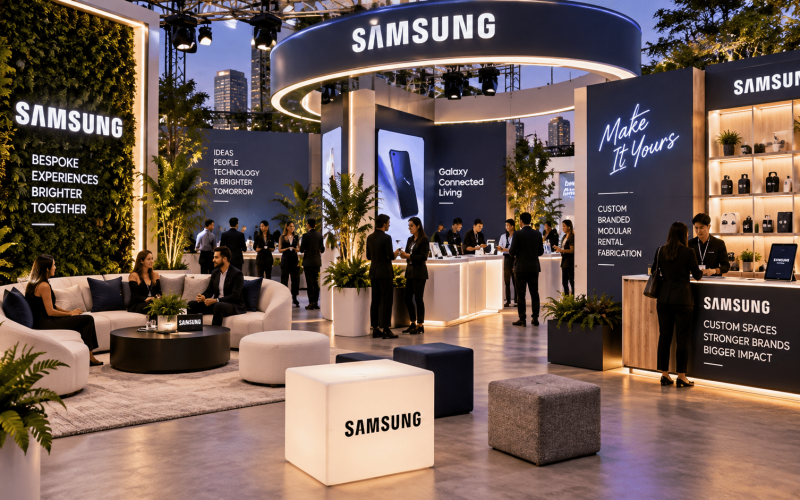
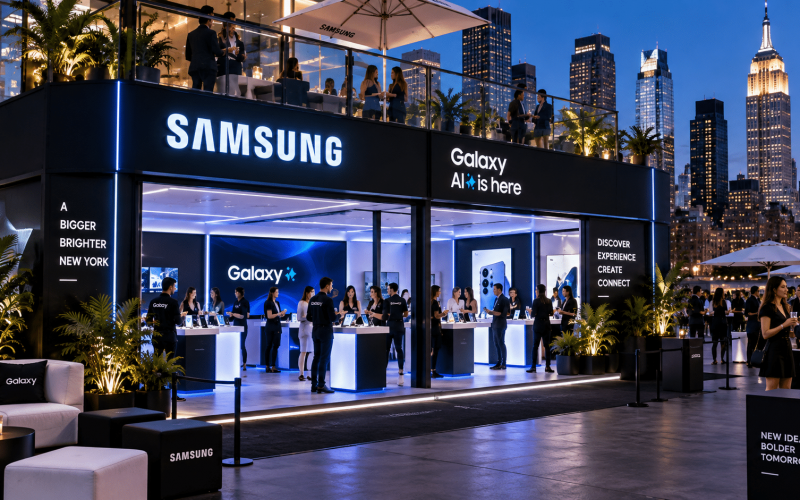
LED is moving beyond the role of a flat presentation screen. Custom LED elements can now function as scenic architecture: dimensional display walls, video columns, ceiling features, illuminated product backdrops, and motion-driven entrance moments. When built into the booth rather than added at the end, the display becomes part of the brand environment.
The content strategy matters as much as the hardware. Use bold motion and simple visual cues to draw people in from the aisle, then shift to shorter product stories once they are inside. Content should also be planned for sightlines. A message that reads well from 30 feet away is different from a demo interface viewed at arm’s length.
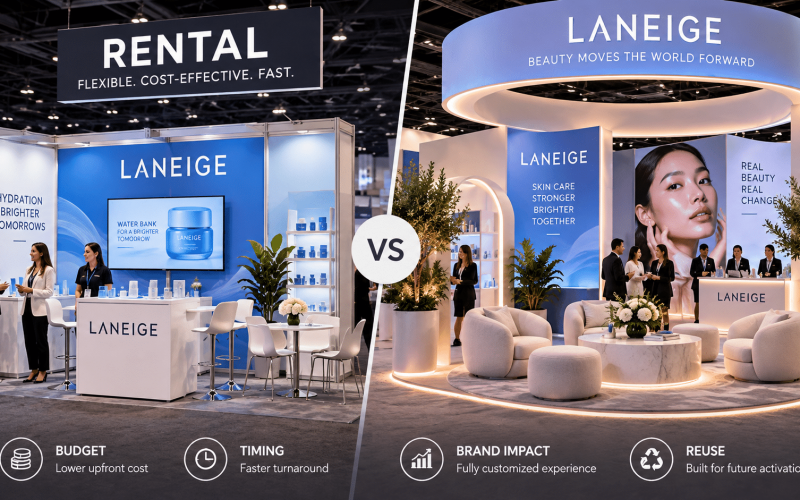
There is a trade-off. High-resolution LED, custom structures, power distribution, and playback systems add cost and production coordination. For a one-day pop-up, a rentable display solution may be the smarter choice. For a national campaign or a major trade show presence, a fabricated LED environment can justify the investment through reuse and stronger visual ownership.
RFID and NFC experiences that reduce friction
RFID badges, wristbands, and NFC-enabled products can connect several booth moments without making visitors fill out the same form repeatedly. A guest might tap in at a welcome station, activate a product comparison display, participate in a game, and receive a personalized recap after the event.
The value is continuity. Instead of treating each interaction as separate, the activation can recognize where a visitor has been and present the next relevant step. For exhibitors, this can reveal which stations attract attention and which content produces real engagement.
Privacy and consent should be designed into the experience from the start. Explain what data is being collected, what the visitor will receive in return, and how the information will be used. A clear value exchange produces better data than a hidden or overly aggressive lead form.
Physical games with connected scoring
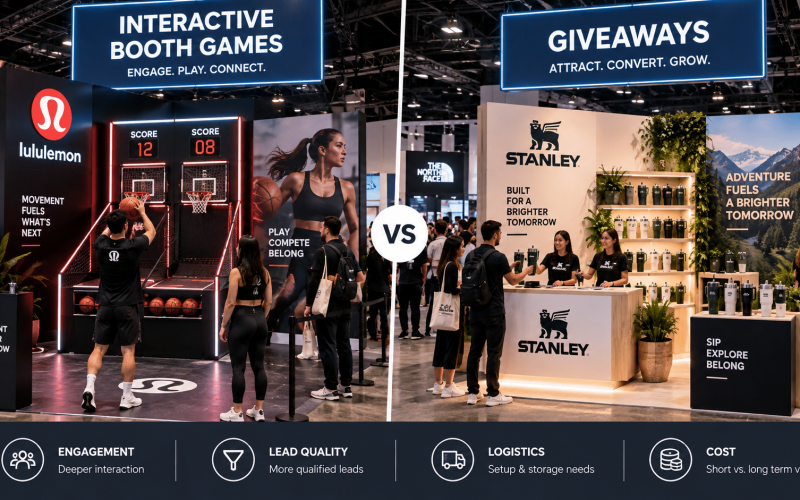
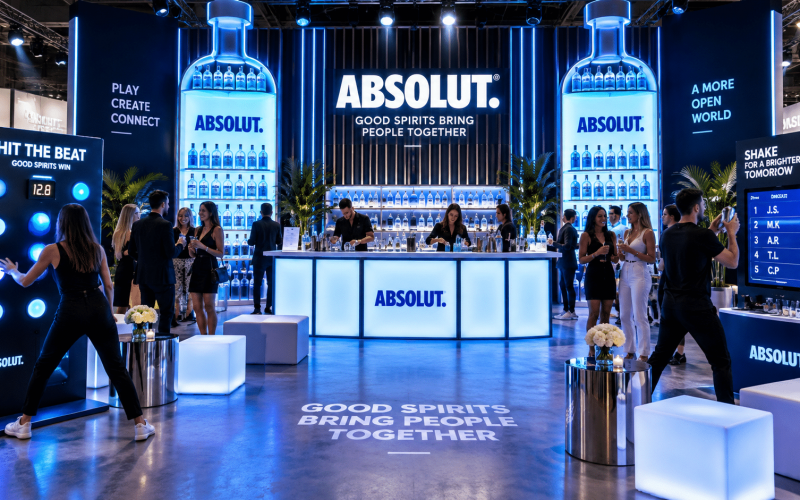
Branded games remain one of the most reliable ways to pull people into a booth, especially when the event floor is crowded and attendees need a break from formal product demos. The future-facing version combines fabricated game elements with digital scoring, timed challenges, animated results, and opt-in lead capture.
A custom reaction wall, skill game, trivia challenge, or product-themed competition can turn a passive audience into active participants. Connected scoring makes the result visible and adds a natural reason for attendees to share a score, join a leaderboard, or return later for a final round.
The concept must fit the audience. A game for a consumer launch can be playful and high-energy. A B2B technology event may call for a concise challenge that demonstrates a product benefit, such as speed, accuracy, decision-making, or problem solving. The fabrication should be durable enough for repeated use and simple enough for staff to reset quickly between participants.
AI-assisted product discovery
AI can be useful at a booth when it helps visitors reach the right information faster. A guided interface can ask a few questions about a visitor’s role, use case, or business challenge and recommend a product path, demo, or conversation with the appropriate specialist.
This approach is especially valuable for companies with broad product lines or technical offerings. Rather than forcing every visitor through the same sales presentation, the experience can direct them toward relevant content. It also gives booth staff context before they begin a conversation.
Do not rely on an unmonitored public chatbot for high-stakes claims, pricing, compliance questions, or technical specifications. Build clear guardrails, limit the experience to approved content, and give visitors an easy path to a live expert. AI should support the staff team, not create another point of failure on the show floor.
Mixed-reality product visualization
Augmented reality and virtual reality are most effective when the product is difficult to transport, too large to display, or best understood in its real operating environment. A visitor can walk through a facility layout, inspect an oversized machine, visualize finishes, or see how a product performs in context.
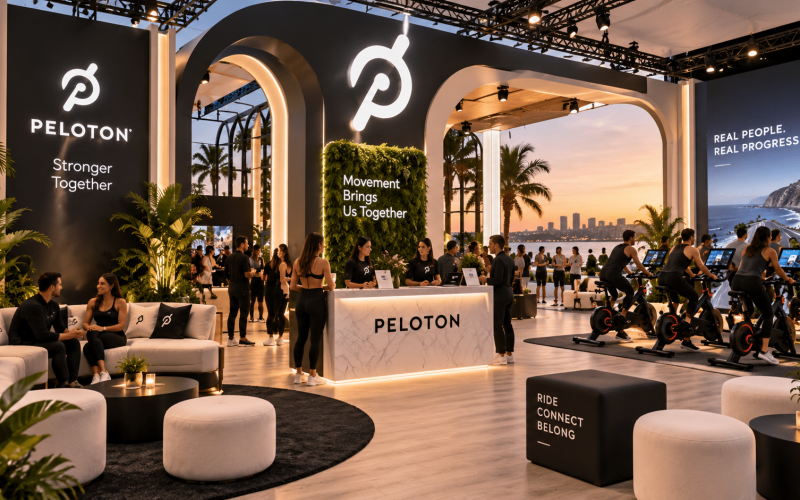
The physical booth still matters. Headsets, tablets, and tracking equipment need a defined area with clean cable management, secure storage, staff supervision, and enough room for the experience to feel comfortable. A fabricated setting can also give spectators something to look at while they wait, preventing the activation from becoming an isolated headset station.
For many programs, tablet-based augmented reality is more practical than full VR. It has a lower learning curve, supports faster throughput, and allows the visitor to remain connected to the booth environment and their colleagues.
Design Technology for Event Reality
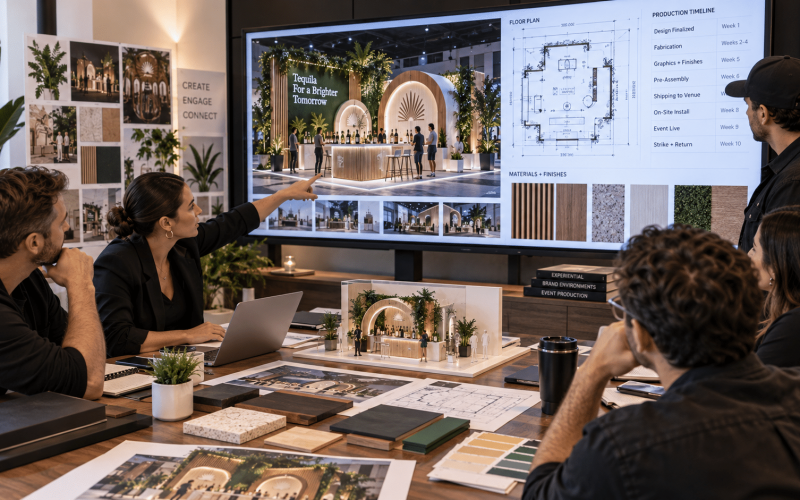
A strong technology concept has to survive load-in, venue Wi-Fi conditions, power limitations, staff turnover, and an eight-hour show day. This is where production planning separates a compelling render from a reliable installation.
Specify wired internet when an experience depends on live connectivity. Plan local fallback content if a network fails. Use commercial-grade displays and enclosures designed for public interaction rather than consumer equipment meant for a conference room. Include accessible pathways, appropriate counter heights, and interfaces that work for a range of users.
Technology also needs a physical home. Custom fabrication can conceal media players, power supplies, cables, sensors, and storage while preserving access for technicians. Service panels, ventilation, replaceable components, and protected edges are not glamorous details, but they directly affect whether the booth operates cleanly throughout the event.
Modularity is another practical advantage. A booth built with reusable frames, interchangeable graphic skins, adaptable counters, and removable technology modules can change across markets without requiring a complete rebuild. That is particularly useful for brands that need different footprints for trade shows, retail activations, and internal events.
Connect Engagement to a Follow-Up Plan
Technology-generated leads are only valuable when the handoff is defined before doors open. Decide which interactions indicate genuine interest, what information staff should collect, and who owns follow-up after the event. A game score alone may be a useful engagement metric, but it is not automatically a sales lead.
Use different calls to action for different levels of intent. A visitor who watches a quick product animation may opt into a content recap. Someone who completes a product configuration should have a direct option to book a consultation or request pricing. That distinction keeps the sales team focused on the most meaningful conversations.
The post-event message should reflect what the attendee actually did. If someone explored a specific product category, send the relevant information rather than a generic event email. The more closely the follow-up matches the experience, the more credible the brand feels.
Choosing the Right Future Booth Technology Mix
The right investment depends on audience volume, event duration, product complexity, budget, and reuse potential. A high-throughput convention booth may need fast, visually obvious interactions that work in under two minutes. An executive-focused event can support a longer guided demo with more detailed personalization.
Build the plan around one primary interaction and one supporting layer. For example, an LED-driven product story can lead people into a connected demo station. A physical branded game can capture attention, while an NFC tap provides the follow-up path. Trying to combine every available technology into one footprint often creates congestion, confuses visitors, and strains the production schedule.
The most effective booths make advanced technology feel easy. When the fabrication is purposeful, the content is relevant, and the visitor journey is clear, the experience becomes more than a visual attraction. It becomes a usable sales environment that people remember after the event floor closes.