A strong activation can lose margin fast when fabrication costs are treated like a single line item instead of a production system. If you are figuring out how to budget activation fabrication, the real job is not just assigning a number. It is understanding what drives that number, what can change it late, and where to spend for impact without overspending on the wrong build decisions.
For brand marketers, agencies, and event producers, fabrication budgets usually get pressured from two sides at once. Creative wants the environment to feel custom and memorable. Operations needs it to ship, install, survive the event, and come down without expensive surprises. The budget only works when both sides are accounted for from the start.
How to budget activation fabrication from the start
The most common budgeting mistake is pricing the activation after the concept is already locked. By that point, you are reacting to cost instead of shaping it. A better approach is to set the budget while the activation is still being designed, so material choices, structural decisions, and interactive features are aligned with actual production realities.
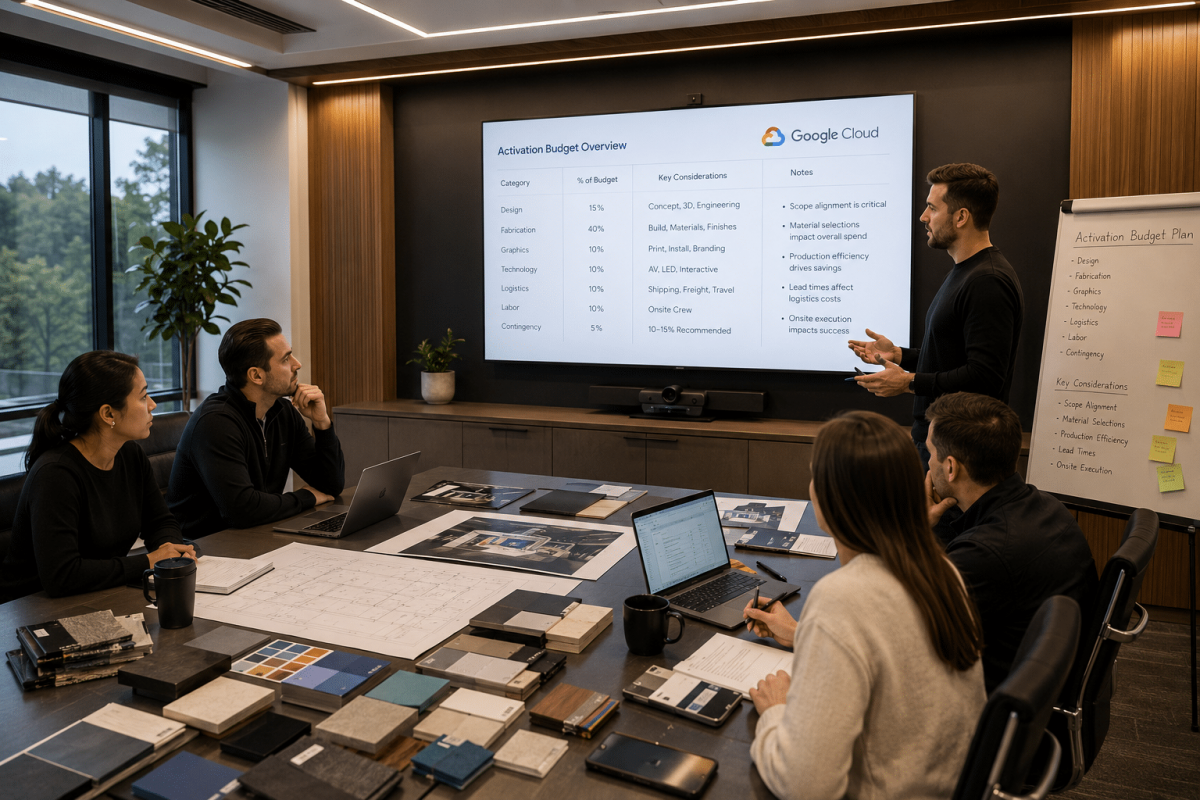
Start by separating the build into practical cost groups. For most activations, fabrication costs are driven by design development, materials, custom manufacturing, graphics, finishes, technology integration, packing, shipping, installation, dismantle, and storage if the asset will be reused. When these categories are blended too early, it becomes harder to see where savings are possible and where cuts will damage the experience.
That separation also helps with approvals. A client may accept a higher fabrication cost if the asset is reusable across multiple stops, or if the structure reduces labor during install. On paper, one option may look more expensive. In practice, it may be the more efficient investment.
What actually drives fabrication cost
Square footage matters, but it is rarely the best predictor of budget by itself. Complexity is usually the bigger cost driver. A simple branded wall with dimensional logos is very different from a multi-zone activation with integrated lighting, hidden storage, product display, and interactive components.
Custom shapes, specialty finishes, tight tolerances, and moving parts all increase labor. So do last-minute engineering changes. If an activation needs to feel fully bespoke, the budget should reflect not only the visible design but also the production time required to make that design event-ready.
Material selection has a direct effect too. The right material depends on whether the asset is for a one-day pop-up, a touring activation, or a trade show program with repeat use. Lightweight alternatives may reduce freight and install costs. Higher-grade finishes may hold up better across multiple events. Cheaper materials can save upfront cost, but they may create damage risk, repair needs, or a less polished brand presentation.
Graphics and branding treatments are another area where budgets move quickly. Large-format prints, layered dimensional logos, routed elements, LED accents, and specialty paint finishes can each be justified. The question is whether they are delivering audience impact or just adding detail that gets lost on the show floor.
Build the budget around event objectives
Not every activation needs the same level of fabrication. If the goal is social engagement, the hero moment may deserve a larger share of the budget than back-of-house areas. If the goal is product education, demonstration stations and display integration may matter more than oversized scenic elements.
This is where many teams overspend. They distribute budget evenly across the footprint instead of funding the moments that actually carry the activation. A smart fabrication budget is tied to what the audience will notice, use, photograph, and remember.
That means asking a few direct questions early. Which element is the visual anchor? Which element drives participation? Which surfaces need to withstand heavy traffic? Which parts can be simplified without changing the experience? These decisions are more valuable than asking for a blanket cost reduction after drawings are complete.
Budget for one-time use versus reuse
One of the biggest cost questions is whether the activation is disposable, semi-permanent, or reusable. The answer affects almost every fabrication decision.
A one-time build can often use lighter construction methods and more cost-conscious finishes. A reusable activation usually needs stronger framing, smarter packing, replaceable graphics, and hardware that can handle multiple installs. That increases the initial fabrication price, but it may reduce the cost per event over the full program.
If a campaign is likely to tour, say so before the build is priced. Retrofitting for reuse later is usually more expensive than engineering for it from the beginning. The same applies if the activation needs to fit through venue doors, break into modular sections, or comply with varying venue rules in different markets.
For national programs, this matters even more. A fabrication partner that understands activation logistics can help avoid a design that looks efficient in renderings but becomes costly once it hits freight, labor, and field conditions.
Leave room for the costs that get missed
When teams ask how to budget activation fabrication, they often focus only on the scenic build. That is only part of the spend. Some of the most disruptive overruns happen in the supporting costs around the build.
Engineering is one example. If the activation includes overhead elements, unusual structural forms, heavy product integration, or public interaction, engineering may be required for safety and venue approval. Crating and packing are another. A well-built asset can still become an expensive problem if it is not packed for transport correctly.
Installation labor should be estimated based on the actual complexity of assembly, not just the event schedule. A build with hidden fasteners, delicate finishes, or integrated tech may take longer on site than expected. Dismantle, touch-up, repairs between stops, warehousing, and replacement graphics should also be considered if the activation has a life beyond one event.
Contingency matters as well. For custom fabrication, a contingency range helps absorb design refinements, venue requirements, and late-stage production adjustments. The right percentage depends on how defined the concept is, but skipping contingency altogether usually creates more pressure later.
How to control cost without flattening the concept
Cost control works best when it happens through design choices, not panic cuts. If budget needs to come down, look first at what can be standardized, simplified, or modularized.
Custom shapes can sometimes be reduced without losing the visual idea. Premium finishes may only be necessary at eye level or on primary photo-facing surfaces. Internal areas, hidden supports, and low-visibility faces often present savings opportunities. Modular construction can also help by making a large build easier to ship, install, and reuse.
Another practical move is to separate permanent structure from campaign-specific branding. If the frame, counters, shelving, or experiential stations can be reused, then printed skins, magnetic panels, or replaceable graphic inserts can update the look for future events without funding a new build each time.
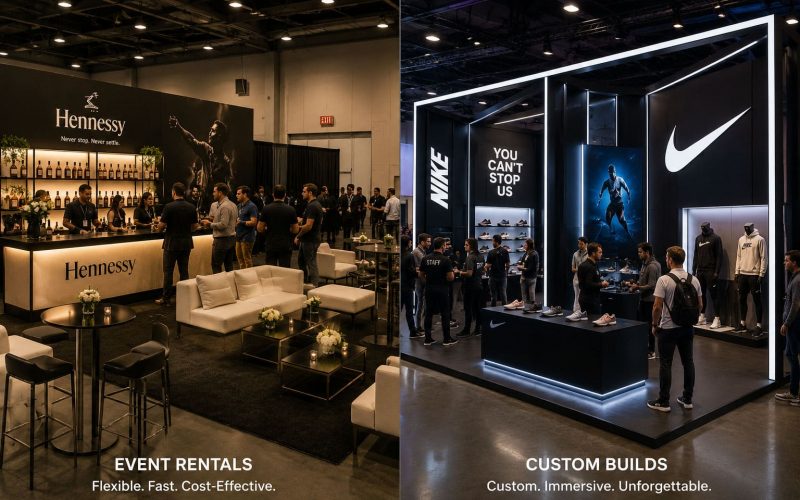
Rentals can also play a role. Not every element needs to be custom fabricated. In some programs, the best budget outcome comes from combining custom hero elements with rental furniture or standard support pieces. That keeps the activation branded where it counts while reducing spend on components that do not need to be bespoke.
Work from a real production timeline
Speed affects price. Rush fabrication often means overtime labor, compressed sourcing, limited finish options, and less room to value-engineer intelligently. If the timeline is tight, the budget should reflect that reality.
A realistic production schedule gives the fabrication team time to review drawings, source materials, coordinate graphics, test assembly methods, and catch issues before they become field problems. It also improves budget accuracy. When pricing is built around assumptions because details are missing, revisions later can change the total quickly.
The most efficient budgets come from early collaboration between creative, production, and fabrication. That does not reduce ambition. It gives the concept a better chance of being executed as intended.
What to ask before you approve the budget
Before sign-off, make sure the proposal answers the operational questions behind the number. Ask what is included in fabrication versus what is still provisional. Confirm whether graphics, crates, tech integration, install supervision, and storage are included or separate. Ask which elements are reusable and how they are packed. Clarify where cost risk remains if drawings or venue requirements change.
A good fabrication budget should not feel vague. It should show you where the money is going and what assumptions support the estimate. That level of visibility makes trade-offs easier and protects the activation from expensive surprises.
For teams managing live events at scale, budgeting well is less about squeezing every line item and more about aligning spend with performance. The best activation budgets support the creative idea, respect production realities, and leave enough room to execute cleanly when the event opens. If you get that part right, the build does more than look good in a rendering. It works where it counts – on site, under pressure, in front of your audience.