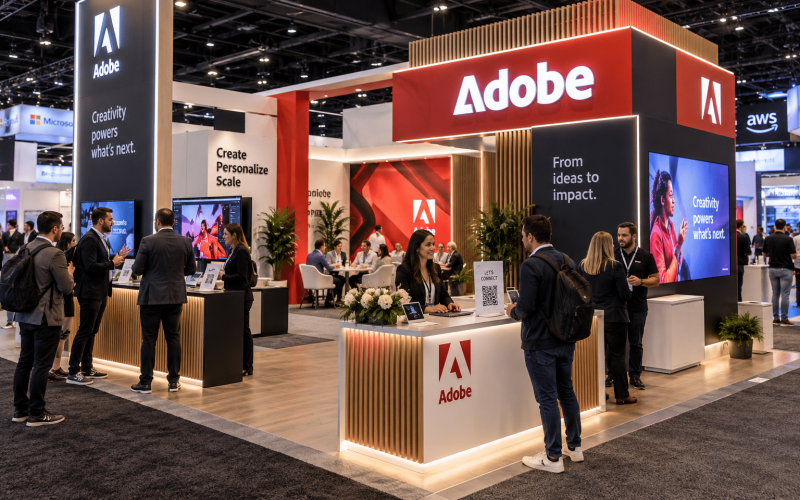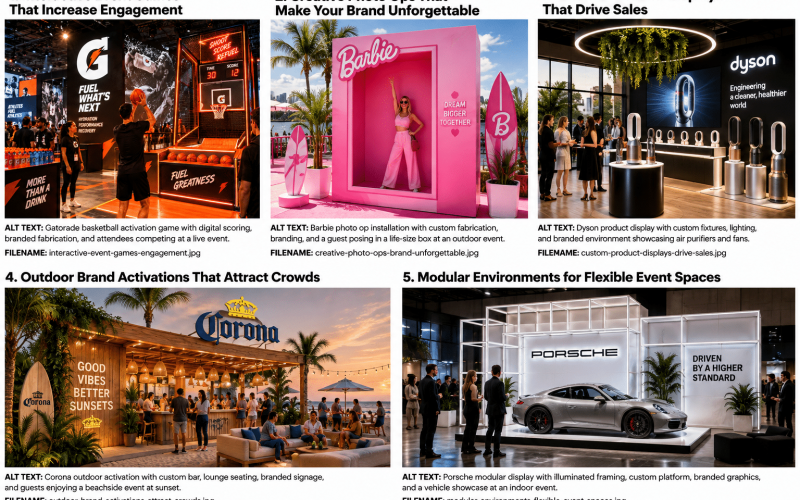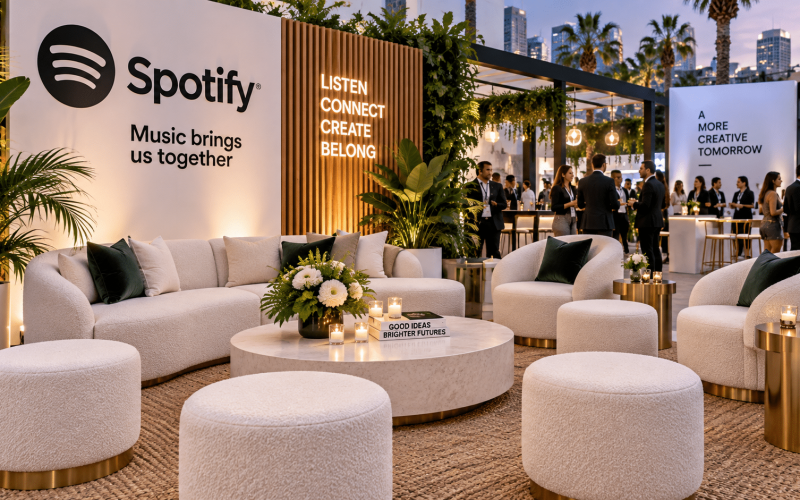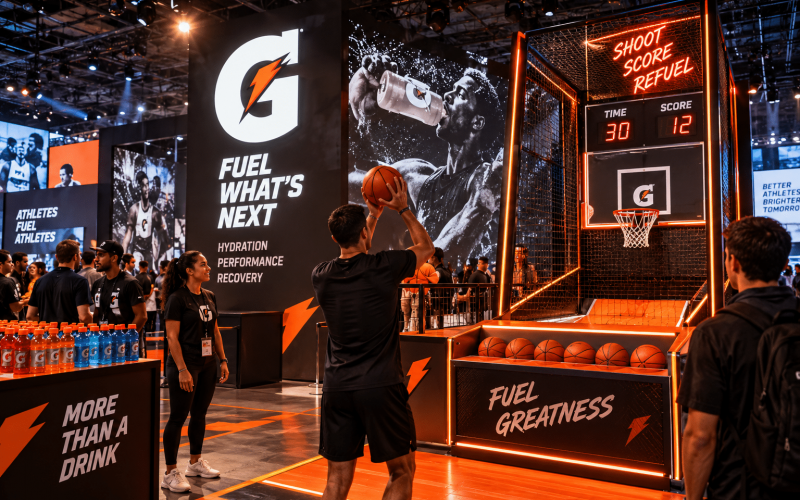
A booth can look impressive on paper and still fail on the show floor. The gap usually comes down to planning. If you are figuring out how to plan trade show booths, the real job is not choosing colors or ordering graphics first. It is aligning goals, footprint, fabrication, traffic flow, staffing, and install logistics before production starts.
Trade show planning gets expensive when decisions happen in the wrong order. A late layout change can affect structure, graphics, shipping, labor, and lead capture setup all at once. That is why the best booths are usually not the most elaborate. They are the ones designed around a clear objective and built for real event conditions.
Start with the outcome, not the booth
Before discussing design direction, define what success needs to look like. Some exhibitors need qualified meetings with buyers. Others need product demos, retail-style interaction, press visibility, or a stronger brand presence in a crowded category. Those are not the same brief, and they should not produce the same booth.
A lead-generation booth often needs open access, clear messaging, quick qualification points, and staff positions near the aisle. A product launch may need a central hero moment and controlled storytelling. A hospitality-driven footprint may need storage, power planning, and durable surfaces that can handle heavy use. When the goal is vague, the booth usually becomes a collection of features instead of a working environment.
This is the first decision point in how to plan trade show booths effectively. Decide what the booth must do before deciding what it should look like.
Match the booth size to the job
Bigger is not always better. A larger booth can create presence, but it also adds more open floor to manage, more labor, more freight, and more pressure to fill space with purpose. A smaller footprint with disciplined planning can outperform a larger one that lacks structure.
Look at the event itself. A 10×10 booth at an industry-specific show may produce better conversations than a 20×20 at a broad expo if the audience is tighter and the traffic is more qualified. Booth size should reflect your event strategy, product needs, and staffing reality. If your team has four booth staffers, planning an oversized environment with multiple engagement zones may stretch execution too thin.
At this stage, review venue rules as well. Ceiling height, rigging restrictions, electrical access, inbound material handling, and show services can all affect what is practical. A strong concept that ignores venue constraints becomes a revision problem later.
Build the layout around traffic flow
The most common booth planning mistake is treating the footprint like a static display. It is not. It is a live environment shaped by aisle exposure, stopping behavior, line of sight, and dwell time.
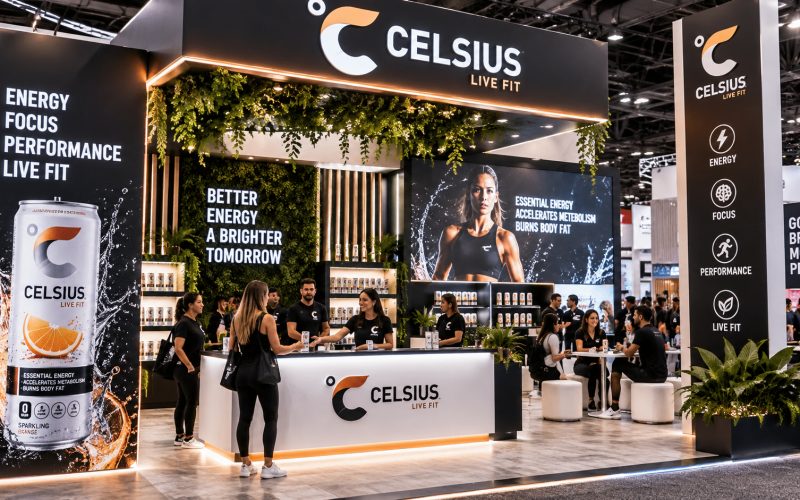
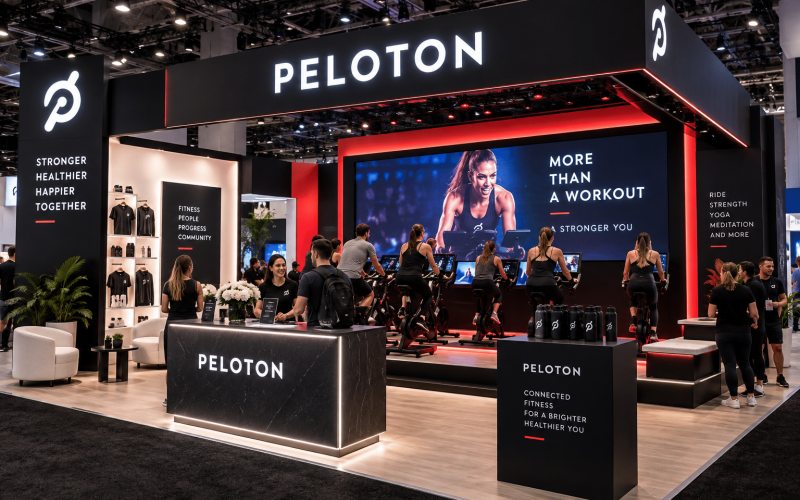
Start by identifying where attendees will first see the booth and where they are most likely to enter. Then organize the experience in layers. The outer edge should communicate the brand and value proposition quickly. The next layer should give visitors a reason to step in. The deeper area can support demos, conversations, seating, or product interaction.
Good traffic flow feels obvious when you walk it. Visitors should know where to stand, what to look at, and who to approach without needing direction. If a large counter blocks entry, if a demo causes congestion, or if furniture creates dead corners, the booth is working against itself.
Open access usually wins
Unless privacy is essential, open entrances tend to perform better than narrow controlled access points. They lower friction and make the booth feel active. That does not mean every side should be wide open. Sometimes one strong entry path creates better engagement than four weak ones. It depends on the product, the audience, and how the booth staff will operate.
Storage matters more than most teams expect
Storage is rarely exciting, but it is one of the strongest indicators of whether a booth will hold up through the event. Bags, literature, giveaways, staff supplies, personal items, chargers, cleaning materials, and backup graphics all need a place to go. If they do not, they end up visible on the floor and reduce the booth’s impact fast.
Design for brand recognition and use on site
A booth has to do two things at once. It needs to look on-brand, and it needs to function under show conditions. That is where planning often gets more disciplined.
Brand consistency should be visible in materials, finishes, messaging hierarchy, and overall form. But trade show environments are physical production spaces, not flat brand boards. Surfaces get touched. Edges get bumped. Lighting changes color perception. Flooring transitions affect how people move. The design has to account for use, not just appearance.
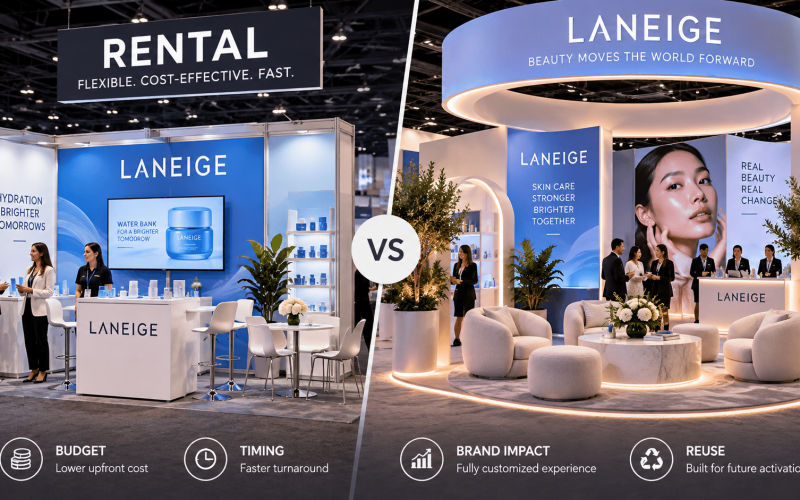
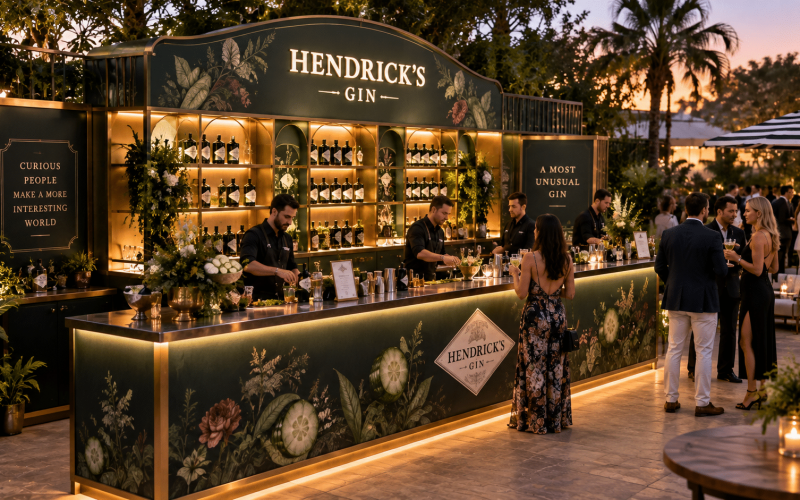
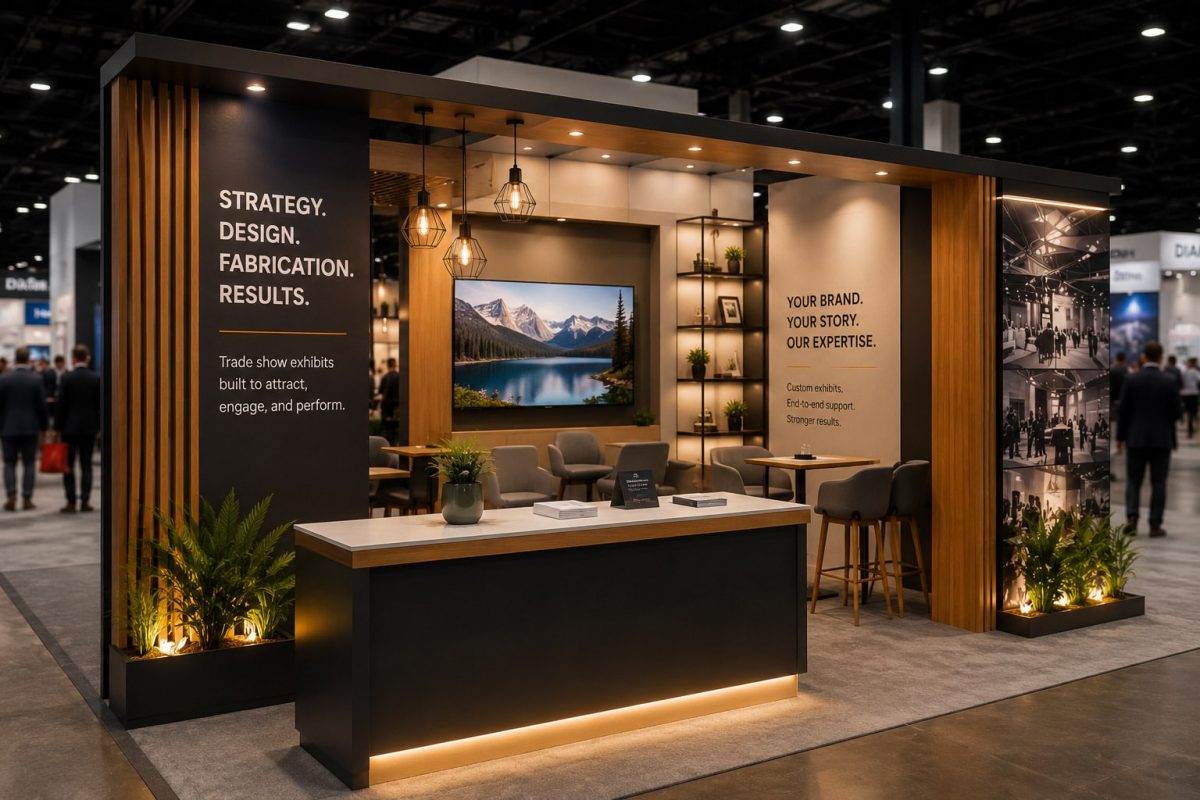
When considering how to plan trade show booths for repeated use, think beyond a single show. Can graphics be updated without rebuilding the structure? Can branded elements be reconfigured for different footprints? Can key components be rented for one event and custom fabricated for another? Those decisions can improve long-term efficiency without sacrificing presence.
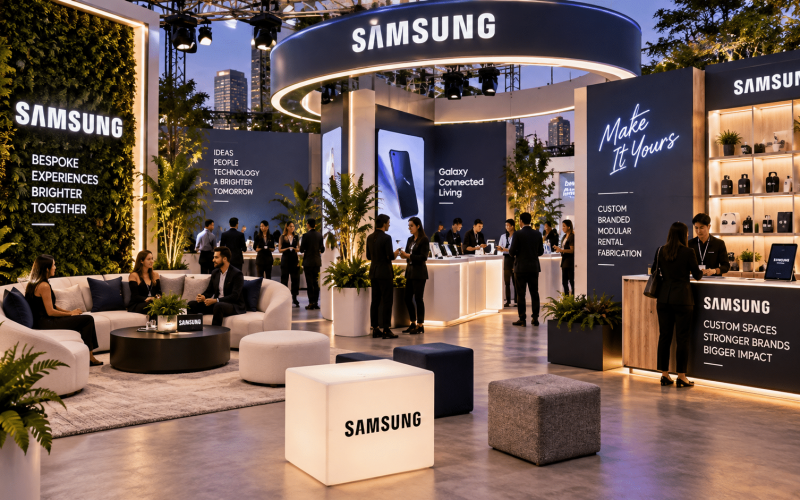
For many exhibitors, a hybrid approach makes the most sense. Custom fabrication can create the branded hero elements that define the experience, while rentals help support budget control and event-to-event flexibility. The right mix depends on campaign lifespan, show calendar, and transport strategy.
Plan booth elements around engagement
Every major booth element should support a visitor action. If an item does not help attract, explain, demonstrate, or convert, it may be taking up valuable space.
Screens should have a job beyond filling a wall. Interactive elements should be intuitive and fast enough for show traffic. Counters should support conversations, not create distance. Furniture should fit the intended meeting length. Even simple branded structures should direct attention somewhere specific.
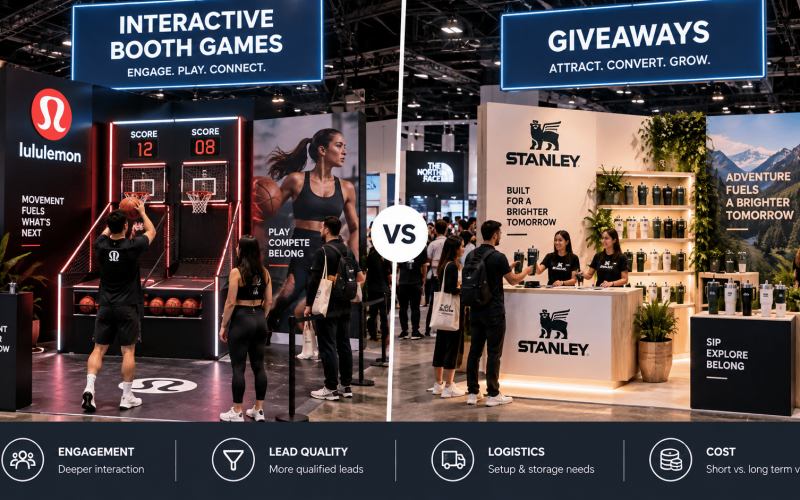
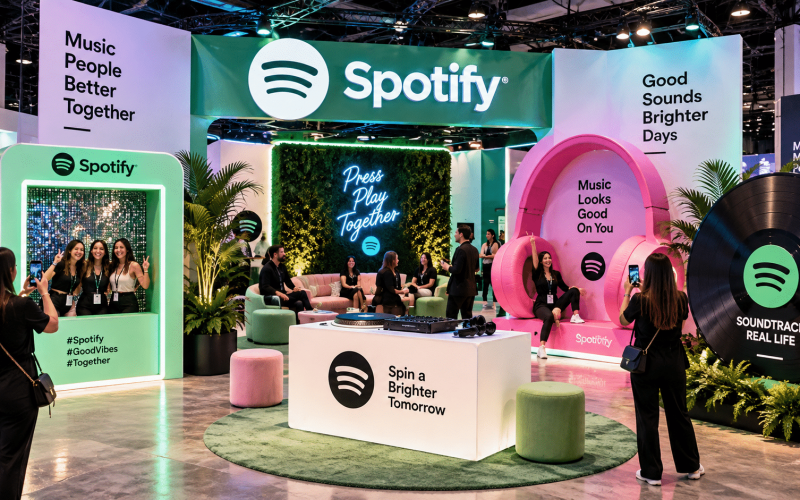
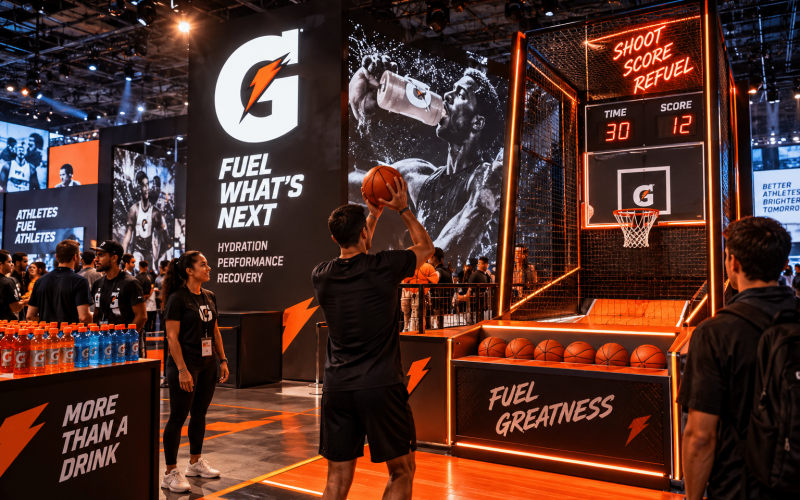
This is especially true for activations. A game, interactive display, or photo moment can increase dwell time and create visibility, but only if it connects to the brand message and can be managed operationally. If it creates long lines without meaningful follow-up, it may generate noise rather than results.
Staffing and booth planning are connected
A booth plan is incomplete until staffing is accounted for. Teams need positions, responsibilities, and enough room to work naturally. If staffers are forced to cluster at the perimeter or compete for the same conversation area, the booth will feel awkward regardless of how well it was designed.
Plan for how many people will be greeting, demonstrating, qualifying, and meeting at any given time. A demo station with no queue space or a meeting table placed beside a noisy activation can weaken performance quickly.
Budget for the full event, not just fabrication
A booth budget should include more than design and build. Freight, drayage, install and dismantle labor, electrical, show services, flooring, graphics, cleaning, storage, and on-site adjustments all affect the final number. Booth concepts that look efficient during early planning can become expensive once show costs are layered in.
That does not mean you should strip the program down. It means each major cost should tie back to a business objective. A custom overhead feature may be worth it if visibility is the primary challenge. A premium demo zone may justify its cost if product interaction drives conversion. But decorative elements with no operational role are often the first place budget gets lost.
When timelines are tight, fabrication strategy matters even more. Custom work takes coordination across design, engineering, production, finishing, packing, and install planning. The earlier that process starts, the more control you have over cost and quality.
Confirm logistics before production is locked
Even strong booth concepts can run into avoidable problems if logistics are treated as an afterthought. Confirm show regulations, shipping windows, target install times, material handling requirements, and labor rules before final approvals. If the booth is traveling to multiple events, packaging and modularity should be addressed during fabrication, not after.
For brands exhibiting in high-density markets like New York City or Boston, venue access, loading schedules, and labor timing can add pressure that should be reflected in the booth plan. A design that installs cleanly and packs efficiently can save far more than it costs.
This is also where an experienced fabrication partner adds value. Booth planning is not only about creating the environment. It is about making sure that environment can be built, transported, installed, and reused without creating new problems at every show.
How to plan trade show booths with a realistic timeline
If the event matters, start earlier than you think you need to. That is the practical answer to how to plan trade show booths without forcing rushed decisions. Early planning creates room to refine messaging, test layouts, align fabrication details, and resolve cost issues before they become expensive.
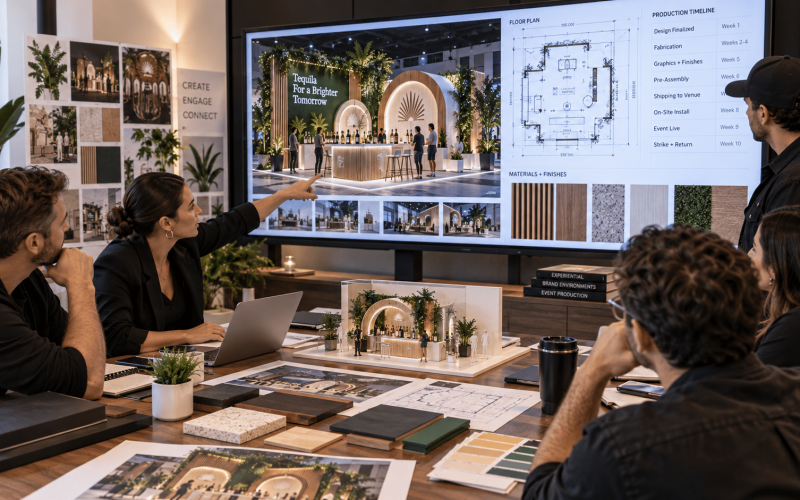
A realistic timeline usually starts with goals and footprint selection, followed by concept development, engineering review, pricing alignment, graphic production, and logistics coordination. Compressing those stages tends to produce avoidable trade-offs. Sometimes the trade-off is cost. Sometimes it is finish quality. Sometimes it is settling for a booth that looks acceptable but does not support the event strategy.
The best booth plans are clear enough to guide production and flexible enough to handle event realities. That balance is what separates a booth that simply shows up from one that actually performs. If your next exhibit needs to generate attention, support engagement, and hold up operationally, plan it like a working asset, not just a display.